

In today’s global fashion marketplace, wholesalers and retailers are constantly seeking a balance between quality, cost efficiency, and brand differentiation. Factory price genuine leather handbags wholesale from PrinceBag offer an attractive proposition for buyers who want authentic leather goods at competitive prices without compromising on craftsmanship. This article provides a professional, in-depth look at what “factory price” and “genuine leather” mean in a wholesale context, why PrinceBag can be an appealing partner, how to evaluate offerings, and practical guidance for sourcing and selling leather handbags profitably.
Understanding “Factory Price” and “Genuine Leather” in Wholesale
“Factory price” typically refers to the cost of goods supplied directly from the manufacturer or their authorized distribution channel, with minimal intermediaries. For wholesalers, buying at factory price can significantly reduce unit costs and increase margins. “Genuine leather” is a term used to indicate that a product is made from real animal hide rather than synthetic alternatives. It is important to note that within the category of real leather there are varying grades—full-grain, top-grain, corrected grain, and genuine or split leather—each with distinct characteristics and price points.
When evaluating factory price genuine leather handbags, buyers should verify:
– Leather grade and origin
– Tanning and finishing processes (vegetable vs. chrome tanning)
– Construction quality (stitching, edge finishing, hardware)
– Compliance and certifications (e.g., REACH, OEKO-TEX where applicable)
PrinceBag’s Value Proposition for Wholesale Buyers
PrinceBag positions itself as a manufacturer and wholesaler focused on reliable leather craftsmanship at scalable manufacturing capacity. Their value proposition for wholesalers typically includes:
– Direct factory pricing through reduced middlemen
– A range of leather grades to meet different market segments
– Customization options for private labels and OEM/ODM services
– Consistent production lead times and MOQ structures
– Quality control processes and sample production prior to bulk runs
For retailers and distributors seeking to source genuine leather handbags that can be branded or sold as-is, PrinceBag’s model aims to combine cost-effectiveness with a reliable supply chain.
Product Quality and Material Analysis
Quality begins with material selection and ends with meticulous finishing. Below is an analysis table that helps wholesale buyers compare typical handbag styles and their business-relevant attributes when sourced from a factory supplier like PrinceBag.
| Model / Style | Material (Leather Grade) | Unit Price (USD) | MOQ (pcs) | Lead Time (days) |
|---|---|---|---|---|
| Classic Tote | Top-grain cowhide | $28–$45 | 50 | 30–45 |
| Crossbody Satchel | Full-grain Italian leather | $45–$75 | 30 | 40–55 |
| Everyday Shoulder Bag | Corrected-grain cowhide | $22–$38 | 100 | 25–40 |
| Minimalist Wallet Bag | Genuine split leather (PU-coated) | $12–$22 | 200 | 20–30 |
| Luxury Handbag | Premium full-grain calfskin | $80–$150 | 20 | 45–70 |
This sample table is illustrative; actual prices, MOQs, and lead times vary depending on customization, seasonality, and raw material market fluctuations. Still, it highlights the range of options available when buying from a factory-focused supplier.
How to Evaluate Leather Quality and Construction
Leather quality assessment should be hands-on when possible. Key checkpoints:
– Smell: Genuine leather typically has a rich, organic scent; chemical smells might indicate heavy treatment or synthetic components.
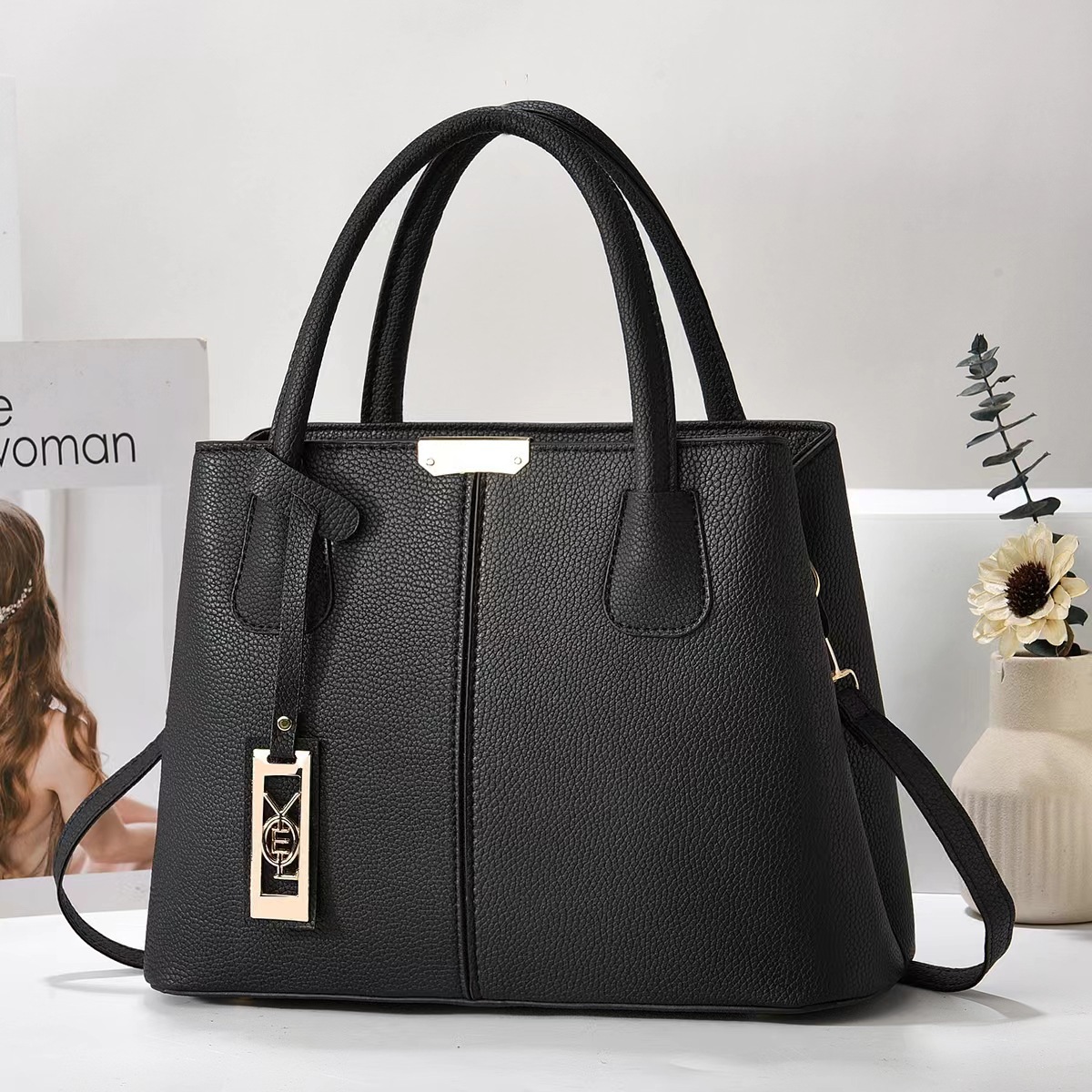
– Grain and texture: Full- and top-grain leather show natural markings; corrected grain may have a more uniform finish.
– Flexibility and feel: Good leather will soften and develop a patina over time, indicating longevity.
– Stitching: Look for even, reinforced stitching at stress points and the use of durable thread.
– Hardware: Metal zippers and clasps should be corrosion-resistant and match the design’s weight and finish.
– Lining and interfacings: High-quality lining materials and internal reinforcements contribute to the bag’s shape retention and durability.
Pricing Strategy and Cost Breakdown
Understanding the cost makeup of factory price handbags helps wholesalers estimate margins and set retail pricing. Typical cost components include:
– Raw material cost (leather hides, lining, hardware)
– Labor and manufacturing overhead
– Pattern making and sample development
– Finishing and quality inspection
– Packaging and labeling (including private label options)
– Shipping and duties
If PrinceBag offers factory prices, that typically means lower intermediary margins but does not eliminate production costs. For example, a top-grain tote with a factory unit price of $35 might break down roughly as: 50% materials ($17.50), 25% labor and overhead ($8.75), 10% packaging and QC ($3.50), 15% margin/other ($5.25)—these percentages vary by supplier and order size. Buyers should request a transparent cost structure to better negotiate pricing and understand levers for reducing costs (e.g., higher-order volumes, simpler hardware).
Customization, Branding, and Private Labeling
One of the major advantages of dealing directly with a factory supplier is the ability to customize. Common customizations include:
– Custom sizes, colors, and leather finishes
– Embossing, debossing, or metal logo plates
– Custom hardware color and engraving
– Unique lining prints and material choices
– Branded tags and packaging
PrinceBag and similar factories usually provide tiered pricing for customization based on tooling costs, MOQ, and development time. Buyers should request pre-production samples and confirm all specs in writing (materials, colors with Pantone references, hardware finishes, stitch type, and placement) to avoid costly misunderstandings.
Supply Chain Reliability and Lead Time Management
Supply chain predictability is essential when stocking seasonal inventory. Key considerations:
– Lead times: Confirm realistic production calendars and plan buffers for raw material delays.
– Inventory planning: Use historical sell-through rates and promotional plans to calculate reorder points that factor in lead times and safety stock.
– Communication: A single point of contact and regular status updates (photos during production runs) reduce surprises.
– Contingency planning: Ask about access to alternative materials or expedited services for urgent replenishments.
A factory-price supplier like PrinceBag can often provide more predictable lead times than multi-tiered distribution chains because production is centralized. Still, buyers should aim to lock in timelines and penalties for significant delays when placing large orders.
Quality Assurance and Compliance
Quality assurance should be systematized:
– Pre-production sample approval (PPS): Sign off on a fully finished sample before mass production.
– In-line inspections: Periodic checks during different production stages (cutting, sewing, assembly).
– Final inspections: ACI standards (Acceptable Quality Limit) or AQL checks before shipment.
– Third-party inspections: Buyers may hire independent inspectors for additional assurance.
Compliance is another critical area—ensure materials meet regulations relevant to target markets (e.g., lead content limits for hardware, VOCs in finishes). Request certificates of origin and material safety data if needed.
Target Markets and Wholesale Strategies
Different markets value different attributes:
– Boutique retailers: Emphasize craftsmanship, unique design, and mid-to-high price positioning.
– Department stores: Require consistent quality and reliable replenishment with potential seasonal collaborations.
– Online DTC brands: Focus on branding, storytelling, and margin control; require smaller initial MOQs and quicker turnaround for trend-driven pieces.
– Export distributors: Might prioritize lower per-unit costs and stable supply for large-volume deals.
When configuring your wholesale strategy with a factory like PrinceBag:
– Select a mix of core evergreen styles and seasonal trend pieces.
– Negotiate flexible MOQs for testing new designs.
– Design packaging and inserts that tell your brand story to enhance perceived value.
Sustainability and Ethical Considerations
Sustainability is increasingly important to consumers. Wholesalers should ask suppliers about:
– Leather sourcing traceability (tanneries and raw hide origin)
– Tanning processes (preference for lower-impact or certified tanneries)
– Waste management and water treatment at manufacturing sites
– Worker welfare policies and audits (social compliance)
– Use of recycled or sustainably sourced materials for linings and packaging
Clear communication about these practices strengthens brand positioning and can justify higher retail prices.
Tips for Negotiating with Factory Suppliers
– Start with clear specifications: technical sheets, materials, and sample references reduce back-and-forth.
– Leverage volume: Higher order quantities usually reduce per-unit pricing; consider breaking larger assortments into smaller, high-margin bundles for testing.
– Ask about shared tooling costs: Negotiate how tooling and setup fees are amortized across runs.
– Secure payment terms: Negotiate deposit structures (e.g., 30% deposit, 70% before shipment) and consider letters of credit for large transactions.
– Build long-term relationships: Repeat business often unlocks better lead times, priority production, and improved pricing.
Conclusion: Maximizing Wholesale Success with PrinceBag
Factory price genuine leather handbags wholesale from PrinceBag can represent a compelling route for retailers, private-label brands, and distributors who want authentic leather quality at competitive costs. Success hinges on diligent evaluation of materials, transparent cost and lead-time discussions, rigorous quality assurance, and clear communication about customization and compliance. By combining product knowledge with strategic purchasing decisions—such as balancing MOQ, selecting appropriate leather grades, and investing in branding and sustainable practices—wholesale buyers can build profitable assortments and long-lasting partnerships.
If you are evaluating PrinceBag or any factory supplier, request samples, corroborate references, and draft a detailed spec sheet before committing to large orders. The right factory partnership can enable growth, improved margins, and a reliable supply chain—turning well-chosen leather handbag assortments into consistent revenue drivers for your business.