

The Wholesale Leather crossbody bag for Global Distributors — PrinceBag is designed to bridge the gap between premium materials, modern design, and scalable wholesale logistics. For distributors targeting boutiques, department stores, and e-commerce marketplaces worldwide, PrinceBag provides a product offering that balances craftsmanship, cost-efficiency, and global compliance. This article provides a professional, market-focused analysis of the product, manufacturing and quality control considerations, pricing and MOQ strategy, logistics and compliance, and actionable recommendations for global distributors to succeed with PrinceBag leather crossbody lines.
Product Overview: Design, Materials, and Variants
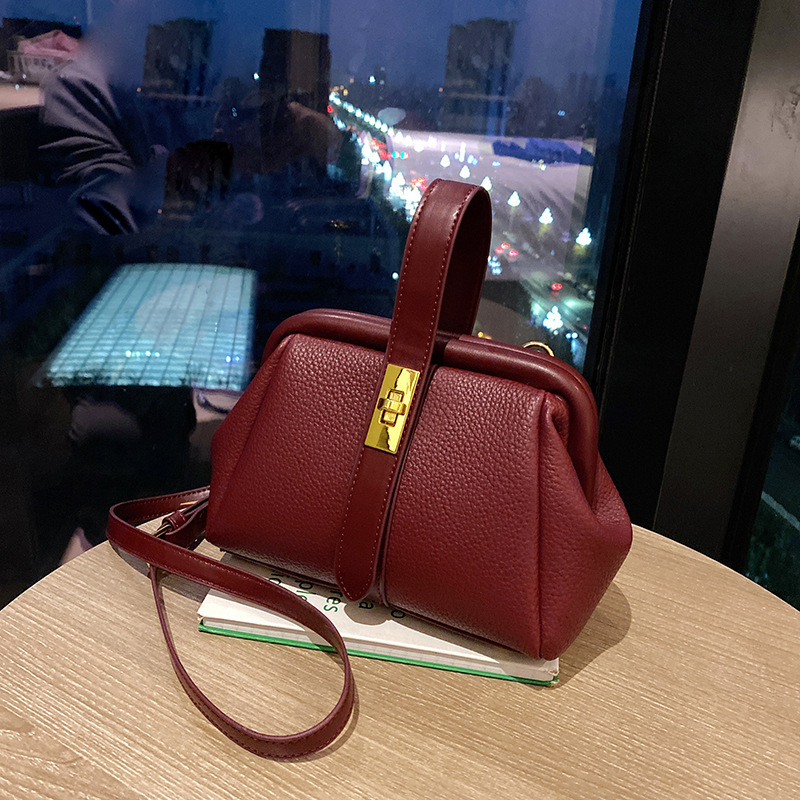
At its core, the PrinceBag wholesale leather crossbody is a mid-sized, versatile bag intended for daily use. Typical product highlights include:
– Genuine full-grain or top-grain leather options, with corrected-grain or bonded leather alternatives for more cost-sensitive channels.
– Classic silhouette with adjustable strap, multiple compartments (main compartment, zippered inner pocket, card slots), and metal hardware in nickel, antique brass, or matte black finishes.
– Dimensions usually range between 8–11” (w) x 6–9” (h) x 2–4” (d), a size optimized for both urban commuters and travel.
– Customization options: logo embossing, interior lining colors/materials, strap variations (leather, canvas, chain), and limited-edition seasonal colors.
PrinceBag’s collection can be tailored into three main SKU tiers to satisfy varied distributor needs:
– Premium Tier: Full-grain leather, hand-finished edges, branded hardware.
– Mid Tier: Top-grain leather with machine-finishing and cost-conscious hardware.
– Value Tier: PU or corrected-grain leather with simplified construction for high-volume channels.
Target Markets and Distributor Profiles
Global distributors should segment target customers into:
– Specialty retailers and boutiques seeking unique colors and small-batch exclusivity.
– Department stores and larger retail chains needing consistent quality and steady replenishment.
– E-commerce resellers and marketplace sellers who prioritize competitive pricing, fast restocks, and strong product photography.
– Corporate gifting and promotional channels needing white-label or co-branded capabilities.
PrinceBag’s wholesale model is suitable for distributors focusing on mid-to-high-end fashion segments in North America, Europe, and emerging markets across Asia-Pacific and Latin America. Each geography imposes different expectations around materials (e.g., preference for vegetable-tanned leather in certain niche markets) and certifications.
Manufacturing, Quality Control, and Compliance
Manufacturing strategy is central to maintaining consistent wholesale supply. Key manufacturing considerations:
– Supplier selection: Work with tanneries and factories that provide traceability (lot numbers for hides), and have experience producing crossbody bags at scale.
– Quality control (QC): Implement pre-shipment checks, inline inspections, and random AQL sampling (commonly AQL 1.5 for critical defects for premium lines; AQL 2.5 for mid-tier). QC should cover stitching integrity, hardware durability, color consistency, and odor/chemical tests.
– Chemical compliance: Test for restricted substances (formaldehyde, AZO dyes, phthalates) according to regional regulations (REACH in EU, California Proposition 65, and local standards).
– Certification: Where possible, provide certifications such as ISO 9001 (quality management) or Leather Working Group (LWG) membership for environmental credentials. These credentials can increase appeal to retailers with sustainability commitments.
Pricing Strategy, MOQ, and Margins
Wholesale pricing must balance factory cost, distributor margin, and retail pricing expectations. Typical structure:
– Factory cost (FOB) will vary by leather grade and hardware; premium full-grain crossbody FOB might range significantly higher than synthetic alternatives.
– Recommended distributor markup: 25–40% over FOB when selling to retailers; retailers typically apply keystone or 2.0–2.5x markup to reach retail price.
– Minimum order quantity (MOQ): For efficient production and cost control, PrinceBag commonly sets MOQs by SKU and tier—e.g., 100–300 units per color for mid-tier, 300–1000 units for value tier, while premium lines may offer smaller production runs (50–150 units) with higher per-unit price.

Below is a concise analysis table summarizing product tiers, MOQ, FOB price ranges, target retail price, and suggested distribution channels.
| Tier | Typical MOQ (per color/SKU) | Estimated FOB Price (USD) | Suggested Retail Price (USD) | Primary Distribution Channels |
|---|---|---|---|---|
| Premium (Full-grain) | 50–150 | $55–$120 | $150–$350 | Boutiques, specialty retailers, premium e-comm |
| Mid (Top-grain) | 100–300 | $25–$55 | $70–$150 | Department stores, multi-brand retailers, online marketplaces |
| Value (PU/Corrected) | 300–1000 | $8–$25 | $25–$70 | Mass retailers, discount chains, high-volume e-retail |
| Custom/Private Label | Varies (often 200+) | Varies (design-dependent) | Varies | Corporate gifting, private label brands |
Logistics and Shipping Considerations
Global distribution requires a robust logistics plan:
– Incoterms: Clarify whether shipments are FOB, EXW, CIF, or DDP. Many distributors prefer FOB or DDP for predictable landed costs.
– Shipping mode: Use sea freight for large volumes to reduce cost, air freight for urgent reorders or sample shipments.
– Lead times: Typical production lead time ranges from 30–90 days depending on complexity and tier. Factor in additional 7–45 days for shipping and customs clearance.
– Warehousing: Maintain regional warehouses (North America, EU, Asia-Pacific) to enable faster fulfillment to retailers and reduce duties and transit times.
– Packaging: Offer flexible packaging (branded dust bags and boxes for premium tiers; minimal eco-friendly packaging for value tiers). Packaging must meet retail display and giftability standards where relevant.
Marketing and Sales Support for Distributors
Distributors succeed when product attributes are clearly communicated. PrinceBag should provide:
– High-resolution product photography and 360-degree images for e-commerce listings.
– Product information sheets: materials, dimensions, care instructions, and SKU codes.
– Sample programs: allow retailers to order display samples at an affordable cost, with sample return or discount applied if the retailer converts to a bulk order.
– Marketing collateral: POS displays, lookbooks, and suggested retail promotions tailored to regional seasons and holidays.
– Digital assets for B2B portals: provide CSV catalogs, EDI integrations, and easy reordering portals with visibility to stock levels.
Customization, Private Label, and Seasonal Strategies
Customization is a decisive differentiator:
– Private label: Offer white-label programs with minimum order terms. Provide logo embossing, unique colorways, and internal tags.
– Limited editions: Seasonal color palettes or artist collaborations create urgency and higher margins.
– SKU rationalization: Limit the number of SKUs per season to reduce inventory complexity. Use core SKUs for evergreen sales and introduce 2–4 new seasonal SKUs per season.
Risk Management and Sustainability
Key risk and sustainability points:
– Raw material price volatility: Leather and hardware costs fluctuate. Use multi-year supplier agreements or hedging strategies where possible.
– Ethical sourcing: Ensure hides are byproducts of the food industry and not from controversial sources. Suppliers with LWG certifications help reassure retail partners.
– Waste reduction and recycling: Offer programs for end-of-life returns or leather recycling credits to appeal to eco-conscious consumers.
– Currency risk: Negotiate prices in stable currencies or use forward contracts to manage exchange-rate exposure.
Quality Assurance: Tests and Inspection Protocols
Implement a rigorous list of QA tests:
– Physical durability: strap load tests, zipper cycles (5,000 cycles common benchmark), and hardware corrosion resistance.
– Chemical tests: formaldehyde, heavy metals, and phthalates for markets with strict standards.
– Colorfastness: rub tests and light exposure tests.
– Odor testing: organoleptic inspection and VOC testing where necessary.
A typical QC workflow:
– Pre-production samples and approvals.
– In-line checks at 30%, 60%, and 90% completion.
– Final inspection with AQL sampling and photo documentation.
– Pre-shipment packaging check to ensure proper presentation.
Distribution Playbook: How Global Distributors Can Win with PrinceBag
Actionable steps for distributors:
1. Start with a mixed-tier launch: introduce 1–2 premium SKUs, 3–5 mid-tier SKUs, and 2–3 value SKUs to test market response.
2. Negotiate reasonable MOQ flexibility for initial orders to reduce risk, then scale once velocity is proven.
3. Use market-specific color palettes: research local preferences and align SKUs accordingly.
4. Invest in localized marketing: adapt product descriptions, care labels, and campaigns to local languages and cultural contexts.
5. Monitor sell-through rates weekly for top SKUs and adjust reorder cadence to avoid stockouts or overstocks.
6. Leverage PR and influencer partnerships for lifestyle positioning in target countries.
Case Examples and Use Scenarios
– Boutique chain in California: Launch 3 premium and 5 mid-tier SKUs timed with spring/summer purchases, using in-store displays and influencer collaborations. Expected sell-through within 8–10 weeks for premium.
– Pan-European distributor: Focus on top-grain mid-tier with LWG-certified tanneries to appeal to retailers demanding sustainable credentials. Use centralized EU warehouse to reduce cross-border duties.
– E-commerce marketplace seller: Prioritize value-tier SKUs with strong photography and competitive pricing. Optimize for fast replenishment and leverage sponsored ads to drive visibility.
Key Performance Metrics for Distributors
Track the following KPIs:
– Sell-through rate (%) by SKU per 4-week period.
– Inventory turnover (times per year).
– Gross margin by SKU and tier.
– Return rate and reasons (quality, sizing, expectation mismatch).
– Lead time from reorder to delivery.
Conclusion and Recommendations
PrinceBag’s Wholesale leather crossbody bag is positioned to serve a broad range of global distributors by offering tiered product options, clear quality assurances, and flexible customization. Success in distribution hinges on balancing MOQ and pricing with strong marketing support, robust quality control, and efficient logistics. Prioritize initial market testing with a curated SKU mix, demand accurate local market intelligence, and insist on supplier transparency for raw-material sourcing and chemical compliance.
For distributors aiming to scale:
– Negotiate pilot MOQ and sample programs to validate demand.
– Insist on documented QC procedures and testing certificates.
– Deploy local marketing assets and pricing strategies adjusted for each region.
– Adopt an agile replenishment plan to react to fast-selling SKUs and seasonal demand.
By aligning product quality, transparency, and supply chain efficiency, PrinceBag can become a reliable partner for global distributors seeking to offer leather crossbody bags that satisfy both retail quality expectations and wholesale economics.