
In the fast-moving world of fashion, emerging brands face a complex web of challenges: finding reliable manufacturers, scaling production without sacrificing design integrity, managing costs, and getting products to market quickly. PrinceBag Handbag Manufacturer has carved out a reputation as a partner that helps nascent labels navigate these obstacles. By offering a mix of technical expertise, flexible production models, supply-chain transparency, and brand-support services, PrinceBag helps designers move from concept to commercial reality while protecting margins and brand identity.
Understanding the role of a manufacturer in early-stage brand success
Manufacturers do far more than stitch pieces of leather together. For emerging fashion brands, the right manufacturing partner is a strategic extension of the brand team. They translate design language into manufacturable products, advise on materials and construction techniques that balance cost and durability, and provide the operational backbone needed for consistent delivery. PrinceBag’s services reflect this broader, consultative role: beyond production, they are involved in prototyping, sourcing, quality assurance, logistics, and even guidance on scaling.
Flexible production and lower barriers to entry
One of the biggest hurdles for startups is minimum order quantities (MOQs). Conventional factories often demand large batch sizes that small brands cannot afford or do not yet have demand for. PrinceBag addresses this by offering tiered MOQ structures and flexible lot sizes tailored to emerging brands. This flexibility allows brands to:
– Test designs with smaller runs.
– Manage cash flow better.
– Reduce inventory risk while iterating on product-market fit.
Additionally, their contract and private-label options simplify the transition from small-scale to larger production runs as demand grows.
Design collaboration and prototyping
A strong design-manufacturer relationship speeds up the product development cycle. PrinceBag invests in collaborative design processes:
– Co-development workshops: aligning a brand’s aesthetic with production realities.
– Rapid prototyping: creating and refining samples quickly to shorten lead times.
– Digital tech integration: using CAD, 3D modeling, and sample photography to reduce physical sample iterations.
These services help emerging brands refine silhouettes, hardware choices, and construction methods with fewer costly errors.
Material sourcing and sustainable options
Raw material selection is critical for price, longevity, and brand perception. PrinceBag leverages established supplier relationships to provide:
– Cost-competitive leather and alternative materials (veg-tan, PU, recycled textiles).
– Access to sustainable and certified supply chains (e.g., LWG-rated leather, recycled fabrics).
– Transparent sourcing documentation to support brand storytelling and compliance requirements.
This capability enables emerging brands to adopt sustainability strategies without taking on the burden of the sourcing network themselves.
Quality control and compliance
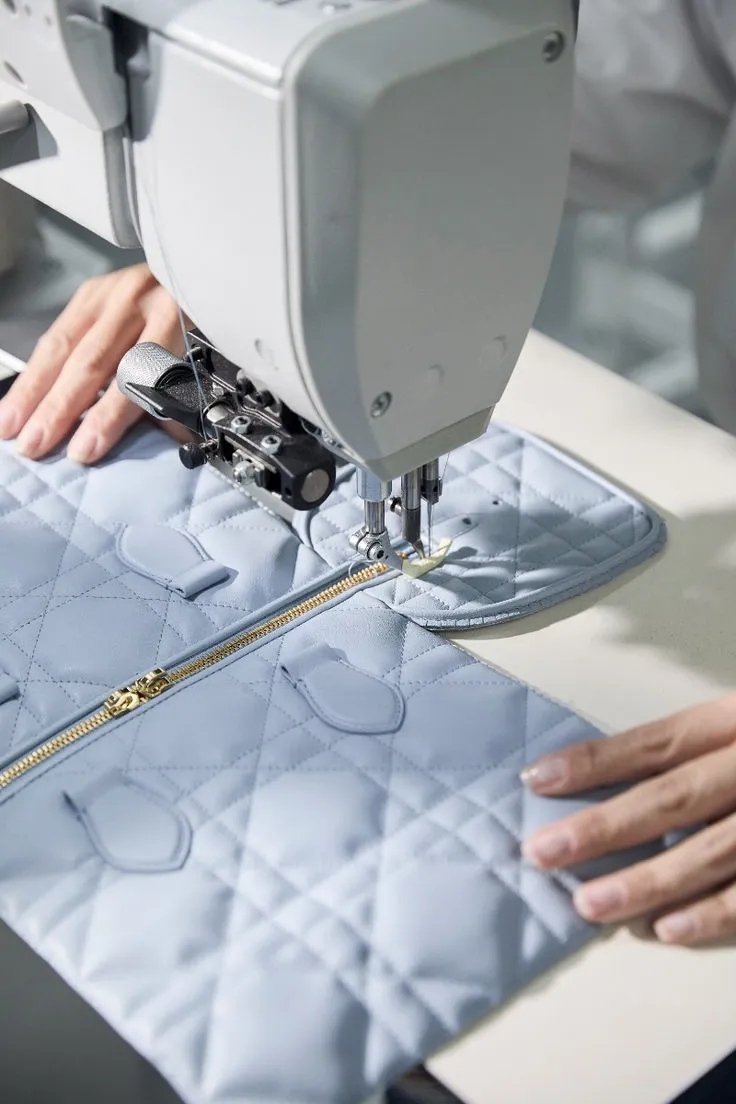
Delivering a consistently high-quality product is essential for reputation and customer retention. PrinceBag offers rigorous quality assurance protocols:
– Incoming material checks and traceability.
– In-process inspections and standard operating procedures (SOPs).
– Final checks and defect categorization with corrective action plans.
– Compliance with international safety and labeling standards.
For young brands, relying on tested QC systems minimizes returns and protects early customer experience.
Branding, finishing, and private labeling
Packaging and finishing differentiate a product on retail shelves and unboxing experiences. PrinceBag supports emerging labels with:
– Custom hardware, logos, and branded lining options.
– Bespoke packaging solutions and point-of-sale materials.
– Assistance in selecting finishes and trims that align with brand identity.
These services allow startups to create a polished consumer experience comparable to more established competitors.
Logistics, warehousing, and fulfillment support
Getting products into customers’ hands requires logistics competence. PrinceBag can coordinate:
– Consolidation and export documentation for cross-border shipments.
– Warehousing options for staged inventory or seasonal surges.
– Integration with third-party logistics (3PL) and direct-to-consumer fulfillment partners.
This reduces operational headaches for fashion entrepreneurs who often lack logistics experience.
Technology and transparency
Modern brands demand visibility. PrinceBag typically provides:
– Order tracking and production status dashboards.
– Digital sample approvals and version control.
– Cost breakdowns per SKU and real-time inventory visibility.
These tools help brand teams make data-driven decisions about reorders, markdowns, and new launches.
Financial flexibility and cost optimization
Emerging brands often struggle with upfront capital. PrinceBag helps by offering:
– Negotiated payment terms (deposits + balance before shipping).
– Cost engineering to suggest material or construction alternatives that preserve aesthetics but reduce cost.
– Consolidated invoicing and customs documentation.
This financial flexibility reduces cash strain while maintaining product quality.
Partnerships and industry introductions
Manufacturers with industry networks can open doors. PrinceBag’s long-term relationships with materials suppliers, logistics firms, and even retail partners can benefit startups by:
– Providing referrals for fashion photographers, PR, and distribution channels.
– Introducing brands to trade-show networks and wholesale platforms.
– Recommending service providers for legal, tax, and regulatory matters.
This ecosystem advantage accelerates brand growth beyond pure manufacturing.
Case study snapshots: typical outcomes for emerging brands
– A direct-to-consumer handbag label reduced prototype cycles by 40% after adopting PrinceBag’s digital prototyping workflow, bringing their first collection to market two months earlier than planned.
– A sustainable brand transitioned to recycled materials with PrinceBag’s sourcing, cutting raw material costs by 12% while accessing verified sustainability documentation for labeling and marketing.
– A boutique brand scaled from 50 to 1,200 units per style within a year by leveraging PrinceBag’s flexible MOQs and staged production runs.
These examples demonstrate tangible benefits in time-to-market, cost control, and scalability.
Risks and mitigation strategies for brands working with manufacturers
Working with any manufacturer involves risks. PrinceBag helps mitigate common issues that impact emerging labels:
– Intellectual property (IP) protection: Non-disclosure agreements (NDAs) and controlled access to technical patterns.
– Dependency risk: Staged production transfers and dual-sourcing strategies.
– Quality variance: Clear quality standards and agreed-upon inspection checkpoints.
Brands should still perform due diligence, visit facilities if possible, and keep open communication channels.
Analysis table: How PrinceBag supports emerging brands — services, benefits, and metrics
| Support Area | Specific Services | Benefits to Emerging Brands | Key Metrics to Track |
|---|---|---|---|
| Prototyping & Design | CAD/3D, rapid sampling, co-development | Faster design validation; fewer sample iterations | Sample turnaround time, iterations/sample |
| Production Flexibility | Low MOQs, staged scaling, private labeling | Lower upfront cost; reduced inventory risk | Minimum order size, lead time variability |
| Materials & Sustainability | LWG leather, recycled textiles, certified suppliers | Brand credibility; compliant claims | Material cost delta, % sustainable content |
| Quality Assurance | IPQC, final inspection, defect tracking | Lower returns; consistent customer experience | Defect rate, return rate |
| Branding & Finishing | Custom hardware, labeling, packaging | Premium unboxing and retail presence | Customer satisfaction, wholesale acceptance rate |
| Logistics & Fulfillment | Consolidation, warehousing, shipping coordination | Faster delivery; simplified export processes | Lead time to ship, on-time delivery % |
| Financial Terms | Flexible payment, cost engineering | Improved cash flow; margin protection | Days payable, cost per unit |
| Technology & Transparency | Order dashboards, digital approvals | Better planning; fewer miscommunications | Order accuracy %, approval cycle time |
How emerging brands should approach working with PrinceBag
To maximize the relationship, brands should be strategic in their collaboration:
– Define priorities: Determine which aspects (cost, speed, sustainability, craftsmanship) are non-negotiable.
– Share clear tech packs: The more precise the pattern, measurements, and materials lists, the fewer misinterpretations.
– Start small, scale systematically: Use pilot runs to test the market and then expand.
– Establish KPIs: Track quality, lead times, and cost metrics to inform sourcing decisions.
– Protect IP: Use NDAs and control sample distribution early on.
Clear communication and realistic timelines build trust, which is especially valuable as early orders are often more iterative.
Common challenges and PrinceBag’s responses
– Challenge: Long lead times for complex hardware. Response: PrinceBag maintains relationships with hardware vendors and offers pre-sourced libraries of popular hardware to shorten lead times.
– Challenge: Ensuring color consistency across batches. Response: They use standardized color references and lab-dye approvals before bulk dyeing.
– Challenge: Cost creep during development. Response: PrinceBag performs cost engineering to propose alternative components that preserve quality while lowering price points.
These pragmatic solutions help startups stay agile and cost-effective.
Measuring success in the partnership
Brands should measure the manufacturer relationship not just by cost per unit but by broader business outcomes:
– Time-to-market: How quickly does a concept become a sellable product?
– Gross margin improvement: Does manufacturing guidance help preserve margins?
– Quality and customer satisfaction: Are return rates and reviews improving?
– Scalability readiness: Can production ramp smoothly during demand spikes?
PrinceBag’s value is most evident when these holistic indicators move in the right direction.
Final recommendations for emerging fashion brands
– Vet manufacturers for cultural fit: Look for partners that understand your brand ethos and customer promise.
– Prioritize transparency: Ensure you have access to production status and cost breakdowns.
– Invest in clear documentation: Good tech packs and communication reduce costly rework.
– Use pilot runs wisely: Small batches are learning opportunities as much as revenue events.
– Build long-term relationships: A trusted manufacturer becomes a growth partner who can contribute strategic advice, not just production.
Conclusion
For emerging fashion brands, the path from a promising design to a scalable business depends heavily on manufacturing partners. PrinceBag Handbag Manufacturer demonstrates how a modern, collaborative, and transparent manufacturer can accelerate growth by providing flexible production, rigorous quality assurance, sustainable sourcing options, and operational support beyond simple manufacturing. By treating manufacturers as strategic partners and leveraging their capabilities—from prototyping and materials sourcing to logistics and cost engineering—new labels can reduce risk, optimize costs, and build a reliable foundation for growth. With the right approach and clear KPIs, working with a manufacturer like PrinceBag can transform early-stage challenges into structured opportunities for brand development.