
PrinceBag Ladies Bag Factory approaches sampling and prototyping as a disciplined, client-centered process that balances creativity, technical precision, time efficiency, and cost control. For brands and private label buyers who expect consistent quality and timely delivery, the sampling stage is where concepts become tangible—where pattern lines, hardware choices, and material behaviors reveal whether a design will succeed in production and in the marketplace. PrinceBag’s system is built to reduce ambiguity, shorten iteration cycles, and document decisions so that each prototype serves as an authoritative reference for subsequent production runs.
Understanding the Purpose of Sampling and Prototyping
Sampling and prototyping have distinct but overlapping goals:
– Validate design aesthetics and proportions in physical form.
– Test fit, capacity, structure, and ergonomics for carried items.
– Verify functionality of closures, hardware, and accessory components.
– Evaluate manufacturing feasibility and identify process constraints.
– Provide a production-ready reference for cost estimates, tooling and quality standards.
PrinceBag treats sampling not as a single artifact, but as a series of targeted checkpoints—each sample type has a specific validation objective. This reduces wasted iterations and focuses resources where technical risk is highest.
PrinceBag’s Sampling Workflow: Overview
PrinceBag’s workflow can be summarized in phases that move from conceptual sketches to production-ready pre-production samples (PPS). Each phase has standard inputs and outputs and a clear owner responsible for sign-off.
– Concept & Feasibility Review
– Technical Specification and Tech Pack Development
– Pattern Making and Mock-up (Maquette) Stage
– First Fit Sample (FFS) / Proto Sample
– Trimmed Sample / Wear-Test Sample
– Pre-Production Sample (PPS) and Final Approval
– Pilot Production and Tooling Handover
This staged approach lets PrinceBag manage expectations and cost: early low-cost prototypes catch design errors before they become expensive tooling or bulk-material commitments.
Detailed Stage Breakdown
– Concept & Feasibility Review: Designers and project managers review sketches, material swatches, and target retail price to assess production feasibility. At this stage PrinceBag often suggests alternative processes or materials to meet cost and durability targets.
– Tech Pack Development: Tech packs are standardized and comprehensive—specifications include exploded views, measured drawings, construction notes, hardware part numbers, materials by layer, tolerances, labeling, and packaging instructions.
– Pattern Making & Maquette: Pattern engineers create graded block patterns and simple maquettes using muslin, craft leather, or cheap canvas to validate proportions before committing to final materials.
– First Fit / Proto Sample: The first “real” sample is made from the proposed materials (or acceptable substitutes). This sample validates structure, internal layout, stitching sequences, and overall look.
– Trimmed Sample: After fit and functionality are approved, a trimmed sample uses final hardware, lining, and trims to show how the finished product will present.
– Pre-Production Sample (PPS): A fully production-intent sample using production materials and processes; this sample is the benchmark for bulk production and final QC.
– Pilot/Bulk Run: A small production run is executed to verify assembly line consistency and cycle times, after which feedback is implemented before full-scale production.
Technical Communication and Documentation
Clear communication is central to PrinceBag’s system. Every sample cycle is accompanied by updated documentation:
– Updated tech packs (version-controlled)
– Sample photos and videos (360-degree and detail shots)
– Defect/adjustment lists with annotated images
– Testing reports (tensile tests, colorfastness, abrasion)
– Approval forms that capture buyer signatures and non-conformance allowances
These documents prevent “telephone” errors as projects move between designers, pattern makers, and production teams, and they form the contractual basis for quality expectations.
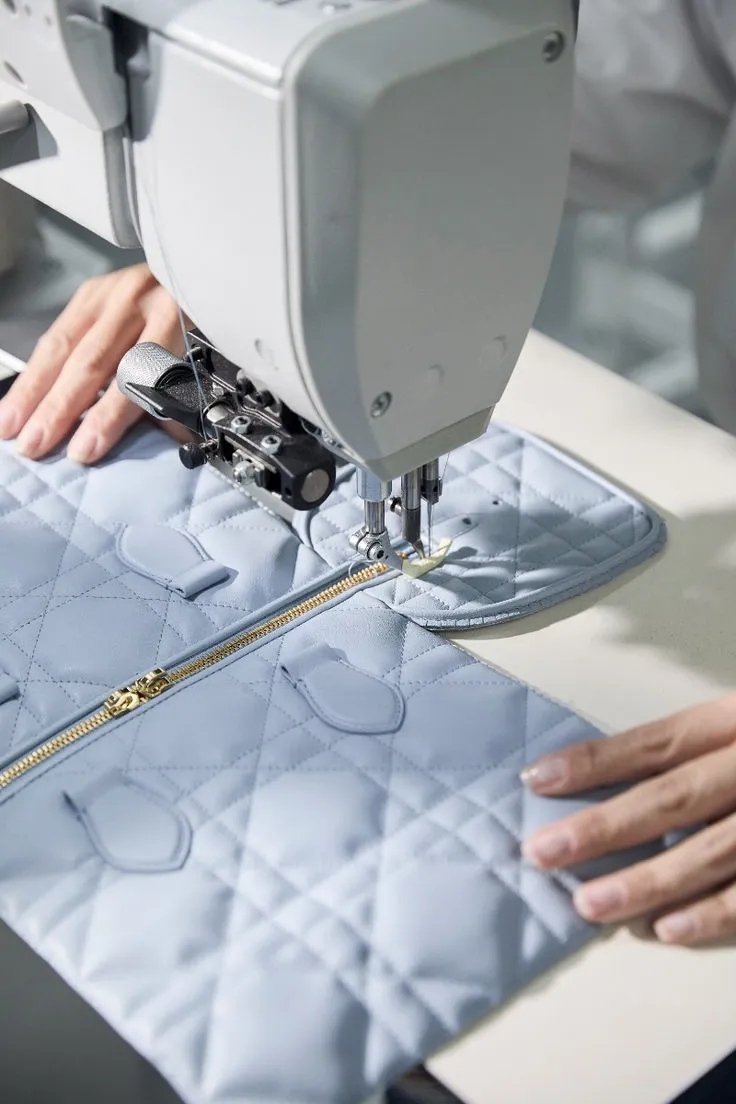
Pattern Making and Grading
Pattern making for ladies’ bags is both art and engineering. PrinceBag employs experienced pattern engineers who:
– Translate 2D sketches into accurate 3D shapes, accounting for leather thickness, lining behavior, and interfacing.
– Create seam allowances and stitch lines for efficient assembly.
– Build nested patterns for nested components (pockets, gussets, straps).
– Run digital simulations where possible to visualize deformation and fit.
Grading is less complex than apparel but critical where multiple sizes or volume capacities exist. PrinceBag applies size increments to maintain proportions and functionality across size variants (e.g., small, medium, large totes).
Materials, Hardware, and Suppliers
Selecting appropriate materials is a decision point that influences cost, lead time, and the number of prototype iterations. PrinceBag maintains relationships with a vetted network of material and hardware suppliers for:
– Leathers (full grain, corrected grain, PU)
– Fabrics and linings (nylons, cottons, jacquards)
– Interfacings and reinforcements (EVA, foam cores, cardboard inserts)
– Hardware (zippers, sliders, buckles, D-rings, rivets)
– Finishes and dyes
For sampling, PrinceBag will often use stock swatches to speed turnaround. If a client requests bespoke materials or custom hardware, the factory includes sourcing and lead-time for tooling (e.g., dies, zipper pull molds) in the sampling timeline.
Sample Types and When PrinceBag Uses Them
– Visual/Concept Models: Quick mock-ups to review silhouette and proportions. Low cost, fast turnaround (1–3 days).
– Fit/Functional Samples: Validate dimensions and usability (3–7 days).
– Trimmed Samples: Incorporate final hardware and labels to inspect aesthetics (7–14 days).
– Lab/Test Samples: Sent for performance testing (water-resistance, abrasion, drop tests) when required by client spec.
– Pre-Production Samples (PPS): The final approval sample that production is measured against (2–4 weeks depending on hardware and material lead times).
PrinceBag recommends at least one fit sample and one PPS for nearly all production orders; more complex projects may require additional intermediate iterations.
Quality Control during Sampling
Quality checks in the sampling stage catch assembly or design flaws before mass production:
– Stitch density and seam integrity checks
– Hardware function tests (zipper pulls, clasp strength)
– Structural integrity tests (tension, drop, and load tests)
– Color and dye consistency checks under standardized light
– Measurement audits against the tech pack
PrinceBag logs issues and corrective actions in a sample report and assigns owners and deadlines. This ensures lessons are applied to tooling and the production process, avoiding costly rework.
Timeline Management and Lead Times
Time management is a core competency for PrinceBag. Typical lead times (for example purposes; actual times depend on complexity and material availability):
– Concept review and tech pack: 3–7 days
– Pattern making and maquette: 3–10 days
– First fit sample: 5–14 days
– Trim sample: 7–14 days
– Pre-production sample: 10–21 days
PrinceBag applies project management tools to track milestones and offers expedited options for buyers who can pay an urgency premium. Risk factors that extend timelines include custom hardware, bespoke leather dyeing, and overseas shipping of sourced components.
Costing and Sample Pricing Strategy
PrinceBag separates sample costs into categories:
– Pattern/pattern revision fees
– Sample labor and consumables
– Materials and hardware for the sample
– Tooling deposits for custom hardware or dies
– Shipping and expedited fees
They often offer a sample fee structure: an initial sample charge and a partial credit of the sample cost against the first production order. This incentivizes buyers to move to production while covering the factory’s upfront costs.
Iterative Feedback Loops
Feedback is structured and recorded:
– Buyers submit clear, prioritized change requests (annotated photos or marked physical samples).
– PrinceBag responds with feasibility notes and estimated rework time and cost.
– Smaller cosmetic changes are handled quickly; structural or tooling-impacting changes require more negotiation.
The factory enforces a change control protocol after PPS sign-off—any post-approval changes must be documented, quoted, and authorized to prevent uncontrolled revisions.
Use of Technology in Prototyping
PrinceBag adopts technology selectively to enhance accuracy and speed:
– CAD software for patterning and marker making.
– 3D visualization tools to preview shapes and materials.
– Digital tech packs with version control to avoid spec drift.
– Sample tracking systems to log status, photos, and QA results.
While 3D prototyping helps reduce iterations, soft goods like bags still require physical sampling to confirm tactile and performance properties.
Sustainability Considerations in Sampling
Waste from sampling is significant industry-wide; PrinceBag addresses this by:
– Reusing prototypes for internal training or display where possible.
– Using lower-cost, recyclable materials for early-stage mock-ups.
– Consolidating sample shipments to reduce carbon footprint.
– Offering clients eco-materials and advising on supply chain transparency and certification (e.g., leather traceability or recycled textile certifications).
These practices help clients meet sustainability goals without sacrificing the need for adequate physical validation.
Common Challenges and How PrinceBag Solves Them
– Custom hardware delays: PrinceBag maintains strategic partnerships with hardware makers and prepares backup options (off-the-shelf pieces) to avoid schedule impacts.
– Color matching: Use of standardized color systems (Pantone, physical swatches) and dye lab tests to ensure accuracy.
– Fit and structure inconsistencies: Early prototyping with reinforced cores and mock-valued fills to simulate weight and wear.
– Miscommunication: Mandatory tech-pack fields and structured sample approval forms reduce ambiguity.
These mitigations come from years of working with diverse brands and multiple production environments.
Analytical Table: Sampling Stages, Goals, Inputs, Outputs, Time & Responsible Roles
| Stage | Primary Goal | Key Inputs | Expected Output | Typical Time | Responsible |
|---|---|---|---|---|---|
| Concept Review | Feasibility and cost alignment | Design sketches, target price, material ideas | Feasibility report, recommended changes | 3–7 days | Design team & PM |
| Tech Pack Development | Clear manufacturing instruction set | Measurements, exploded views, material specs | Versioned tech pack | 3–10 days | Technical designer |
| Pattern & Maquette | Validate shape and seaming | Tech pack, swatches | Patterns, muslin/craft mock-up | 3–10 days | Pattern maker |
| First Fit/Proto Sample | Test fit and function | Materials (or substitutes), patterns | Proto sample, issue list | 5–14 days | Sample maker, QC |
| Trimmed Sample | Validate aesthetics with final trims | Final hardware/labelling | Trimmed sample for approval | 7–14 days | Production team |
| Pre-Production Sample (PPS) | Production benchmark | Production materials, tooling | PPS and QC sign-off | 10–21 days | Production manager & buyer |
| Pilot Production | Confirm line consistency | Setup production line, materials | Pilot units, manufacturing KPIs | 1–3 weeks | Production manager & QC |
Case Study Examples (Illustrative)
– Luxury Leather Tote: A client requested a structured tote with a hidden magnetic closure and bespoke embossed logo. PrinceBag recommended a layered core to maintain shape, modified the gusset to ease manufacturing, and sourced a custom magnetic clasp. Two fit samples and a trimmed sample were required; final PPS included heat-stamped logo and approved colorfastness results before production.
– Lightweight Nylon Crossbody: For a technical crossbody intended for travel, PrinceBag focused on functional sample testing—zipper water resistance, strap adjuster strength, and RFID pocket placement. Rapid prototyping with laminated nylon swatches allowed the team to validate weight targets and functionality in three iterations.
These types of examples illustrate PrinceBag’s ability to adapt methods to product category and functional demands.
Best Practices PrinceBag Recommends to Buyers
– Provide complete tech packs with clear priorities to reduce unnecessary iterations.
– Establish a single decision-maker for approvals to prevent conflicting feedback.
– Plan for two core samples (fit and PPS) unless the design is highly complex.
– Discuss lead-time implications early if custom hardware or dyes are involved.
– Leverage digital communication for quick clarifications but always follow up with annotated images or updated tech packs.
Clear governance around approvals and change control speeds projects and limits disputes.
How PrinceBag Measures Success in Sampling
Success metrics include:
– Number of iterations before PPS: fewer is better.
– Time to PPS from initial brief: shorter turnaround indicates efficiency.
– Alignment of production output with PPS: low variance percent indicates accurate transfers.
– Sample-related costs as percentage of total project cost: controlled sampling cost improves project economics.
– Customer satisfaction and reuse of sample protocols across projects: repeat business indicates process reliability.
PrinceBag tracks these KPIs internally and reviews them with clients for continual improvement.
Conclusion: Sampling as Investment, Not Expense
PrinceBag Ladies Bag Factory treats sampling and prototyping as an investment in predictability and brand protection. By systematizing sample types, documenting decisions rigorously, leveraging supplier relationships, and applying targeted technical skill, the factory reduces the likelihood of costly surprises during mass production. Buyers benefit from the resulting clarity—better cost estimates, fewer production delays, and products that meet both design intent and functional expectations.
For brands, the key to a successful partnership with a factory like PrinceBag is collaboration: timely, authoritative feedback; realistic timelines; and mutual understanding of trade-offs between materials, cost, and lead time. When those conditions are met, the sampling process becomes a streamlined bridge from creative concept to reliable product reality—ensuring that a ladies’ bag not only looks beautiful in a sketch but performs beautifully in everyday life.