

The modern fashion marketplace rewards speed, reliability, and the ability to scale without sacrificing design integrity or quality. For brands seeking to grow their womenswear accessory lines—particularly purses and handbags—a strategic manufacturing partner can be the difference between stalled aspirations and exponential expansion. PrinceBag, as a dedicated women’s purse supplier, positions itself to support brands at every stage of scaling production, offering a blend of manufacturing capacity, material sourcing, technical know-how, and supply chain proficiency. This article examines, in depth, how PrinceBag helps brands scale production efficiently and sustainably, and it outlines practical steps brands can take to maximize the partnership.
Understanding the Scaling Challenge for Purse Brands
Scaling production in the purse category presents unique challenges. Unlike commodity products, purses are crafted items that combine aesthetics, materials, structural engineering, and user experience. Brands must balance:
– design complexity and differentiation,
– material procurement and cost control,
– quality control across batches,
– predictable lead times,
– flexible manufacturing to handle seasonal and trend-driven demand,
– and compliance with evolving sustainability and labor standards.
A supplier like PrinceBag addresses each of these dimensions through integrated capabilities that are both operational and strategic. The rest of this article breaks down those capabilities and provides a roadmap for how brands can leverage them.
Core Capabilities PrinceBag Brings to Scaling Production
At the heart of any scaling partnership are capabilities that allow a supplier to consistently and predictably increase output while maintaining quality and meeting market windows. PrinceBag typically offers several interlocking capabilities:
– Manufacturing capacity and flexible production lines that scale by volume and complexity.
– Deep materials sourcing to secure leathers, fabrics, hardware, and trims at competitive prices and in consistent grades.
– In-house or tightly integrated design and prototyping services to reduce time-to-production.
– Robust quality assurance processes across pre-production, in-line, and final audits.
– Supply chain and logistics coordination to align raw material flows with production schedules and delivery windows.
– Technology tools for order tracking, inventory visibility, and communication.
The advantage for brands is not merely access to a factory but to a partner that understands product lifecycle, seasonal planning, and how to convert design intent into reproducible goods.
Analysis Table: How Supplier Capabilities Translate to Scaling Outcomes
| Capability | How PrinceBag Executes | Benefit to Brands | Scaling KPI/Impact |
|---|---|---|---|
| Manufacturing Capacity | Multiple production lines; scalable workforce; peak-season staffing plans. | Ability to ramp volumes quickly without quality loss. | Units/month; capability to increase X% during peak. |
| Materials Sourcing | Long-term supplier networks for leather, fabrics, hardware; bulk purchasing. | Reduced material lead time and cost; consistent material quality. | Material lead days; cost per unit; % of on-spec deliveries. |
| Design & Prototyping | Pattern makers, sample room, rapid prototyping technologies. | Faster iteration; fewer costly revisions in production. | Prototype cycles; sample-to-production time. |
| Quality Control | Multi-stage inspections; standardized test protocols. | Lower defect rates; stronger brand reputation. | Defects per 1,000 units; returns rate. |
| Logistics & Fulfillment | Coordinated shipping plans; warehousing options; global freight partners. | Reliable delivery windows; optimized freight cost. | On-time delivery %; lead time variance. |
| Production Flexibility | Small-batch runs; colorway variation; modular assembly lines. | Testing market segments; responding to trends quickly. | Minimum order quantity; time to first scaled run. |
| Compliance & Sustainability | Certifications, traceability systems, responsible sourcing programs. | Meets retailer and consumer expectations; reduces risk. | Certification coverage; % of sustainable materials. |
Design and Product Development Support
One of the most impactful ways PrinceBag helps brands scale is by reducing the cycle time from concept to production. Design support often includes technical pattern-making, material suggestions, and prototyping. For scaling brands, the value isn’t just in producing many units but in ensuring the first batch is right.
Key elements:
– Collaborative design reviews to match aesthetic goals with manufacturing feasibility.
– Sample room capabilities: physical samples, 3D mock-ups, or virtual sampling to speed approvals.
– Value engineering to reduce cost without degrading perceived value (e.g., alternative hardware finishes or streamlined interior construction).
– Clear tech packs and bill-of-materials (BOM) templates to eliminate ambiguity.
By front-loading technical expertise, PrinceBag minimizes costly revisions that would otherwise slow scaling.
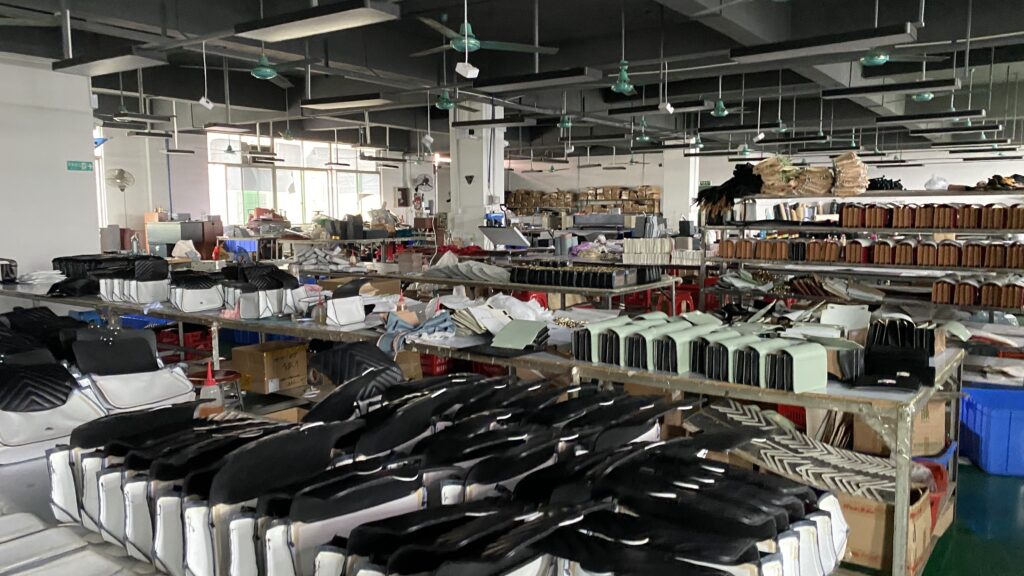
Materials Sourcing and Cost Management
Sourcing is a leverage point for brands looking to scale without eroding margins. PrinceBag’s sourcing practices focus on:
– Long-term supplier relationships that enable stable pricing and priority access to scarce materials.
– Consolidated purchasing to realize economies of scale for brands as they increase orders.
– Quality grading systems to ensure consistent feel and appearance across pockets of production.
For brands, a supplier who can also manage materials means fewer disruptions and clearer cost forecasting—critical when planning larger production runs or negotiating retail pricing.
Manufacturing Flexibility: From Small Batches to High Volumes
Not all scaling is linear—brands often need the ability to alternate between small, experimental runs and large-scale production. PrinceBag typically supports several models:
– Small-batch, fast-turn runs for testing new designs or limited editions.
– Mid-volume runs with staged ramp-up to full capacity.
– Full-scale production with dedicated lines or priority scheduling.
Practical mechanics include modular assembly stations, cross-trained workers, and dynamic scheduling. This flexibility reduces the barrier to launching new styles and allows brands to respond quickly to consumer trends.
Quality Assurance and Consistency
Consistency is a non-negotiable when scaling—defects multiply with volume and can undermine brand credibility. PrinceBag’s approach to quality typically includes:
– Incoming material inspections with defined acceptance criteria.
– In-line inspections to catch defects early.
– Final AQL (Acceptable Quality Level) checks before shipment.
– Traceability for problem batches to enable root-cause analysis.
These processes preserve the customer experience as brands grow and reduce costs associated with returns and rework.
Supply Chain Coordination and Lead-Time Optimization
Predictable lead times are essential for fashion calendars and retail commitments. PrinceBag supports lead-time optimization via:
– Master production scheduling aligned to sales forecasts.
– Buffer inventory strategies for high-risk materials.
– Just-in-Time (JIT) options for parts and trims to reduce inventory carrying costs.
– Collaborative planning with brand merchandising teams for seasonal peaks.
The result is fewer missed launches and the ability to commit to retailer timelines with confidence.
Technology and Data Transparency
Scaling requires data. PrinceBag often employs technology layers to provide visibility and improve decision-making:
– Order management systems with real-time status updates.
– Inventory tracking for raw materials and finished goods.
– Digital sample approvals and shared technical documents.
– Basic production analytics (yield, downtime, defect rates).
For brands, access to this data supports better forecasting, inventory planning, and risk mitigation.
Logistics, Warehousing, and Fulfillment
As production scales, so does the complexity of shipping finished goods to multiple markets. PrinceBag’s logistics support can include:
– Consolidated shipping for multi-style orders to reduce per-unit freight costs.
– Drop-shipping or fulfillment-on-demand services for D2C operations.
– Pre-export inspections and export documentation management.
– Warehousing options for staged deliveries or monthly offtake.
Smart logistics preserve margins and ensure timely distribution across channels.
Compliance, Ethical Sourcing, and Sustainability
Brands scaling into international markets face increasing scrutiny on labor practices and material sustainability. PrinceBag helps by:
– Supporting audits and certifications (e.g., social compliance frameworks).
– Implementing traceability practices for leather and other regulated materials.
– Offering sustainable material options and guidance on reducing waste in production.
Brands benefit from reduced regulatory risk and better alignment with consumer expectations around responsible fashion.
Communication and Partnership Models
Scaling is built on trust and communication. PrinceBag typically offers structured collaboration models:
– Designated account management for strategic planning.
– Regular production and development meetings with clear action logs.
– Escalation paths and contingency plans for disruptions.
– Co-investment frameworks in tooling or development for long-run styles.
These practices turn transactional relationships into strategic partnerships that enable joint growth.
Representative Scenarios: How PrinceBag Helps Brands Scale (Anonymized Examples)
To illustrate practical outcomes without referencing confidential client data, here are anonymized examples of how such a supplier might assist brands:
Scenario A — Emerging D2C Brand:
– Challenge: A direct-to-consumer purse brand needed to scale from 500 to 5,000 units per month while maintaining a premium handcrafted look.
– Supplier Support: PrinceBag provided a phased production ramp, trained staff on specific stitching techniques, consolidated hardware procurement, and ran a parallel sample improvement program.
– Outcome: Ramp completed in three months; defect rates reduced by half; per-unit cost decreased due to material consolidation.
Scenario B — Wholesale Expansion:
– Challenge: A contemporary label secured retail distribution and required predictable deliveries for seasonal windows at larger volumes.
– Supplier Support: PrinceBag implemented a master schedule, allocated production blocks, and established a safety stock for critical trims.
– Outcome: On-time delivery rate increased to over 95%, enabling retailer confidence and repeat orders.
Scenario C — Limited Edition and Customization:
– Challenge: A brand wanted to test limited colorways and monogramming without committing to large inventories.
– Supplier Support: PrinceBag ran small-batch colorway runs and provided an agile assembly process for monogramming add-ons.
– Outcome: The brand validated new SKUs with minimal capital and quickly scaled successful variants for wholesale.
These scenarios highlight the strategic mix of technical, operational, and commercial support needed to scale.
Risk Management and Contingency Planning
Scaling is not without risk—supply disruptions, quality incidents, and demand variability can threaten production continuity. PrinceBag mitigates risks through:
– Dual sourcing strategies for critical materials.
– Buffer inventory for high-risk items.
– Cross-training to prevent single-point labor dependencies.
– Rapid response teams for urgent rework or corrective actions.
Brands should demand clear contingency plans from suppliers and incorporate scenario planning into their own go-to-market strategies.
How Brands Should Prepare to Work with a Scaling Supplier
To maximize the value of a partnership with PrinceBag, brands should prepare on multiple fronts:
– Clear product specifications and prioritized tech packs.
– Realistic, data-driven demand forecasts and seasonal plans.
– A transparent budget for tooling, samples, and initial production costs.
– Defined quality standards and acceptable tolerances.
– A decision-making cadence for approvals to avoid production delays.
– Flexibility on lead times for new materials or novel finishes.
Active collaboration and shared expectations are essential to avoid expensive delays and to capture the full benefits of a scaling supplier relationship.
Metrics Brands Should Track in a Scaling Partnership
To evaluate partner performance and their own readiness to scale, brands should monitor:
– Lead time variability (average vs. promised).
– Units produced per month and ramp rates.
– Defect and return rates.
– Cost per unit and material cost trends.
– On-time delivery percentage.
– Inventory turnover and carry costs.
– Time-to-market from design approval to shipment.
These KPIs help identify bottlenecks and inform continuous improvement actions.
Negotiating Commercial Terms for Scalable Production
As brands scale, commercial terms become a lever to balance risk and cost:
– Volume discounts and tiered pricing to reward higher order quantities.
– Minimum order quantities (MOQs) negotiated for flexibility (e.g., smaller MOQs for new SKUs).
– Shared tooling or amortization agreements for new molds and hardware.
– Payment terms aligned with cash flow (e.g., deposit and balance at shipment).
– Penalty clauses or incentives tied to on-time delivery and quality.
A strategic negotiation considers both short-term cash flow and long-term predictable cost structures.
Choosing a Supplier: Questions Brands Should Ask PrinceBag
When evaluating PrinceBag or any supplier for scaling, brands should ask:
– What is your maximum monthly capacity for my product category?
– Can you show examples of production ramp plans and how you executed them?
– How do you source and vet critical materials (leather, hardware, linings)?
– What quality assurance processes do you use, and what are typical defect rates?
– What is your approach to sustainability and compliance?
– How do you handle urgent rework, rush orders, and seasonal spikes?
– What technology do you provide for order visibility and communication?
– Can you provide references from brands you’ve helped scale?
These questions uncover operational realities and cultural fit.
Scaling Successfully with a Trusted Purse Supplier
Scaling a purse line demands more than increased manufacturing—it requires a comprehensive supply chain partner that can align design intent, materials sourcing, technical execution, and logistics. PrinceBag’s role as a women’s purse supplier is to bridge those areas, offering the processes, capacity, and partnership mindset that let brands scale confidently.
Brands that succeed in scaling with a supplier like PrinceBag do three things well: they communicate clear expectations and forecasts; they collaborate early on technical and costing decisions; and they treat the supplier as a strategic partner involved in continuous improvement. By combining operational discipline with flexibility and transparency, brands can convert creative vision into reliably delivered product, seize market opportunities, and grow without losing the quality and identity that define their collections.
If you are a brand planning to scale production, start by auditing your product specs, forecasting needs, and risk points—then engage with prospective suppliers on concrete ramp plans and KPIs. A supplier with the right blend of capacity, capability, and collaborative approach can transform scaling from an obstacle into a competitive advantage.