
Starting a private label with a trusted supplier like PrinceBag for women’s purses can be a highly rewarding business move — allowing you to control branding, margins, and product direction while leveraging an experienced manufacturer’s capabilities. This guide walks you through each step in detail, from understanding the supplier landscape to designing a winning product line, managing quality assurance, and scaling sales. It is designed to be practical and actionable, with checklists, negotiation tips, and an analysis table to help you compare options.
Understanding Private Labeling and Why Choose PrinceBag
Private labeling means selling products manufactured by a third party under your own brand. For women’s purses, this model lets you define aesthetics, materials, hardware, and packaging without owning a factory. PrinceBag, as a supplier specializing in women’s purses, typically offers experience in design, material sourcing, production scalability, and logistics. The decision to work with them (or any specialized bag supplier) should be based on alignment with your brand vision, product quality expectations, minimum order quantities (MOQs), lead times, and communication responsiveness.
Key advantages of working with an established purse supplier:
– Faster time to market: They already have material sources and production lines.
– Lower startup costs compared to building your own factory.
– Access to expertise in construction, hardware, and finishing.
– Ability to focus on branding and sales.
Before committing, ensure PrinceBag can meet your specific needs: custom branding, label placement, material options, compliance for target markets, and flexibility with MOQ.
Step 1 — Market Research and Product Positioning
Every successful private label begins with research. You must know who you are selling to, what price point you’ll occupy, and what differentiates your purses.
Actions:
– Define target customer: demographics, lifestyle, design preferences, and spending behavior.
– Identify niches: vegan leather purses, luxury leather, minimalist crossbody, travel totes, eco-friendly options, convertible bags, etc.
– Analyze competitors: product features, price ranges, materials used, packaging, and customer reviews.
– Trends and seasonality: track color, size, and feature trends (e.g., chain straps, RFID pockets).
– Determine price bracket: value, mid-market, premium — this impacts material choice and expected margins.
Deliverables:
– A one-page product brief per purse style (target customer, price, features, materials).
– Competitor benchmarking spreadsheet.
Step 2 — Establishing Contact and Evaluating PrinceBag
Initial communication should serve two goals: verify supplier credibility and understand production capabilities.
What to ask in initial outreach:
– Company background and factory capabilities (in-house vs. subcontractors).
– Minimum order quantities (by style, by material).
– Lead times for samples and bulk production.
– Customization options: logo embossing, metal hardware, lining prints, colorways.
– Price estimates (EXW, FOB, or CIF).
– Quality control processes and certifications (ISO, leather tanning standards).
– Reference clients or case studies.
Validation steps:
– Request product photos and sample catalogs.
– Ask for sample of similar existing product. A paid sample shows seriousness.
– Check reviews, trade platform ratings, or request references.
– If possible, visit the factory or hire a third-party audit/inspector.
Step 3 — Selecting Products and Creating a Collection
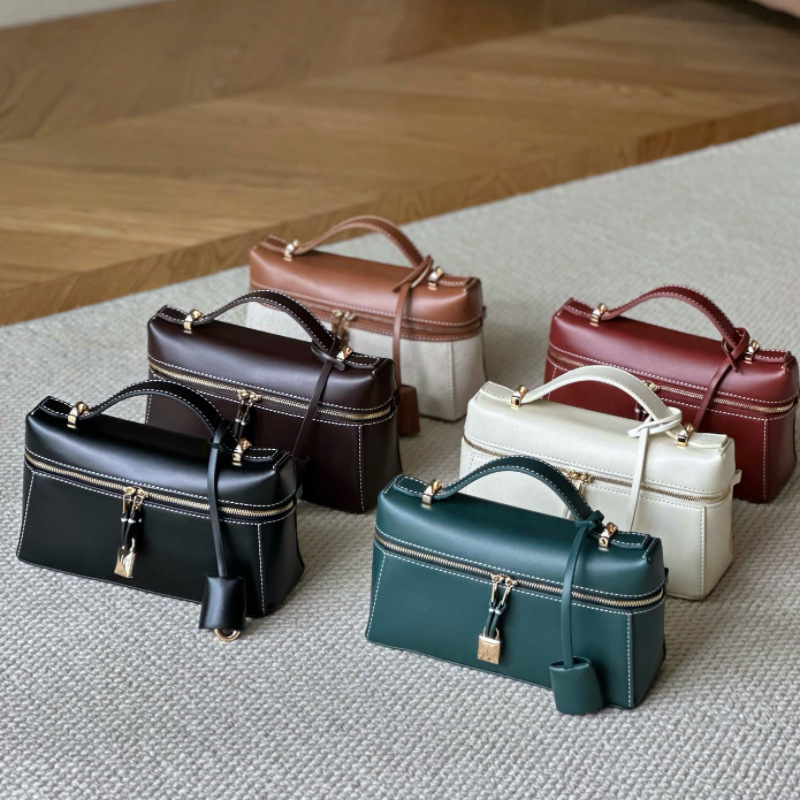
A cohesive collection helps brand recognition. Start small with 3–6 SKUs that vary by silhouette or color but share a unifying design language.
Selection criteria:
– Complementary styles (e.g., tote, crossbody, clutch).
– Shared materials to reduce tooling and material costs.
– Differentiating features for each SKU (hardware color, strap style).
– SKU rationalization: choose a limited color range initially.
Design inputs to prepare:
– Moodboard with visual references and target materials.
– Technical sketches or tech packs including dimensions, internal compartments, zipper types, hardware sizes, and stitch details.
– Branding guidelines (logo files in vector, label specs, hangtag artwork).
Step 4 — Technical Specifications and Samples
A tech pack is essential. It reduces ambiguity and ensures samples match expectations.
Tech pack components:
– Flat sketches with measurements (length, width, depth).
– Materials list: outer fabric (PU, genuine leather, canvas), lining material, interlining, threads.
– Hardware specification: zippers (brand and type), buckles, clasps, strap attachments.
– Label placement and type (woven label, leather patch, heat stamp).
– Packaging specs: dust bags, branded boxes, tissue, hangtags.
Sampling process:
– Proto sample (first visual sample).
– Fit and function test (check straps, pockets, closure).
– Pre-production sample (PPS) — final sign-off sample for bulk production.
Tips:
– Expect multiple iterations; build time and cost into your timeline.
– Ask for high-resolution photos and short videos of the sample in use.
– Test durability and wear (zipper cycles, strap pull, colorfastness).
Step 5 — Materials, Costing and the Analysis Table
Material choice drives cost, durability, and brand positioning. Below is an analysis table comparing common material options, MOQs, estimated cost per unit ranges, and pros/cons to help you decide. (Costs are indicative and depend on supplier quotes, exchange rates, and volume.)
| Material | Typical MOQ | Estimated Cost Per Unit | Pros | Cons |
|---|---|---|---|---|
| Genuine Leather (Full-grain / Top-grain) | 200–500 pcs / color | $25–$120+ | High perceived value, durability, premium finish | Higher cost, longer lead times, tanning compliance issues |
| PU Leather (High-quality vegan) | 300–1,000 pcs | $8–$40 | Lower cost, uniform look, cruelty-free | Less breathable, may crack over time, perceived as lower-end |
| Vegetable-tanned Leather | 200–500 pcs | $30–$150 | Eco appeal, unique patina, premium | Higher cost, variations in tone, care requirements |
| Canvas (Waxed or Coated) | 300–1,000 pcs | $6–$25 | Durable, casual aesthetic, often lower cost | Less luxurious, heavier in some types |
| Recycled / Eco Fabrics | 500+ pcs | $10–$60 | Sustainable branding, growing consumer interest | Higher material procurement complexity, consistency issues |
Use this table when discussing options with PrinceBag — ask them to confirm MOQs and revise cost estimates for your designs and quantities.
Step 6 — Pricing Strategy and Margins
Set retail prices based on production costs, target margins, and market positioning.
Key formulas:
– Cost per unit = manufacturing price + packaging + shipping per unit + duties + warehousing.
– Target wholesale price = cost per unit (1 + target markup) (commonly 2x–2.5x).
– Recommended retail price (RRP) = wholesale price (1.5–2x) depending on channel.
Example:
– Production price: $15
– Packaging & labels: $2
– Shipping & duties per unit: $3
– Cost per unit: $20
– Wholesale target = $40–$50
– Retail (DTC) ≈ $60–$100
Tips:
– Factor in returns and promotional discounts.
– Offer tiered pricing for launch (e.g., early-bird discounts).
– Ensure price aligns with perceived value (materials, details, and brand story).
Step 7 — Negotiating MOQs, Lead Times, and Payment Terms
Negotiation can dramatically affect your startup capital requirements.
Negotiable items:
– MOQ: Ask for smaller pilot runs for a premium per-unit price; some suppliers accept sample MOQs.
– Lead times: Clarify sample vs. bulk lead times and rush manufacturing costs.
– Payment terms: Negotiate deposit (commonly 30–50%) and balance upon shipping or after inspection. Longer-term partners may secure net terms.
– Packaging and add-ons: Negotiate inclusion of dust bags or branded boxes at a reduced price for initial order.
Negotiation tips:
– Bundle multiple SKUs to meet MOQ.
– Commit to a 12-month forecast in exchange for better pricing.
– Pay attention to currency fluctuations; ask for prices in your preferred currency.
– Use multiple quotations to leverage competitive offers.
Step 8 — Quality Control and Inspections
Consistency is essential. Define quality standards upfront and build QC checkpoints into the production timeline.
QC steps:
– Pre-production inspection (materials and trims).
– During production: random checks at specified milestones (first 30%, mid-run).
– Pre-shipment inspection (100% visual or AQL sampling).
Key QC criteria:
– Stitch density and uniformity.
– Seam strength and edge finishing.
– Hardware function and plating quality.
– Color consistency across batches.
– Label and logo placement adherence.
Hiring third-party inspectors:
– Use established inspection services (SGS, Bureau Veritas) or local QC agents.
– Provide inspection checklists and sample photos for reference.
– Allocate budget: typical inspection fees plus any corrective action costs.
Step 9 — Packaging, Branding, and Compliance
Packaging is part of the unboxing experience and brand storytelling. Decide on functional packaging (to protect during shipping) and branded packaging (for premium perception).
Components:
– Dust bags, boxes, tissue paper, hangtags, and care cards.
– Labels: woven, printed, or embossed leather patches.
– Barcodes and product labeling for retail and logistics.
– Regulatory compliance: materials and dyes must meet safety regulations for target markets (e.g., REACH in EU, CPSIA for certain accessories in US).
Trademark and IP:
– Register your brand name and logo in your target markets to protect against counterfeiting.
– Ensure your designs don’t infringe on existing trademarks or patented hardware.
Step 10 — Logistics: Shipping, Duties, and Warehousing
Decide on shipping method: air (fast, expensive), sea (cheaper, slower), or express couriers for small parcels.
Key considerations:
– Incoterms: EXW, FOB, CIF — each affects who handles logistics and costs.
– Duties and taxes: classify products using HS codes. Duties vary by material and country.
– Lead time buffer: sea freight often adds 30–45 days plus customs clearance.
– Warehousing: consider fulfillment options (3PL, Amazon FBA, or your own warehouse).
Cost-saving tips:
– Consolidate shipments and plan seasonal inventory early.
– Use bonded warehouses or fulfillment centers to delay duty payment until distribution.
– Optimize packaging dimensions to reduce volumetric freight costs.
Step 11 — Launching Your Collection: Sales Channels and Marketing
Choose channels based on brand: Direct-to-consumer (DTC) via your website, marketplaces (Amazon, Etsy), wholesale to boutiques, or department stores.
Marketing tactics:
– Product photography and lifestyle shots; include close-ups of hardware and interior.
– Build a narrative: founder story, material sourcing, craftsmanship.
– Influencer collaborations and unboxing campaigns.
– Email marketing to build pre-launch lists and generate initial momentum.
– Paid ads (social and search) targeted by demographic and interests.
Retail readiness:
– Provide retailers with line sheets, wholesale pricing, MOQ, lead times, and payment terms.
– Prepare high-quality product images and spec sheets for listings.
Step 12 — Managing Returns, Warranty, and Customer Service
Plan for returns and customer complaints — these affect reputation more than price.
Return policy essentials:
– Clear return windows and conditions (unworn, tags attached).
– Define who bears return shipping costs for defects vs. dissatisfaction.
– Offer repair services for premium lines (stitching, hardware fixes) as part of warranty.
Customer service:
– Train your team to handle inquiries about materials, care instructions, and fit.
– Collect and act on feedback; use it to improve future production runs.
Step 13 — Scaling Production and Diversifying Product Lines
Once your initial collection proves successful, plan how to scale.
Scaling strategies:
– Increase order volumes to reduce per-unit costs.
– Add colorways and seasonal editions that reuse the same molds and hardware.
– Introduce accessories (wallets, straps, small leather goods) leveraging existing supply chains.
– Consider co-branding or exclusive retail partnerships.
Operational considerations:
– Forecast demand realistically; use sales data to plan inventory.
– Strengthen supplier relationships for priority production slots during peak seasons.
– Invest in quality controls and audits as volumes grow.
Step 14 — Legal Agreements and Protecting Your Business
Contracts with PrinceBag should clearly document expectations to avoid disputes.
Key contract elements:
– Product specifications and approved samples as attachments.
– Pricing schedule with conditions (volume tiers, lead time variations).
– Payment terms and penalties for late delivery.
– Quality standards and remedy procedures for defects.
– IP clauses: ownership of designs, restrictions on supplier producing identical products for others.
– Confidentiality and non-circumvention clauses.
Legal counsel:
– Use a lawyer familiar with international trade to review terms.
– For large orders, include arbitration clauses and specify jurisdiction.
Step 15 — KPI Tracking and Continuous Improvement
Measure performance to improve margins and customer satisfaction.
Suggested KPIs:
– Cost of goods sold (COGS) per SKU.
– Return rate and reasons (quality, sizing, dissatisfaction).
– Lead time variance (quoted vs. actual).
– Sales velocity (units sold per week/month per SKU).
– Customer satisfaction (reviews and NPS).
Continuous improvement:
– Use customer feedback to refine designs.
– Implement A/B testing for product photography and descriptions.
– Optimize packing to reduce damage and shipping costs.
Sample Timeline and Budget (Illustrative)
A realistic timeline for first private-label production can span 3–6 months depending on complexity.
Sample timeline:
– Week 1–2: Market research and supplier selection.
– Week 3–4: Design briefs and tech pack creation.
– Week 5–8: Sampling iterations.
– Week 9–12: Pre-production and tooling (if any).
– Week 13–18: Bulk production.
– Week 19–22: Shipping, customs, and fulfillment setup.
Illustrative startup budget (for a small first order of 300 units across 3 SKUs):
– Samples and prototypes: $750–$2,000
– Production cost (300 units @ $20 avg): $6,000
– Packaging: $600
– Shipping (sea + local): $800–$1,500
– Quality inspections: $300–$800
– Marketing & photography: $1,000–$3,000
– Misc (duties, legal): $500–$1,000
Total estimate: $10,000–$15,000
Checklist for Launching a Private Label with PrinceBag
– Finalize target customer and product brief.
– Confirm PrinceBag’s MOQ, lead times, and sample policy.
– Provide detailed tech packs and branding assets.
– Approve prototype and sign off on pre-production sample (PPS).
– Agree on payment terms and sign purchase contract.
– Schedule QC inspections and define acceptance criteria.
– Confirm packaging, labels, and shipping terms.
– Prepare marketing assets and launch plan.
– Register trademarks in target markets.
– Setup returns and after-sales processes.
Final Tips and Common Pitfalls to Avoid
– Avoid vague tech packs — the clearer the specs, the fewer surprises.
– Don’t skip samples — they are the single most important tool to ensure production quality.
– Budget for overruns — initial orders often cost more due to sampling, testing, and smaller batch inefficiencies.
– Don’t compromise on branding — quality packaging and storytelling justify higher prices.
– Maintain good communication — daily or weekly updates during critical phases prevent delays.
– Protect intellectual property — register trademarks and have clear IP clauses in contracts.
Starting a private label with PrinceBag (or any specialized women’s purse supplier) is a step-by-step process that combines market insight, strong product specifications, diligent supplier management, and effective marketing. By following a structured approach — from researching your niche to executing production and scaling thoughtfully — you can build a compelling purse brand that resonates with your customers. Use the tables and checklists above to guide discussions with PrinceBag, negotiate favorable terms, and ensure that your first collection is both on-brand and commercially viable.