
Minimum Order Quantity (MOQ) is a critical operational and commercial lever for both manufacturers and buyers in the ladies’ bag industry. For PrinceBag Ladies Bag Factory, understanding and applying MOQ effectively can mean the difference between profitable production runs and inefficient resource use. This guide explains what MOQ is, why it matters, how PrinceBag typically sets MOQs, how buyers can work with varying MOQs, practical cost models, negotiation strategies, and real-world examples to help importers, wholesalers, private-label brands, and small retailers make informed decisions.
What is Minimum Order Quantity (MOQ) and why it matters
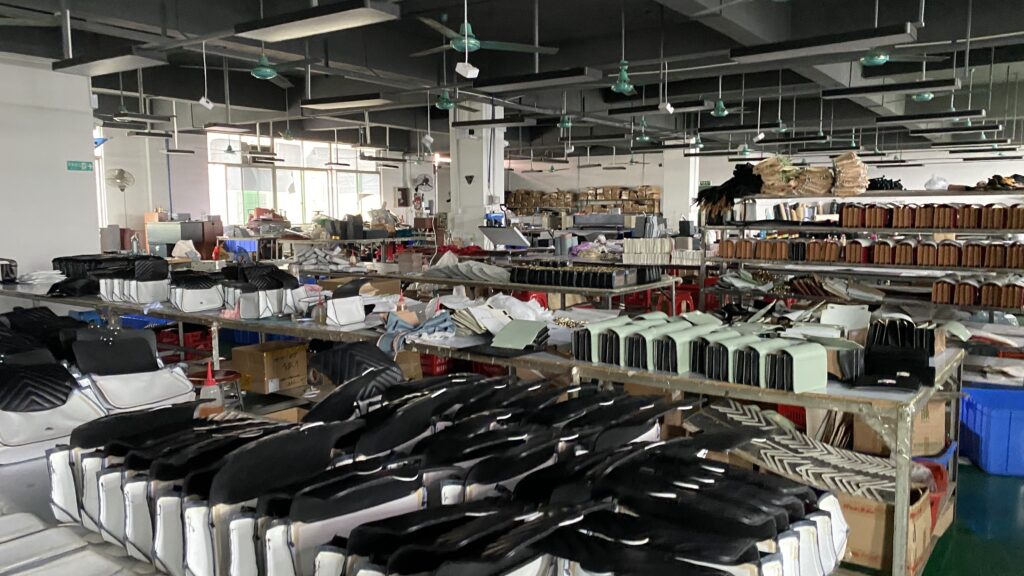
MOQ is the smallest number of units a supplier is willing to produce in a single order. It reflects the supplier’s need to cover fixed costs—tooling, setup, material procurement, and production line allocation—while achieving acceptable unit economics. For PrinceBag Ladies Bag Factory, MOQs are influenced by material types (PU, genuine leather, canvas), production processes (cut-and-sew vs. molded components), accessory complexity (zippers, hardware), and customization level (branding, lining patterns).
Why MOQ matters:
– Cost-efficiency: Larger orders amortize fixed setup costs over more units, lowering per-unit price.
– Supply chain stability: A sensible MOQ ensures stable production scheduling and reduces frequent changeovers.
– Inventory and cash flow implications: Buyers must balance MOQ against storage capacity and working capital availability.
– Design and quality control: Sufficient quantities can justify higher upfront investment in tooling and quality assurance.
Key factors PrinceBag considers when setting MOQs
– Material sourcing minimums: Suppliers of leather, lining, hardware often have their own MOQ or batch constraints.
– Tooling and molds: Custom hardware or bag frames may require molds or dies; amortizing that cost demands a higher MOQ.
– Labor and assembly complexity: Highly detailed or hand-finished bags raise labor time per unit and may require higher volumes to justify specialized workforce allocation.
– SKU proliferation: Multiple colors, sizes, or minor variations can raise effective MOQ per SKU.
– Lead time and capacity: During peak seasons, factories may raise MOQ to optimize throughput.
– Quality control and testing: New designs may require prototypes and testing; cost allocation can raise initial MOQ.
How PrinceBag typically structures MOQ offers
PrinceBag’s approach is pragmatic and tiered:
– Standard SKU, standard materials: Typical MOQ ranges from 300–1000 pieces per color per style for PU and canvas bags.
– Genuine leather and high-end finishes: MOQs often start at 500–1500 pieces due to material costs and longer processing times.
– Customized hardware or embossed logos: Additional MOQ for hardware sets or tooling may be required; sometimes 1000+ units.
– Private-label small-batch solutions: For startups and boutiques, PrinceBag may offer “starter” runs of 100–300 units with a premium on unit price to cover additional handling and smaller batches.
– Mixed-color or mixed-material orders: Aggregate MOQ across colors or materials may be allowed (e.g., 1000 units split into 5 colors of 200 each) but often with minimum per-color thresholds.
How to calculate break-even MOQ: a practical model
Determining the break-even MOQ helps buyers decide whether an order size is viable. The formula is:
Break-even MOQ = Fixed Costs / (Target Price per Unit – Variable Cost per Unit)
Where:
– Fixed Costs include tooling, die/cutter, initial sample development, setup labor, and testing.
– Variable Cost per Unit includes materials, direct labor, packaging, and per-unit overhead.
Example calculation (simplified):
– Tooling cost (hardware molds, embossing dies): $2,000
– Initial sample and testing: $300
– Additional setup labor and QC time: $200
– Total fixed costs = $2,500
– Variable cost per unit = $6.50
– Target selling price per unit (the buyer expects) = $12.00
Break-even MOQ = 2500 / (12 – 6.5) = 2500 / 5.5 ≈ 455 units
This means to reach a margin that can absorb the fixed costs at that price point, the buyer would need to order about 455 units.
Analysis table — MOQ scenarios and unit economics
| Scenario | Fixed Costs | Variable Cost/Unit | MOQ | Unit Price | Total Cost | Unit Cost | Profit/Unit |
|---|---|---|---|---|---|---|---|
| Small Batch (starter) | $2,500 | $6.50 | 200 | $12.00 | $2,500 + $1,300 = $3,800 | $19.00 | -$7.00 |
| Medium Batch | $2,500 | $6.50 | 500 | $12.00 | $2,500 + $3,250 = $5,750 | $11.50 | $0.50 |
| Large Batch | $2,500 | $6.50 | 1,500 | $12.00 | $2,500 + $9,750 = $12,250 | $8.17 | $3.83 |
Interpretation:
– Smaller batches can be attractive for testing but are often loss-making or low-margin unless the buyer accepts a higher unit price.
– Larger batches reduce per-unit fixed-cost impact and improve margins.
Strategies for small buyers to work with MOQ
1. Consolidation and aggregation:
– Combine SKUs or colors: Negotiate aggregate MOQ where the factory allows multiple variants within a total order volume.
– Group buying: Partner with other small retailers to place a joint order under one purchase order (clear agreement on allocation is essential).
2. Pay for partial tooling or amortize tooling separately:
– Offer to pay tooling as a one-time investment and negotiate a lower per-unit price, or structure the tooling cost as a separate line item to be amortized over reorders.
3. Higher unit price for lower MOQ:
– If you need a smaller run, accept a higher unit price that compensates the factory. This is often acceptable for small runs and special collections.
4. Use standard components:
– Choose commonly stocked materials and hardware to avoid extra costs and reduce MOQ requirements.
5. Pre-orders and crowdfunding:
– Validate demand through pre-orders; use this to justify MOQ to PrinceBag, sharing the sales data as evidence of demand.
6. Start with a prototype or pilot run:
– Order a small presale or sample batch (e.g., 50–100 units) at a premium. Use it to gather feedback and fund the full production run.
Negotiation levers with PrinceBag
When negotiating MOQs, consider these levers:
– Forecast sharing: Provide a realistic 6–12 month forecast to show commitment; factories often respond to reliable forecasts.
– Payment terms: Offering partial upfront payment or shorter payment cycles can sometimes secure lower MOQs.
– Design flexibility: Agree to use factory-standard lining, hardware, or colors to avoid custom tooling and reduce MOQ.
– Long-term contract: Commit to multiple collections or reorder frequency in exchange for a lower first-order MOQ.
– Shared tooling cost: Propose the buyer funds part or all tooling costs, with an agreement on amortization over future orders.
– Co-branding or co-development: For higher-end collaborations, develop a shared-cost product line to distribute risk.
Sample negotiation script:
– Buyer: “We are launching a new line and want to start with 300 units to test market response. We understand this is below your standard MOQ. We can accept a 10% premium on the unit price and cover 50% of tooling as a shared investment if you can accommodate 300 pieces with 2 colorways of 150 each.”
– Factory (PrinceBag) response points to expect: Request for forecast, ask for color split, propose per-unit price with premium, offer pilot order at higher price and outline timeline.
Quality control and sampling process
Good quality control reduces returns and improves brand reputation. PrinceBag typically recommends:
– Pre-production samples (PPS): Confirm color, hardware, and zippers.
– First article inspection: Check the first production unit or first production lot to ensure compliance.
– In-process inspections: Periodic checks during production at key milestones.
– Pre-shipment inspection (PSI): Final random sampling before packing and shipping.
– Lab testing for material claims: If claiming water resistance, leather grade, or fire retardancy, request independent testing.
Costs: Sampling and testing are often charged separately. Rapid prototyping or rush sampling increases costs and may influence MOQ decisions.
Logistics, lead times, and inventory planning
Lead times depend on complexity and factory schedule:
– Standard run: 30–60 days from order confirmation to shipment (includes material procurement and production).
– High complexity or peak season: 60–90 days.
– Express or rush production: possible but with additional cost.
Inventory planning tips:
– Align MOQ with sales cycle: Seasonal styles may require faster turnover; avoid oversized MOQs that lead to deadstock.
– Safety stock: For steady sellers, plan buffer stock to avoid stockouts due to production and shipping delays.
– Reorder points: Calculate reorder points considering lead time and average demand: Reorder Point = (Average Daily Sales × Lead Time Days) + Safety Stock.
Case studies — applying MOQ strategy
Case study A: Emerging boutique brand
– Need: Test 3 bag styles in 2 colors each; limited budget.
– PrinceBag solution: Pilot run of 150 units per style (50 per color), at premium price, with tooling amortized across future orders. Outcome: After pre-sales, reorder for successful styles at 800 units, lowering per-unit costs.
Case study B: Established private label
– Need: 4 SKUs with custom hardware.
– PrinceBag solution: Factory required a tooling MOQ of 1000 units for hardware. Buyer funded tooling, negotiated payment terms, and committed to scheduled reorders over 12 months. Outcome: Achieved lower per-unit cost and consistent quality.
Case study C: Multi-retailer consolidation
– Need: Several small boutiques formed a buying group.
– PrinceBag solution: Group PO for 1200 units split among retailers, accepted aggregate MOQ, and PrinceBag provided proportional packaging and invoicing. Outcome: Each retailer obtained acceptable quantities with reduced unit cost.
Analysis table — negotiation levers and expected impact
| Negotiation Lever | Action | Typical Impact on MOQ | Trade-offs |
|---|---|---|---|
| Aggregate Ordering | Combine colors/SKUs or group purchases | Reduce per-SKU MOQ | Complex coordination; inventory allocation required |
| Tooling Cost Sharing | Buyer pays tooling upfront | Lower MOQ or faster acceptance of small batch | Higher upfront cash outlay |
| Premium Unit Price | Accept higher per-unit cost for small run | Factory accepts lower MOQ | Lower margin or higher retail price |
| Long-Term Commitment | Sign multi-order agreement | Factory lowers MOQ for initial run | Requires sales certainty and forecasting |
| Design Flexibility | Use factory-standard materials | Reduced or waived custom MOQ | Less distinct differentiation |
Practical checklist for buyers before placing order with PrinceBag
– Validate design: Confirm technical pack, materials, dimensions, hardware references.
– Request BOM (Bill of Materials): Ensure all components are specified and priced.
– Confirm MOQ per SKU and allowability of color splits.
– Get a clear quote: Include tooling, sampling, unit price, packaging, labels, and any extra charges.
– Agree on payment terms: Deposit, balance, and acceptable payment methods.
– Define lead times and minimum acceptable delivery dates.
– Specify inspection and testing requirements; decide on third-party QC if needed.
– Confirm packaging and carton dimensions for freight estimates.
– Negotiate after-sales support: defect rate tolerance, replacement policies, and return handling.
How to use MOQs in product development and assortment planning
– Use a tiered assortment: Flagship designs at larger MOQ for stable core assortment, and limited-edition small-batch runs for testing trends.
– Rotate colorways seasonally: Use smaller color runs for trend-led colors and larger runs for perennial neutrals.
– Data-driven replenishment: Track sell-through rates and convert successful small runs into full MOQ reorders quickly.
– Cost plus pricing: Include MOQ amortization in initial costing to ensure margin targets.
Risks associated with ignoring MOQ considerations
– Cash flow strain: Overcommitting to large MOQs without sales can tie up capital.
– Overstock and obsolescence: Fashion risk where styles become outdated before selling.
– Compromised margins: Accepting lower MOQ without adjusting price can lead to losses.
– Supplier friction: Repeatedly pushing for unreasonable MOQs without concessions may damage relationships.
Final recommendations — getting the most from PrinceBag’s MOQ policy
– Build relationships: Reliable communication and predictable ordering behavior are rewarded. PrinceBag will more likely accommodate flexible MOQ terms for buyers with consistent histories.
– Start smart: Use pilot runs, pre-orders, and tighter inventory controls to validate designs without excessive risk.
– Be transparent: Share sales data and forecasts; suppliers value transparency and will consider bespoke MOQ arrangements in return.
– Negotiate creatively: Combine financial incentives (tooling coverage, premium price) and operational fairness (reorder commitments) to achieve workable MOQs.
– Focus on total landed cost: Never evaluate MOQ purely on unit price—consider freight, duties, inspection, and carrying costs to determine the real viability of an order.
Minimum Order Quantity is not merely a number—it’s a negotiation point, a planning tool, and a design-for-manufacturing constraint that shapes profitability and operational risk. PrinceBag Ladies Bag Factory balances factory economics and buyer needs by offering tiered MOQ approaches, pilot runs, and negotiation options like tooling cost sharing and aggregate orders. Whether you are a startup testing a concept or an established brand scaling a line, understanding and actively managing MOQ is essential. Use the tools and strategies in this guide—cost models, negotiation levers, and practical checklists—to create a purchasing strategy that aligns production efficiency with market demand and financial goals.