
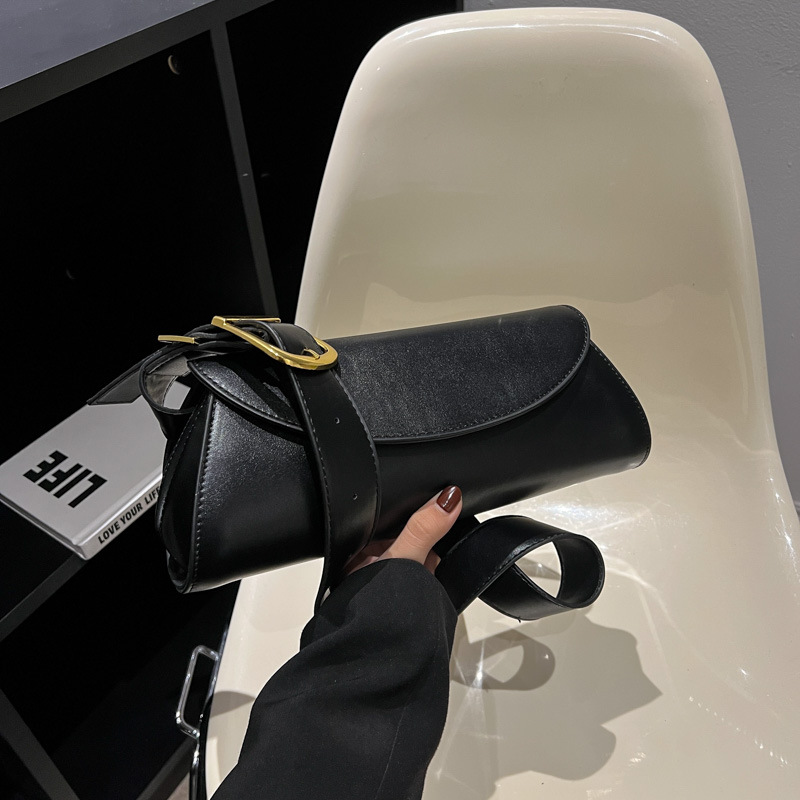
The global handbag market has evolved from seasonal trends into a stable growth category driven by functionality, quality and lifestyle positioning. Among handbag silhouettes, crossbody bags for women have secured a premium position because they combine practicality with fashion: hands-free convenience, versatile sizing, and wide stylistic adaptability. For retailers, brands and distributors evaluating B2B suppliers, partnering with a factory that can deliver premium crossbody bags in bulk is a strategic move to control cost, ensure consistent quality and accelerate time-to-market.
PrinceBag Factory positions itself as a dedicated B2B partner focused on delivering premium crossbody bags for women—combining factory-level cost advantages with design-led thinking, robust quality management and flexible customization. This article explores the features and capabilities that make such a factory an optimal partner for brands and retailers, with practical advice on MOQ, lead times, materials, certifications, pricing and logistics.
PrinceBag Factory at a Glance
A reliable premium crossbody supplier must deliver across five core areas: design expertise, material sourcing, production capacity, quality control and after-sales support. PrinceBag Factory’s profile typically includes:
– Production facilities with dedicated leather and fabric workshops.
– Specialized teams for pattern making, prototyping and sample development.
– Access to reputable material suppliers for full-grain leather, top-grain leather, sophisticated vegan leathers and technical textiles.
– Certifications and compliance programs geared toward international retail standards.
– Skilled workforce capable of small-batch custom runs as well as high-volume orders.
For B2B buyers, these attributes provide predictability: consistent fit and finish across runs, clear lead-time expectations and structured costing that supports margin planning.
Design and Materials: Building Premium Appeal
The perceived premium of a crossbody bag starts with materials and construction:
– Leather Options: Full-grain leather and corrected top-grain leather remain the most sought-after for premium lines. Leather choices influence patina, durability and price points. PrinceBag Factory can source European and South American hides for clients requiring specific grain or finish.
– Vegan and Bio-Based Leathers: High-quality polyurethane (PU) leathers, microfiber leathers and emerging bio-based leathers can meet sustainability and price targets for certain brand positions.
– Hardware and Trims: Zippers (YKK, RIRI), metal hardware (nickel-free, gold-plated), magnetic closures and chain straps must meet durability and aesthetic standards. Premium hardware elevates perceived value and longevity.
– Linings and Internal Organization: Branded jacquard linings, RFID pockets and removable pouches add functionality that justifies higher retail prices.
– Stitching and Edge-Finishing: Reinforced stitching, edge paint, burnished edges and hand-finished details are hallmarks of premium production.
Design teams at PrinceBag Factory collaborate with clients on tech packs, fit samples and trim selections to achieve the desired balance of cost, weight and finishing.
Customization and Private Label Services
One of the primary reasons brands work B2B with a factory like PrinceBag is private label capability:
– Logo Application: Embossing, hot-stamping, metal logo plates, woven labels and heat transfers.
– Colorways and Pantone Matching: Small-batch dyeing and special color runs for seasonal collections.
– Packaging and Presentation: Custom dust bags, gift boxes, hangtags and care cards to support retail presentation.
– Functionality Customization: Adjustable straps, modular inserts, convertible straps (crossbody to shoulder), anti-theft features.
– OEM/ODM Flexibility: From following a client’s tech pack (OEM) to delivering new designs for retailers (ODM), PrinceBag Factory offers both pathways.
Typical MOQs for customization vary by component—metal hardware often requires higher minimums, while fabric or lining changes may be feasible at lower quantities. Clear communication of priorities (cost vs. uniqueness) helps determine the most efficient customization strategy.
Quality Control, Testing and Certifications
For internationally distributed premium products, quality control and compliance are non-negotiable:

– Incoming Material Inspection: Full checks of leather hides, fabrics, linings and hardware against agreed specifications.
– In-Process Checks: Stitching, seam allowances, zipper function, strap attachment points and edge finishing are inspected at defined production milestones.
– Final Inspection (AQL): Acceptance Quality Limit inspections by trained QC teams to ensure consistent quality.
– Testing: Colorfastness, abrasion resistance, tensile strength for straps, and hardware plating tests.
– Certifications: ISO 9001 for quality management, REACH compliance for restricted chemicals, and customer-requested documentation like COA or lab test results.
PrinceBag Factory typically provides inspection reports and can facilitate third-party inspections (SGS, BV) for buyers requiring independent verification.
| Model | Material | MOQ (pcs) | Lead Time (weeks) | Typical FOB Price (USD) |
|---|---|---|---|---|
| Mini Leather Crossbody | Top-grain Cowhide | 200 | 6-8 | $28 – $42 |
| Classic Leather Crossbody | Full-grain Leather | 300 | 8-10 | $45 – $70 |
| Vegan Leather Tote-Crossbody | High-grade PU / Bio-leather | 300 | 6-9 | $20 – $35 |
| Nylon Sports Crossbody | Waterproof Nylon | 500 | 4-6 | $12 – $20 |
| Chain-Strap Evening Crossbody | Synthetic Suede + Metal Chain | 250 | 7-9 | $30 – $55 |
| Tech Organizer Crossbody | Microfiber + RFID Lining | 300 | 7-8 | $22 – $38 |
Production Capacity and Lead Times
A factory’s ability to scale reliably is crucial for B2B buyers:
– Sample and Proto Phase: Typically 7–14 days for basic prototypes; more complex or bespoke hardware may add 2–4 weeks.
– Small Batch Runs: For MOQ orders, production can take 4–8 weeks depending on material availability and customization.
– Mass Production: For larger orders (thousands of pieces), standard lead times are often 8–12 weeks, with seasonal peaks potentially extending that.
– Peak Season Planning: Apparel and accessory factories require advance planning for peak seasons—Chinese New Year, end-of-year holidays and major fashion seasons. Buyers who plan shipments and secure materials early get better timeline control.
PrinceBag Factory can support staggered shipments and partial deliveries to optimize retail inventory flows and cash cycles.
Pricing, Payment Terms and B2B Negotiation
Working with a factory requires clarity on commercial terms:
– Pricing Structures: FOB pricing is common for international buyers, with EXW or CIF upon request. FOB covers goods loaded onto the chosen vessel at the port of origin.
– Volume Discounts: Tiers typically start at 300–500 pieces with meaningful cost reductions at 1,000+ units.
– Payment Terms: Standard terms might be 30% deposit at order confirmation, 70% balance before shipment. Established customers can negotiate L/C at sight or net terms.
– Cost Drivers: Material quality, hardware complexity, lining and internal organization, and finishing (hand-burnished edges, painted edges) are primary drivers. Buyers trade off between design originality and per-unit cost.
– Hidden Costs: Tooling fees for custom molds, metal stamping dies and color matching surcharges should be negotiated up front.
Transparent costing and a written quotation with inclusions/exclusions are essential to avoid later disputes.
Logistics, Packaging and After-Sales Support
B2B relationships extend beyond production to logistics and support:
– Shipping Options: Air for urgent retail replenishment, sea for cost efficiency. PrinceBag Factory can coordinate FOB shipments and work with buyer-preferred freight forwarders.
– Packaging: Bulk cartons sized to maximize container efficiency; retail-ready boxes and hangtags supplied per buyer spec.
– Customs Documentation: Commercial invoices, packing lists, COs and any specific documentation for preferential tariffs.
– After-Sales Support: Warranty for manufacturing defects, spare-part availability for hardware, and assistance with reorders and seasonal adjustments.
– Reverse Logistics: For retailers with returns, a clearly defined returns process and thresholds for acceptable defect rates are necessary.
A responsive customer service team minimizes friction—critical for brands managing multiple SKUs and seasonal campaigns.
Sustainability and Ethical Manufacturing
Sustainability is no longer optional for many premium brands:
– Eco-Friendly Materials: Options include recycled nylon, bio-based leathers and low-VOC PU finishes.
– Waste Reduction: Cutting optimization, offcut reuse programs and partnerships with recycling plants.
– Responsible Sourcing: Traceability of leather and supply-chain audits to ensure ethical sourcing.
– Labor Standards: Compliance with local labor laws, fair wages and safe working conditions; many brands request third-party social audits (BSCI, SA8000).
– Chemical Management: Restricted substance lists and testing protocols to comply with REACH and other regional regulations.
PrinceBag Factory typically collaborates with buyers on sustainability goals, providing certification documentation and progress reports when required.
How Retailers and Distributors Can Work with PrinceBag Factory
A streamlined engagement model helps B2B buyers evaluate and onboard a factory quickly:
1. Initial Inquiry: Share brand positioning, target retail price, target volumes and desired lead times.
2. Design Alignment: Exchange tech packs, inspiration boards, material preferences and logo requirements.
3. Sampling & Approval: Receive proto samples for fit, color and finish approval. Iterate until spec is locked.
4. Quotation & Terms: Receive an itemized quote, MOQ, lead times and payment terms.
5. Production: Confirm PO and begin production with regular status updates and checkpoints.
6. Inspection & Shipping: Conduct AQL inspections and arrange shipment as agreed.
7. Post-Delivery: Open channels for feedback, warranty claims and reorder planning.
Clear communication, shared timelines and mutual KPIs (defect rates, on-time delivery) make the partnership efficient.
Case Study: Scaling a Boutique Brand to National Distribution
A hypothetical example illustrates the value chain:
– Scenario: A boutique womenswear brand wants to scale a premium crossbody line into department stores.
– Challenge: Control unit cost while maintaining premium materials, accelerate sampling and ensure seasonal on-time deliveries.
– Approach: The brand partners with PrinceBag Factory to co-develop a classic leather crossbody. The factory produces an initial sample run (50 pcs) to refine fit, then scales to a 1,000-piece production with phased deliveries.
– Outcome: With negotiated volume pricing, the brand achieved a 40% margin expansion relative to the prior small-batch manufacturer, maintained consistent quality across stores and met peak-season replenishment targets.
This kind of partnership demonstrates how a factory’s manufacturing and logistics expertise directly supports retail expansion.
Why Choose PrinceBag for Premium Crossbody B2B Supply
For retailers and brands seeking a long-term B2B partner in the premium crossbody bag segment, PrinceBag Factory offers a compelling combination of design collaboration, robust material sourcing, flexible customization and reliable production capacity. Key advantages include:
– Consistent quality through rigorous QC and testing.
– Flexibility across leather, vegan and technical material categories.
– Competitive FOB pricing with volume discounts and clear commercial terms.
– Support for private label, custom packaging and seasonal scaling.
– Commitment to sustainability and compliance for international distribution.
When evaluating suppliers, buyers should prioritize sample quality, transparency of lead times and evidence of production capacity. A partner that maps design intent to factory realities—like PrinceBag Factory—can turn an idea into a repeatable, profitable SKU that delights customers and scales with market demand.