


PrinceBag’s reputation for reliable delivery and consistent product quality rests on a multi-layered quality assurance approach tailored for bulk orders. Supplying women’s purses at scale demands attention to material sourcing, production control, inspection protocols, and communication with buyers. For large-volume customers — retailers, private-label brands, or corporate buyers — PrinceBag combines proactive processes, skilled teams, and measurable systems to make sure every shipment meets specifications, minimizes defects, and arrives on time. The following explores how PrinceBag ensures quality for bulk orders, the tools and checkpoints they use, and practical guidance for buyers who want predictable, high-quality results.
Understanding the Customer Need: From Specification to Strategy
The foundation of quality in bulk production is a clear, shared understanding of the customer’s requirements. PrinceBag begins every bulk project with a comprehensive requirements capture phase. This includes product specifications (dimensions, compartments, hardware types), performance requirements (load capacity, wear resistance), appearance standards (color codes, texture, finishing), packaging and labeling demands, supply timelines, and pricing constraints.
A detailed tech pack or specification sheet becomes the single source of truth, and PrinceBag encourages mutual sign-off at the sample approval stage. For private-label orders, they accept and help refine artwork files, brand marks, hangtags, and care instructions so that quality checks can be tied directly to the buyer’s brand expectations.
Strategic Material Sourcing and Supplier Management
Quality starts with raw materials. PrinceBag maintains strategic supplier relationships for leather, PU, fabrics, linings, zippers, threads, hardware (buckles, chains, rivets), and accessories. Their sourcing strategy emphasizes:
– Approved vendor lists (AVL): Only pre-qualified suppliers—evaluated for quality, lead time, capacity, and compliance—are used for bulk orders.
– Material testing: Incoming materials are tested for colorfastness, tensile strength, abrasion resistance, and formaldehyde/chemical content where applicable.
– Traceability: Each material lot receives a batch code linking it back to the supplier, mill certificate, and test results.
– Diversification: Multiple vetted sources for critical items reduce single-supplier risk and prevent production stoppages.
This disciplined approach ensures raw material variance is minimized, which is essential when producing thousands of units to the same standard.
Design Validation and Pre-Production Samples
Before mass production, PrinceBag produces several tiers of samples: prototype, pre-production (PP) sample, and bulk-production sample. Each stage tightens tolerances and finalizes finishing details. Key activities include:
– Fit, form, and function checks: Confirming dimensions, strap lengths, pocket placements, and hardware operation.
– Aesthetic checks: Color matching (using lab dips or Pantone references), grain/texture consistency, and seam appearance.
– Durability simulation: Basic functional testing on zippers, attachments, and strap connections.
Buyers are encouraged to approve the PP sample formally. Approval triggers the manufacturing run plan and final inspection criteria. Any requested changes are documented and re-sampled until sign-off.
Production Workflow and In-Line Quality Controls
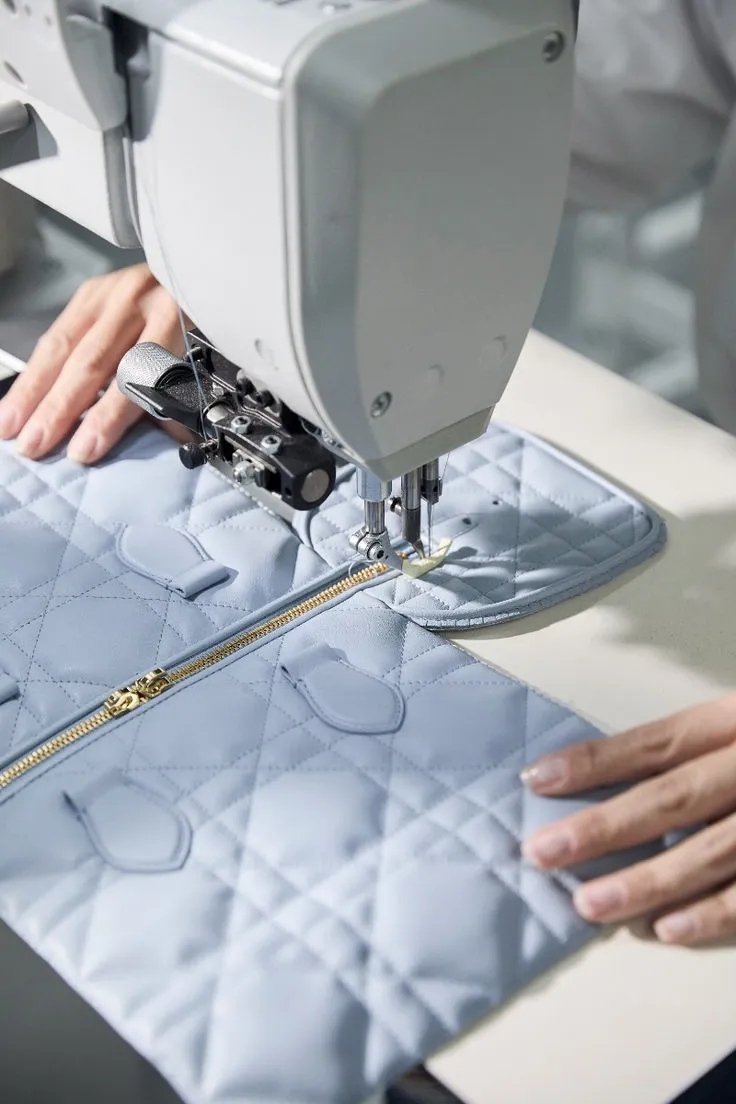
PrinceBag’s factory layout and process control are optimized for repeatability and scalability. Standard operating procedures (SOPs) for every production stage—cutting, skiving, stitching, assembly, edge finishing, hardware attachment, and final trimming—ensure consistent workmanship.
In-line quality controls are deployed at defined process stages:
– Incoming material check: Inspectors verify batch labels, measure and test samples, and record results before materials enter production.
– Cutting stage checkpoints: Pattern placement and cutting accuracy are monitored to prevent miscuts and inconsistent shapes.
– Stitching checkpoints: Stitch counts, stitch length, tension, and seam alignment are checked periodically.
– Hardware attachment checkpoints: Torque or crimping settings for rivets and buckles are controlled; mechanical attachments are validated for strength.
– Mid-line sample audits: Random samples taken from work-in-progress (WIP) are verified against PP sample criteria.
Operators are trained on defect recognition and empowered to stop the line if critical non-conformities arise. This culture of accountability reduces downstream rework and scrap.
Statistical Process Control and Production Sampling
For bulk orders, PrinceBag leverages statistical process control (SPC) to monitor key variables such as stitch density, component dimensions, and production defect rates. SPC charts identify trends before defects accumulate, enabling corrective action in real time.
Production sampling follows AQL (Acceptable Quality Limit) principles tailored to the customer’s risk tolerance. The AQL plan is agreed during contract negotiation and detailed in the inspection plan. For higher-risk items or luxury collections, stricter sample sizes and lower acceptance criteria are applied.
Final Inspection and Pre-Shipment Quality Assurance
Before shipment, PrinceBag performs a rigorous final inspection combining visual, dimensional, and functional checks. A standardized inspection checklist captures:
– Cosmetic defects: stains, scratches, color inconsistencies, loose threads.
– Construction: seam strength, straightness, lining attachment.
– Hardware function: zipper operation, clasp integrity.
– Dimensional compliance: lengths, widths, strap drop.
– Packaging and labeling: hangtags, polybags, boxing, and barcode accuracy.
Inspectors use magnification, calipers, and test rigs where necessary. Non-conforming batches are segregated and subject to rework or replacement. PrinceBag documents all inspections and provides inspection reports (including photos) to buyers as part of transparency.
Testing and Certification
Many buyers require proof that products comply with international safety and regulatory standards. PrinceBag conducts in-house or third-party laboratory testing where necessary:
– Chemical testing: Ensuring compliance with REACH, CPSIA (for lead content in metals), and formaldehyde limits.
– Physical testing: Abrasion, colorfastness, zipper cycles, seam tensile strength, and strap load testing.
– Flammability: For certain materials and markets where this is regulated.
Certificates of compliance and lab reports are attached to the shipment documentation when required by the buyer.
Packaging, Labeling, and Logistics Controls
Quality doesn’t end with the product — proper packaging preserves quality during transit. PrinceBag standardizes packaging protocols for bulk orders, including:
– Protective measures: Tissue, desiccants, and polymer bags to prevent moisture and abrasion.
– Consistent folding/ stuffing: Guards against deformation, especially important for structured purses.
– Label accuracy: Inner labels, brand tags, size stickers, and carton markings verified against packing lists.
– Palletization standards: Secure stacking patterns, pallet straps, and covers to meet carrier requirements.
Before loading, a loading inspection ensures the correct cartons, counts, and seals match shipping documents. PrinceBag coordinates logistics partners for reliable transit and offers tracking details and delivery confirmations.
Quality Management System (QMS) and Traceability
PrinceBag implements a formal QMS aligned with industry best practices (often drawing on ISO principles even if not certified) to govern processes and continuous improvement. Key elements include:
– Documented SOPs for core processes and quality checkpoints.
– Record-keeping of material lots, production batches, inspection results, and corrective actions.
– Traceability matrix: Linking finished goods to raw material lots and production records for root-cause analysis.
– Internal audits: Regular audits to identify systemic weaknesses and non-conformance trends.
– Management reviews: KPI assessment and resource planning to sustain improvements.
Traceability is especially important when a buyer reports field defects; PrinceBag can quickly identify affected batches and isolate causes.
Sustainability, Ethical Sourcing, and Social Compliance
Modern buyers increasingly demand ethical production and environmental responsibility. PrinceBag addresses these concerns through:
– Supplier social audits: Ensuring mills and component suppliers meet labor standards and workplace safety.
– Material choices: Offering lower-impact alternatives (e.g., water-saving tanning, recycled textiles) on request.
– Chemical management: Restricting hazardous substances and using safer alternatives.
– Waste reduction: Optimizing cut planning and reusing offcuts where feasible.
These measures not only protect brand reputation but also help manage regulatory risk in major markets.
Technology and Automation in Quality Assurance
To scale quality reliably, PrinceBag integrates technology where appropriate:
– Barcode and RFID labeling: For fast inventory and batch tracking.
– Digital checklists and tablet-based inspection apps: Improve inspection data accuracy and enable real-time reporting.
– Vision systems (where applicable): Automated visual inspection for patterns or stitching consistency.
– ERP integration: Tying production schedules with material procurement and quality records for synchronized operations.
Technology accelerates decision-making, reduces human error, and provides auditable records for buyers.
Communication, Transparency, and Buyer Collaboration
Clear communication is a differentiator for bulk orders. PrinceBag assigns a dedicated account/project manager for large orders who handles:
– Regular status updates: Production progress, material availability, and inspection outcomes.
– Sample and approval workflows: Ensuring timely sample submissions and feedback loops.
– Issue escalation: Rapidly addressing quality concerns with documented corrective actions.
– Flexible solutions: Offering buffer stock, staggered shipments, or express production for urgent needs.
Transparency in reporting builds buyer trust and simplifies dispute resolution.
Continuous Improvement, KPIs, and Root-Cause Analysis
PrinceBag tracks quality metrics to drive continuous improvement. Key performance indicators include:
– First Pass Yield (FPY): Percentage of items produced without rework.
– Defect Rate (per thousand units): Tracked by defect type and process stage.
– On-Time Delivery (OTD): Percent of bulk shipments meeting agreed schedules.
– Rework time and cost: Identifying costly bottlenecks.
When defects occur, PrinceBag follows structured root-cause analysis (5-Whys, fishbone diagrams) and corrective/preventive action (CAPA) plans. The aim is not just to fix but to prevent recurrence.
Case Example: Scaling a Seasonal Collection
Consider a case where a retailer orders 20,000 units of a seasonal women’s purse line with multiple colorways and metal finishes. PrinceBag’s approach would typically include:
– Early alignment meetings to finalize tech packs and delivery milestones.
– Material reservations: Securing leather and hardware with batch codes.
– Staggered production plan: Producing colorways in controlled runs to limit cross-contamination and speed up color correction if needed.
– Multiple in-line auditors: Ensuring stitch quality and hardware attachment across shifts.
– Interim sample audits and photos sent weekly to buyer for confidence.
– Pre-shipment AQL and targeted destructive tests on representative samples.
– Logistics coordination for staggered container shipments to meet retail season windows.
This disciplined orchestration reduces the risk of large-scale recalls or costly rework.
Common Challenges and PrinceBag’s Mitigation Strategies
Bulk production brings specific challenges. PrinceBag addresses common issues proactively:
– Material color variance: Use of lab dips and bulk dye lot approvals; segregated cutting for different lots.
– Hardware delays: Maintaining safety stock of common hardware and secondary suppliers for custom items.
– Workforce variability: Training programs, SOPs, and incentive schemes for consistent workmanship.
– Cross-shift inconsistency: Shift handover checklists and shared quality dashboards.
– Rapid scale-up needs: Capacity mapping and use of partner factories under PrinceBag’s quality oversight.
By planning for failure modes, PrinceBag reduces uncertainty for the buyer.
How Buyers Can Partner Effectively with PrinceBag
Buyers can help ensure smooth, high-quality bulk production by:
– Providing detailed tech packs and clear approval timelines.
– Agreeing on realistic lead times that factor in testing and rework windows.
– Setting explicit acceptance criteria (AQL) and regulatory expectations upfront.
– Participating in PP sample reviews and delegating authority for timely sign-offs.
– Opting for staggered shipments or pilot runs when introducing new designs or materials.
– Requesting regular QA reports and being responsive during clearance checkpoints.
A collaborative mindset enables PrinceBag to deliver predictable outcomes.
Predictability through Process and Partnership
Delivering high-quality women’s purses in bulk requires more than skilled artisans — it demands a systematic, data-driven approach that spans sourcing, production, inspection, testing, and logistics. PrinceBag’s model balances human craftsmanship with standardized processes, technology, and transparent communication. By establishing clear specifications, enforcing supplier controls, deploying in-line and final inspections, and cultivating continuous improvement, PrinceBag reduces variability and gives bulk buyers confidence that the products they receive will consistently meet expectations.
For brands and retailers seeking dependable bulk manufacturing of women’s purses, the measure of a supplier is their ability to prevent defects, trace issues when they arise, and maintain open, documented dialogue throughout production. PrinceBag’s emphasis on traceability, testing, and proactive QA checkpoints exemplifies how a supplier can transform the inherent risks of bulk fashion manufacturing into reliable, scalable output — enabling buyers to focus on market growth while leaving production assurance in capable hands.