

Minimum Order Quantity (MOQ) is one of the most consequential terms a buyer encounters when sourcing women’s purses from a manufacturer. For retailers, designers, and private-label entrepreneurs considering PrinceBag as a women’s purse supplier, understanding how MOQ works, why it’s set at particular levels, and how to manage it strategically can make the difference between a profitable launch and inventory stress. This guide breaks down MOQ from practical, financial, and logistical angles, giving actionable strategies and real-world calculations for buyers at every scale.
What is MOQ and Why It Matters
MOQ stands for Minimum Order Quantity — the smallest quantity a supplier is willing to produce in a single order. MOQs exist because manufacturing has fixed setup costs. In the purse industry, these can include tooling, cutting dies, pattern development, sample production, labor scheduling, material minimums from sub-suppliers, and quality control processes. Suppliers like PrinceBag set MOQs to ensure production runs are economically viable and to safeguard their margins while maintaining consistent quality standards.
Why it matters to buyers:
– Unit Cost: Higher MOQs generally reduce per-unit cost due to fixed-cost distribution across more units.
– Inventory Risk: Large MOQs can increase inventory carrying costs and the risk of unsold products.
– Cash Flow: Higher MOQs require more upfront capital, affecting working capital and financing needs.
– Time-to-Market: MOQ-driven production timelines affect how quickly a buyer can react to trends.
About PrinceBag — A Brief Supplier Profile
PrinceBag has built a reputation as a manufacturer and private-label partner in the women’s purse market, offering a range of factory services: R&D, prototyping, materials sourcing, mass production, quality inspection, and global logistics support. While each partnership can have different terms, PrinceBag’s standard MOQs reflect an attempt to balance customization flexibility with production efficiency. Their experience in leather, vegan leather alternatives, woven fabrics, and hardware sourcing influences MOQ structures by material type and complexity.
Common MOQ Structures You’ll Encounter with PrinceBag
PrinceBag’s MOQ structure typically varies by product complexity and customization level:
– Standard SKU, Stock Colors: Lower MOQs (e.g., 50–200 units per SKU) for basic, in-stock designs.
– Custom Colors or Minor Trims: Moderate MOQs (e.g., 200–500 units) when swapping lining or hardware finishes.
– Full Custom Design (New Mold / Unique Hardware): Higher MOQs (e.g., 500–1000+ units) to amortize tooling and mold costs.
– Seasonal Limited Editions: Can be negotiated but may attract premium pricing for small batches.
These ranges are representative; final MOQ depends on negotiation, the buyer’s relationship, and other factors.
Factors That Influence MOQ
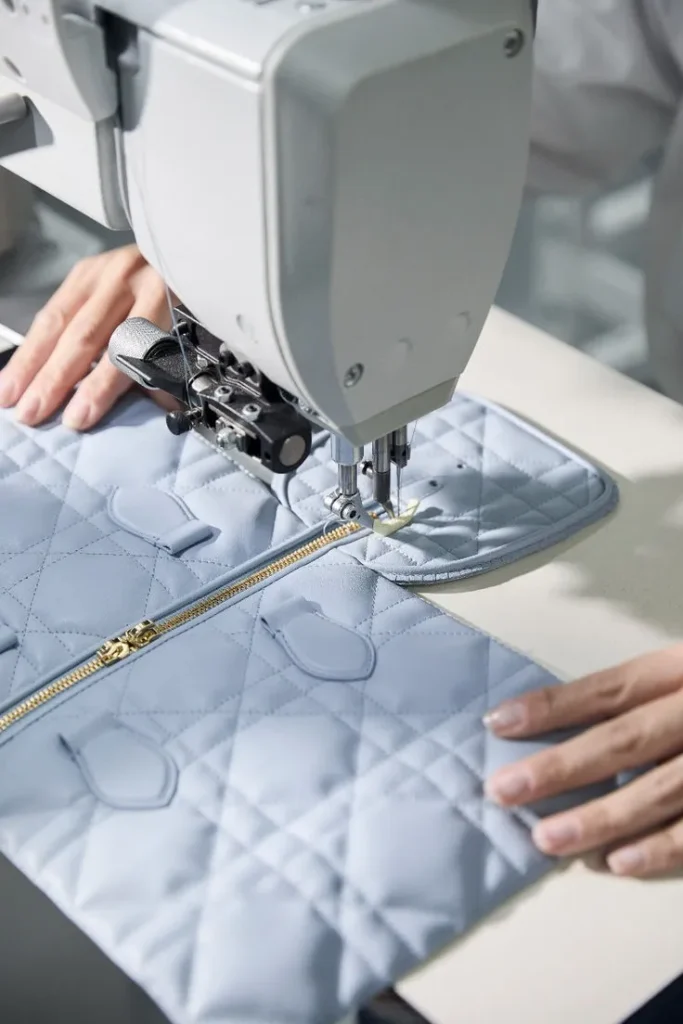
– Material Minimums: Leather hides, metal hardware, or fabric dye lots often come with supplier minimums that cascade to finished product MOQs.
– Production Method: Handcrafted or artisanal processes increase labor time and often require higher MOQs to justify labor coordination.
– Pattern Complexity: Multiple pattern pieces, unique quilting or embroidery, and special lining designs increase setup time.
– Custom Hardware: New zipper molds or branded metal hardware typically demand higher volumes to offset tooling costs.
– Lead Time and Capacity: Off-peak vs peak season scheduling and factory booking can allow flexibility with MOQ.
– Buyer History: Repeat buyers with proven order history can often negotiate lower MOQs.
MOQ and Cost: Understanding the Relationship
Purchase decisions are frequently decided by a unit cost vs. MOQ tradeoff. Fixed costs like tooling, setup labor, and pattern making are spread across total units. As quantity rises, per-unit allocation of fixed costs falls; variable costs (material, per-piece labor) typically remain stable or reduce slightly due to bulk discounts.
Example formula:
– Total Cost = Fixed Costs + (Variable Cost per Unit × Quantity)
– Unit Cost = Total Cost / Quantity
Quick example (hypothetical numbers illustrative of PrinceBag scenarios):
– Fixed Costs: $2,000 (pattern + setup + sample amortization)
– Variable Cost per Unit: $20 (materials + labor)
– MOQ scenarios:
– Qty 100: Total = 2000 + (20×100) = 4000 → Unit = $40
– Qty 500: Total = 2000 + (20×500) = 12000 → Unit = $24
– Qty 1000: Total = 2000 + (20×1000) = 22000 → Unit = $22
This shows why suppliers set MOQs: to push unit costs to acceptable margins.
Analysis Table: MOQ Scenarios — Cost, Lead Time, Suitability
| MOQ Level | Illustrative Fixed Cost Allocation | Variable Cost / Unit | Estimated Unit Cost | Lead Time | Best For | Risks |
|---|---|---|---|---|---|---|
| 50 units | $40.00 | $22 | $62.00 | 2–6 weeks (often requires premium) | Small boutiques, market testers, prototype runs | Very high unit cost; limited margin; supplier may charge premium |
| 200 units | $10.00 | $21 | $31.00 | 4–8 weeks | Independent e-commerce brands, seasonal SKUs | Moderate stock risk, reasonable margin if priced correctly |
| 500 units | $4.00 | $20 | $24.00 | 6–10 weeks | Growing retailers, private label launches | Requires more capital and storage; better per-unit margin |
| 1,000 units | $2.00 | $19 | $21.00 | 8–12 weeks | Large buyers, major wholesale accounts | High inventory exposure; more negotiating power |
Note: The numbers above are illustrative to explain relationships and negotiation outcomes. Actual figures from PrinceBag would depend on materials, complexity, and buyer history.
How to Negotiate MOQs with PrinceBag
Negotiation is both art and science. Suppliers value predictable, long-term partnerships. Here are tactics buyers can use:
– Build Credibility: Share business plans, sales channels, and projected reorder cadence. A credible forecast can convince PrinceBag to lower MOQs.
– Commit to Multiple SKUs: Agree to a combinedMOQ across several SKUs/styles to hit minimum production lot sizes while keeping per-sku counts small.
– Pay Higher Unit Price for Lower MOQ: Suppliers accept smaller runs at a premium. Negotiate a fair uplift that preserves your margin.
– Offer a Deposit or Prepayment: Larger down payments reduce supplier financing risk and can lower MOQ or expedite timelines.
– Start with a Pilot Run: Propose an initial smaller pilot batch with a contract to reorder a larger volume if sales targets are met.
– Share Tooling Costs: Offer to cover tooling for a new hardware mold in exchange for a reduced MOQ afterwards.
– Consolidate Orders Seasonally: Aggregate launches so production can be planned across multiple SKUs to meet factory capacity.
Alternatives When MOQ Is Too High
If PrinceBag’s MOQ doesn’t fit your model, consider:
– Third-Party Consolidation: Use a sourcing agent who aggregates orders from multiple small brands to meet MOQ.
– Dropshipping or On-Demand: Use PrinceBag’s stock lines or partner companies that offer lower quantities via higher per-unit pricing.
– White-Label Minimums: Negotiate to rebrand existing PrinceBag designs that have lower MOQ because the tooling already exists.
– Pre-Order Sales Model: Fund production via customer pre-orders to cover higher MOQ and mitigate inventory risk.
– Co-Manufacturing: Share tooling and order runs with another brand to split MOQ and cost.
Practical Checklist Before Placing an MOQ Order
– Confirm exact MOQ per SKU and per color. Some suppliers allow small color breaks within one SKU; others don’t.
– Get a detailed cost breakdown: tooling, unit price, shipping, inspection, and tariffs.
– Request a lead-time schedule: sampling → pre-production → mass production → inspection → shipping.
– Insist on clear quality control criteria and rectify procedures for defects (AQL standards).
– Secure IP protections for unique designs: NDAs and design ownership clauses.
– Confirm payment terms: deposit %, balance on shipment, LC vs. TT.
– Plan logistic implications: storage, customs, insurance, and fulfillment readiness.
Case Study 1: Boutique Retailer Launch
Scenario: A boutique orders 150 units of a new evening clutch from PrinceBag to test local demand.
Strategy: Negotiate a small premium and request a single-color run in a standard lining. Secure a 40% deposit, with production start upon deposit. Price calculated to allow a 3× keystone markup at retail.
Outcome: The boutique sells out in 6 weeks; based on data, they reorder 400 units and secure a 10% price reduction per unit.
Case Study 2: E-Commerce Brand Scaling
Scenario: An online brand starts with a 50-unit sample to test product-market fit and then plans to roll out multiple colors.
Strategy: Use the sample to refine the product, then negotiate a combined MOQ across 3 colors to reach a 300 unit production run, offering a firm reorder forecast.
Outcome: Supplier agrees to a smaller per-sku MOQ due to forecast; per-unit cost drops, and brand gains momentum with broader SKU offerings.
Logistics, Lead Time, and Cash Flow Planning
Understanding lead time is essential: sampling (2–4 weeks), production (4–12 weeks), inspection (1 week), and shipping (2–6 weeks) can total several months. Buyers must plan inventory and promotions around this timeline. Cash flow planning should include deposit, balance, shipping, customs clearance, and unexpected delays. Consider factoring in buffer inventory for top sellers and conservative reorder points based on sell-through rates.
Inventory and Retail Pricing Strategies
Set retail price with clear margin targets considering MOQs:
– Keystone Pricing: Double the wholesale price conservatively; adjust based on market positioning.
– Dynamic Pricing: Use early-bird pre-orders and tiered pricing to fund initial production.
– SKU Rationalization: Focus on 2–3 core styles to reduce MOQ pressure from multiple SKUs.
– Bundling: Offer accessory bundles to increase average order value and improve inventory turnover.
Quality Assurance and AQL Expectations
Be explicit about acceptance criteria. Typical AQL (Acceptable Quality Limit) practices are used in apparel and accessories. For purses, discuss:
– Stitching consistency
– Hardware finish and function (zippers, clasps)
– Lining integrity
– Color consistency (Pantone references)
– Odor and material defects
Arrange pre-shipment inspections and consider third-party QC services. For high MOQs, invest in thorough inspections to avoid large volumes of defective stock.
Sample Orders: Balancing Cost and Validation
Samples from PrinceBag can be paid at a premium but are invaluable for reducing launch risk. Types of samples:
– Proto-Sample: Initial hand-made piece for design sign-off.
– Size/Fit Sample: Ensures dimensions and ergonomics are correct.
– Pre-Production Sample (PPS): Made on production materials and expected factory processes; closest to final product.
– Color Approval Sample: Confirms dyes, lining, and hardware color.
Negotiate sample fees to be credited against mass production orders to minimize waste and align incentives.
Common Buyer FAQs and Short Answers
Q: Can MOQs be lowered for start-ups?
A: Often yes, through negotiation, higher unit price, or by combining SKUs/colors. Long-term growth commitments help.
Q: Will PrinceBag accept split shipments?
A: Many factories can arrange staggered shipments; negotiate prior to production.
Q: Are there ways to avoid upfront tooling costs?
A: Use existing patterns or pay tooling amortized across later orders; sometimes suppliers subsidize tooling for larger, recurring orders.
Q: How does customization affect MOQ?
A: Significantly — custom hardware or molds usually mean higher MOQs to justify tooling costs.
Sample Calculations — Decide If MOQ Makes Sense
Use the following to evaluate a PrinceBag quote:
1. Total Landed Cost per Unit = Unit Price + (Shipping per Unit) + (Import Duty per Unit) + (Insurance & Fees per Unit)
2. Required Retail Price = Total Landed Cost × Desired Markup
3. Breakeven Sales Volume = (Fixed Costs + MOQ × Landed Cost) / (Retail Price – Landed Cost)
Example:
– Unit Price = $22
– Shipping per Unit = $3
– Duty = $2
– Total Landed Cost = $27
– Desired Retail Markup = 3× → Retail Price ≈ $81
– If Fixed Costs (marketing, photography) = $3,000
– Contribution per Unit = $81 – $27 = $54
– Breakeven Volume = 3000 / 54 ≈ 56 units (this helps evaluate whether a 200 MOQ will recover initial investments)
Legal and IP Considerations
If you’re creating unique designs or branded hardware, protect your IP. Use NDAs before sharing detailed tech packs. Clearly define ownership of patterns and molds in your contract. For overseas production, specify jurisdiction and arbitration mechanisms in case of disputes.
Checklist for Scaling After First MOQ Order
– Analyze sell-through in the first 30–90 days.
– Take customer feedback for design improvements.
– Re-negotiate with PrinceBag for lower pricing at the next scale tier.
– Forecast reorder points with a conservative safety stock.
– Evaluate logistics cost savings via consolidated shipments or different Incoterms.
– Consider diversification of SKUs only when core items show stable sales.
Final Recommendations
– Start with a well-defined product spec sheet and communicate it clearly to PrinceBag. Clarity reduces costly revisions.
– Use sample runs to validate demand and production quality before large MOQs.
– Negotiate on multiple levers: price, color breaks, payment terms, and combined MOQ across SKUs.
– If cash is constrained, use pre-orders, deposit-backed production, or phased shipments to manage risk.
– Build a long-term relationship; consistent reorder behavior yields better MOQ flexibility and pricing.
MOQ is not merely a supplier constraint — it’s a lever in your product strategy. Whether you’re a boutique testing a niche clutch design or a growing e-commerce label launching a seasonal collection, understanding how MOQs affect cost, lead time, and risk is essential. With clear planning, thoughtful negotiation, and carefully structured orders, PrinceBag can be a partner in scaling your women’s purse business — enabling you to manage inventory risk while achieving the production economics needed for sustainable growth.