

Original Design Manufacturer (ODM) services have become a strategic choice for B2B buyers who want to bring distinct, high-quality products to market without building a full design and manufacturing pipeline in-house. For retailers, private labels, lifestyle brands, and distributors operating in the leather handbag segment, pairing with an experienced ODM like PrinceBag can shorten time-to-market, reduce upfront investment, and deliver consistent product quality. This article explores PrinceBag’s American leather handbags ODM service in depth—covering capabilities, processes, customization options, quality assurance, cost and lead-time expectations, supply-chain considerations, and practical advice for B2B buyers evaluating a partnership.
Who Is PrinceBag and What Does an ODM Relationship Look Like?
PrinceBag is positioned as a full-service ODM partner focusing on American leather handbags—combining design expertise, leather sourcing, manufacturing controls, and logistics support. Unlike a contract manufacturer that simply executes a buyer’s technical package, an ODM contributes design, material selection, and production optimization. For B2B buyers, that means access to product development resources (sketches, CAD, material samples, and prototypes), input on cost-effective construction techniques, and integrated production planning.
An effective ODM partnership with PrinceBag typically follows these stages:
– Discovery and spec alignment (market positioning, target price, functional and aesthetic priorities).
– Concept and design (mood boards, sketches, technical drawings).
– Material sourcing and sampling (leather types, trims, hardware).
– Prototype iteration and fit/function testing.
– Pre-production and quality-planned manufacturing runs.
– Final inspection, packaging, and logistics to the buyer’s distribution points.
– Post-delivery support: warranty handling, replenishment planning, and seasonal updates.
Core Capabilities: What PrinceBag Brings to B2B Buyers
Design & Trend Intelligence
PrinceBag’s design team collaborates with buyers to translate brand DNA into commercially viable handbag collections. Their work typically includes trend research tailored to target demographics, seasonal color and hardware palettes, functional enhancements (e.g., convertible straps, RFID pockets), and tech integrations (e.g., charging compartments). For B2B buyers who lack in-house design teams, PrinceBag can produce complete design libraries that retain brand uniqueness while adhering to cost constraints.
Leather Sourcing & Material Expertise
A critical differentiator when sourcing American leather handbags is material traceability and finish quality. PrinceBag sources full-grain, top-grain, corrected-grain, and specialty leathers (vegetable-tanned, aniline, semi-aniline) and can advise on durability, patina behavior, and maintenance. They can also provide vegan leather alternatives and responsibly sourced trims—important for compliance and brand transparency.
Production & Scalability
PrinceBag supports small-batch runs for product testing and larger scalable production for full retail rollouts. Their production planning addresses capacity, seasonal peaks, and tooling needs (molds for hardware, dies for patterns). The ODM’s emphasis on process optimization helps keep per-unit costs competitive while maintaining craftsmanship.
Quality Assurance & Compliance
For B2B buyers, especially those selling to retailers in regulated markets, compliance is paramount. PrinceBag’s QA protocols include incoming material inspection, in-line process checks, and final random sample testing. They can generate test documentation for colorfastness, chromium levels (REACH/California Proposition 65 considerations), flammability where applicable, and hardware fatigue testing.
How the ODM Process Works: Step-by-Step for B2B Clients
1. Briefing and Alignment
The project starts with a detailed brief: target price, target consumer, desired leather category, acceptable lead-time, and minimum order limits. PrinceBag works with buyers to finalize a technical package if the buyer has one—or creates one if the buyer needs design support.
2. Conceptual Design and Prototyping
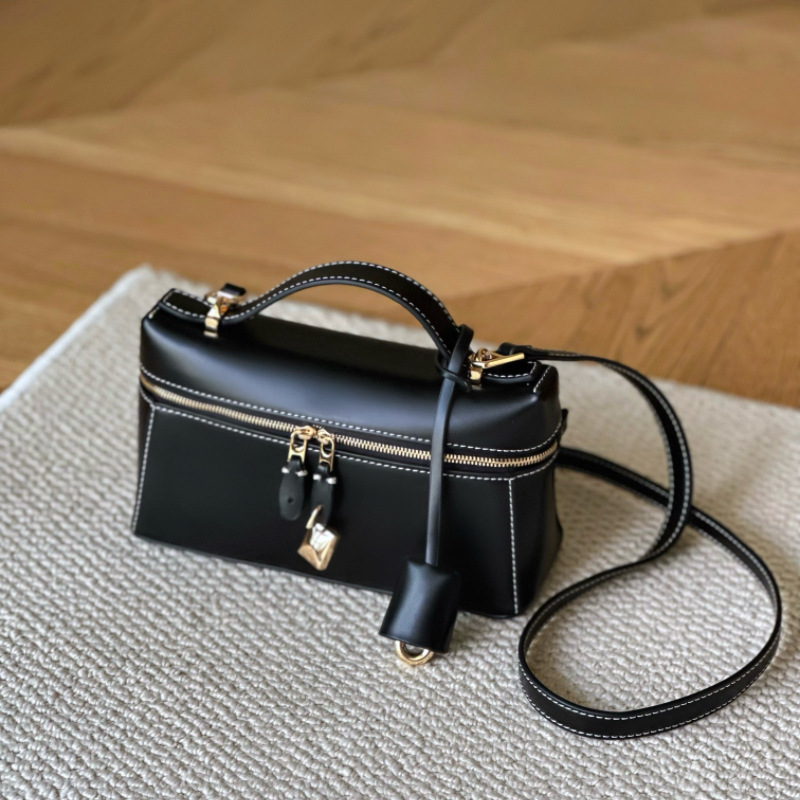
Design proposals typically include several concepts. Once a direction is chosen, PrinceBag produces a proto sample. The iterative prototyping stage may involve two to five rounds depending on complexity. For B2B buyers, prototype feedback cycles are a chance to refine construction, hardware placement, weight balance, and pocket configurations.
3. Pre-Production and Pilot Run
Before full production, a pilot run verifies production stability. PrinceBag documents SPC (statistical process control) metrics and ensures tooling is producing consistent results. This stage also validates packaging formats and labeling requirements for retail readiness.
4. Full Production and Shipping
Once pre-production sign-off is complete, PrinceBag schedules full production, applies in-line QA checks, and prepares goods for shipment. The ODM coordinates logistics—whether DDP (Delivered Duty Paid) to the buyer’s warehouse or FOB (Free On Board) to a designated port.
Key Advantages for B2B Buyers Choosing PrinceBag
– Speed to market: Integrated design and manufacturing reduces handoffs and shortens timelines.
– Cost efficiency: Experience with leatherworking and supplier networks lowers material and production costs.
– Design differentiation: Proprietary ODM designs reduce direct product commodification and help buyers own unique SKUs.
– Risk mitigation: Documented QA, regulatory testing, and reliable production capacity reduce delivery and compliance risks.
– Scalability: From pilot runs to sustained seasonal volumes, PrinceBag supports growth without buyers needing additional capital investment.
Analysis Table: PrinceBag ODM Services – Comparative Overview
| Service Component | PrinceBag Offering | Benefit to B2B Buyer | Typical MOQ | Typical Lead Time |
|---|---|---|---|---|
| Design & Prototyping | Trend-led concepts, CAD, 2–5 prototype iterations | Faster concept validation and reduced in-house design cost | 1–50 samples; 300–500 units for pilot | 4–8 weeks for samples; 8–14 weeks to production |
| Leather & Trim Sourcing | Full/top-grain, specialty leathers, vegan alternatives | High-quality, traceable materials that align with brand values | N/A (material order size varies) | 2–6 weeks depending on leather availability |
| Manufacturing | Handcrafting, mechanized sewing, hardware assembly | Consistent build quality and scalable output | 500–2,000 units typical for production runs | 6–16 weeks based on complexity and quantity |
| Quality Assurance | Incoming checks, in-line QC, final inspection, testing support | Reduced defects, assured compliance for retail entry | Applies to entire production batch | Concurrent with production; final QC 1–3 days |
| Packaging & Logistics | Custom packaging design, labeling, DDP/FOB coordination | Retail-ready deliveries and simplified logistics | Depends on carton/pallet quantities | Varies by shipping mode (air: 3–10 days; sea: 20–45 days) |
Quality Control and Compliance: What B2B Buyers Need to Ask
When assessing PrinceBag—or any ODM—buyers should focus on these QA and compliance questions:
– Can you provide certificates for leather origin and any chemical testing (e.g., formaldehyde, heavy metals, azo dyes)?
– What is your defect tolerance and AQL (acceptable quality level) for visible and functional defects?
– Do you offer third-party inspection or lab testing on request?
– How do you trace batches of leather and trims in case of a recall or customer complaint?
– What are your procedures for warranty claims and post-shipment corrective actions?
PrinceBag’s value proposition is stronger when it can demonstrate documented test results, traceability of leather lots, and a clear escalation path for defects.
Commercial Considerations: Price, MOQ, and Lead Time Tradeoffs
ODM arrangements always involve balancing price, minimum order quantities (MOQs), and lead times. B2B buyers should expect:
– Lower per-unit pricing at higher volumes as fixed tooling and design costs are amortized.
– Higher complexity designs or rare leathers will increase lead times and sample costs.
– Flexibility on MOQs is possible for established partners or with incremental pricing adjustments.
– Premium services such as exclusive colorways, hardware development, or rapid replenishment (air shipping, priority production) will add cost.
Negotiation levers include committing to seasonal volume, agreeing to multi-season orders, or sharing some tooling costs. Buyers should request a clear quote structure (design fees, sample charges, unit price tiers, packaging costs, and logistics options).
Risk Management and Best Practices for B2B Buyers
To build a reliable relationship with PrinceBag, adopt these best practices:
– Start with a pilot collection: Validate consumer response and production reliability before committing to large runs.
– Lock core specifications: Finalize leather grades, hardware finishes, and internal linings prior to production to prevent costly mid-run changes.
– Agree on KPIs: Set on-time delivery targets, defect rates, and replenishment windows in the contract.
– Protect IP: Use clear agreements on design ownership and non-disclosure to protect proprietary brand designs created through the ODM.
– Plan logistics early: Factor shipping times into retail launch windows and include buffer time for customs or inspection delays.
Sustainable and Ethical Considerations
Sustainability is increasingly influential in leather handbag purchases. PrinceBag can support ethical sourcing credentials—such as responsible tanning processes, traceable hides, and alternative materials for buyers pursuing vegan or low-impact lines. Buyers should request:
– Evidence of responsible tanning practices and wastewater management at suppliers.
– Documentation on chemical management compliant with international restrictions (e.g., REACH).
– Options for recycled or plant-based lining fabrics and eco-friendly packaging.
Transparent communication about sustainability goals facilitates joint development of a compliant and marketable product.
Case Example: From Brief to Retail Shelf
Consider a mid-market private label seeking a fall collection of structured leather totes with a convertible strap and RFID pocket. Using PrinceBag’s ODM service, the project could proceed as follows:
– Week 0–2: Briefing and mood boards, finalize target price and materials.
– Week 3–6: Initial sketches and selection of top-grain leather samples.
– Week 7–10: Prototype 1 and 2, hardware and lining decisions.
– Week 11–14: Pilot run (500 units), QC adjustments.
– Week 15–22: Full production (2,000 units), final inspection, and sea shipment.
The result: a clear price point, compliant labeling, and on-shelf readiness within a typical seasonal development cycle.
How to Evaluate PrinceBag: A Buyer’s Checklist
– Confirm sample and prototype lead times and costs.
– Verify leather sourcing and request sample swatches.
– Ask for a production capacity statement and lead-time guarantees.
– Review QA processes and request AQL thresholds in writing.
– Negotiate commercial terms: special pricing tiers, tooling amortization, and minimums.
– Ensure IP and confidentiality clauses are sound.
– Demand sustainability documentation if it’s part of your brand promise.
Is PrinceBag the Right ODM Partner for Your Business?
For B2B buyers looking to bring American leather handbags to market with a balance of design differentiation, quality assurance, and scalable manufacturing, PrinceBag’s ODM service presents a compelling solution. Their integrated approach—from concept to delivery—reduces friction and helps brands focus on merchandising, marketing, and distribution. The best fit is for buyers who need design input, consistent quality, and a partner capable of scaling operations as sales grow.
Selecting the right ODM requires careful alignment on expectations: price, lead-time, compliance, and product identity. By starting with a pilot program, demanding transparent QA documentation, and negotiating commercial terms that reward volume growth, B2B buyers can leverage PrinceBag’s strengths to build a sustainable, high-quality handbag lineup that resonates with their customers.