

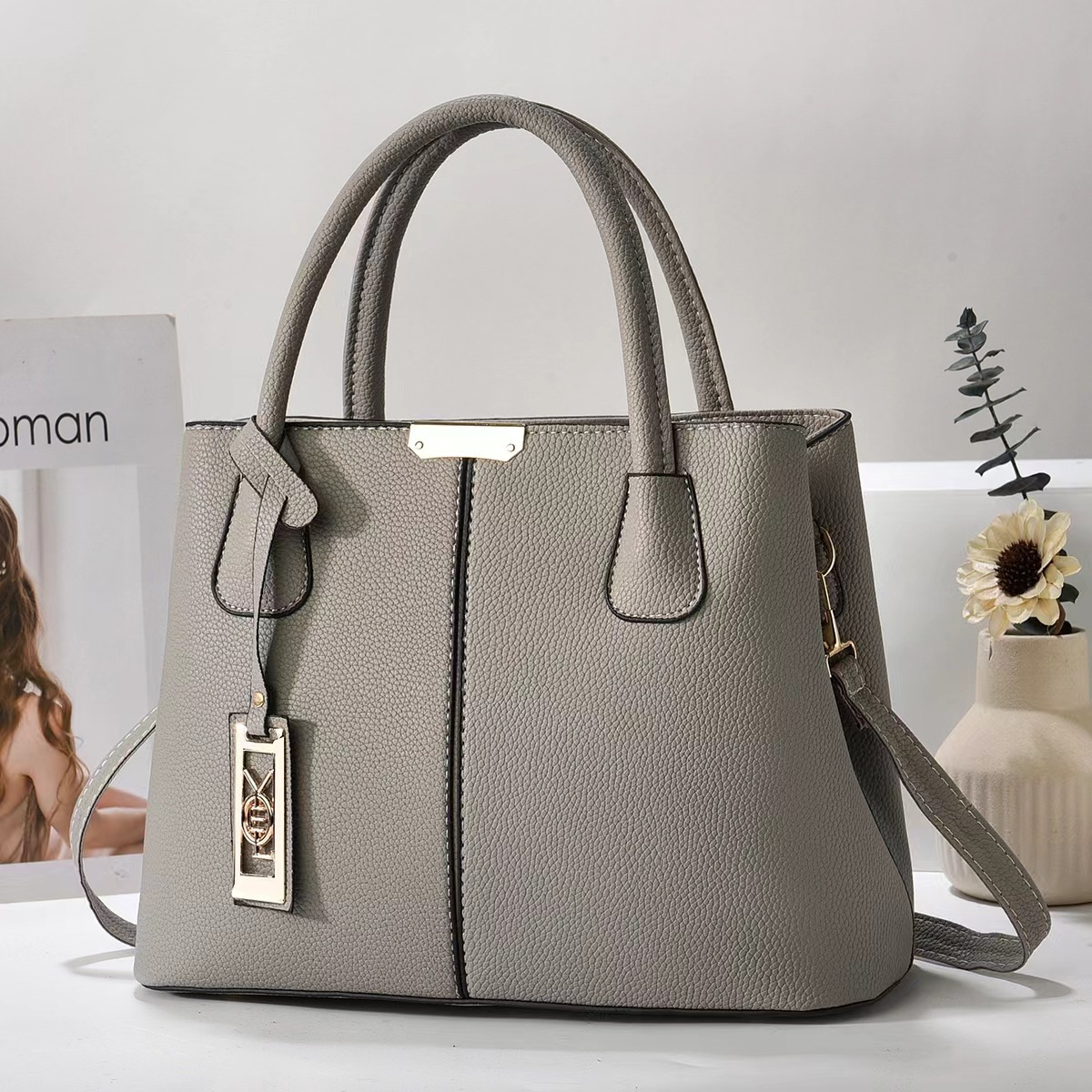
PrinceBag’s Durable Leather crossbody bag is positioned as a premium, functional accessory for modern consumers. For B2B buyers—retailers, corporate gift purchasers, and private-label brands—the product’s durability, consistent quality, and customization options make it an attractive bulk-order candidate. This article provides a practical, business-focused analysis covering product features, manufacturing and sourcing considerations, pricing strategies, quality control, logistics, and negotiation tactics to help procurement teams evaluate PrinceBag for large-scale purchase.
Product Overview: Key Features and Target Markets
PrinceBag’s crossbody bag typically features:
– Full-grain or top-grain leather options with reinforced stitching.
– YKK-style metal hardware and durable zippers.
– Multi-compartment interior for phones, wallets, and tablets.
– Adjustable straps with swivel hooks for comfort and durability.
– Options for embossing, debossing, or woven labels for branding.
Target markets include specialty leather retailers, lifestyle boutiques, corporate gifting programs, and ecommerce private-label brands targeting urban professionals and travelers. For B2B buyers, the combination of perceived value and functional utility supports healthy retail markups and customer satisfaction.
Materials & Construction: What to Inspect in Bulk Orders
For bulk orders, material consistency and construction quality are essential. Key inspection points:
– Leather grade: Confirm full-grain vs top-grain vs corrected-grain, and request leather certificates if available.
– Lining material: Nylon, polyester, or cotton blends—verify abrasion resistance and colorfastness.
– Hardware specification: Metal composition (zinc alloy, brass, stainless steel) and plated finish durability.
– Stitching and seam reinforcement: Check stitch counts per inch and reinforcement at stress points.
– Edge finishing and dye consistency: Even edge paint and consistent dye across batches.
Include these in your pre-shipment quality checklist and request standard photos and third-party inspection reports for large runs.
Product Variants and B2B Cost Analysis Table
| Variant | Leather Type | Unit Price (USD) | MOQ | Lead Time |
|---|---|---|---|---|
| Classic Urban | Top-Grain Cowhide | $18.50 | 200 pcs | 35–45 days |
| Premium Traveler | Full-Grain Aniline | $26.00 | 150 pcs | 40–50 days |
| Eco Line | PU Veg-Tanned Leather | $12.00 | 300 pcs | 30–40 days |
| Executive Minimal | Top-Grain, Smooth Finish | $21.00 | 200 pcs | 35–45 days |
| Custom Branded | Specified by Client | Depends on spec | 100–500 pcs | 45–60 days |
This table provides a snapshot to compare material costs, minimum order quantities (MOQ), and lead times. Use it to shortlist variants that match your price point and stocking capacity.
Pricing Strategy for B2B Buyers
When negotiating pricing tiers:
– Volume discounts: Typical structure reduces unit price at 500, 1,000, and 5,000+ unit thresholds. Confirm exact breakpoints and how pricing applies across mixed-SKU orders.
– Freight-on-board terms: Specify FOB (port) or CIF terms; FOB is common for lower landed cost transparency.
– Currency and payment terms: Negotiate in USD or a stable currency; consider 30% deposit / 70% before shipment or irrevocable LC for larger orders.
– Hidden costs: Account for customs duties, import VAT, inspection fees, and local labeling requirements.
– Packaging: Basic boxed packaging may be included; custom branded packaging usually incurs per-unit tooling and setup fees.
Sample margin scenario:
– Unit cost (Classic Urban): $18.50
– Add landed cost & duties estimate: $4.50
– Total cost per unit: $23.00
– Suggested wholesale sell-in price: $46.00 (100% markup for retail partners)
– Retail price recommendation: $92.00 (keeps standard keystone markup)
Adjust margins based on market positioning, channel, and promotional strategy.
Customization & Branding Options
B2B buyers often require tailored branding:
– Embossing/debossing: Low tooling cost, durable branding—ideal for leather.
– Metal nameplates: Higher cost but premium appearance.
– Woven or printed hangtags: Cost-effective for branding and barcodes.
– Custom lining and interior pockets: Enhance perceived value; may increase lead time and MOQ.
– Color matching: Pantone-based color matching available but may add cost and require pre-production samples.
Always request and approve pre-production samples for color, logo placement, and tactile quality before signing large contracts.
Quality Assurance & Compliance
For large orders, include these QA and compliance steps in your procurement contract:
– Pre-production sample approval: Mandatory sign-off on a physical sample.
– In-line production checks: Periodic inspections during production to catch issues early.
– Final random inspection: Use AQL (Acceptable Quality Limit) standards such as AQL 2.5 for critical defects.
– Third-party testing: If selling in regulated markets, test for restricted substances (e.g., REACH, California Proposition 65) and flammability where applicable.
– Packaging and labeling compliance: Ensure country-of-origin, care instructions, and safety warnings meet import regulations.
Link quality standards to penalties or rework obligations to protect your purchase.
Packaging, Logistics, and Lead Time Optimization
Efficient logistics planning reduces working capital lock-up:
– Consolidate SKUs to maximize container utilization; a 40ft container usually optimizes per-unit freight cost.
– Use sea freight for cost-sensitive large orders and air freight for urgent replenishments.
– Plan reorder points using lead time plus safety stock—factor in production variability and customs delays.
– Consider bonded warehousing or nearshore distribution centers for faster regional fulfillment.
Ask suppliers for typical production capacity per month and for contingency plans when demand spikes.
Supplier Relationship & Negotiation Tips
Establish a strategic supplier relationship:
– Start with a medium-sized order to validate processes before scaling.
– Negotiate payment terms that scale favorably as volume grows (e.g., extended payable days, lower deposits).
– Commit to seasonal cadence and forecast to secure capacity and better pricing.
– Build a mutually beneficial roadmap: incremental tooling investments, co-branded marketing budgets, and exclusive SKUs can improve supplier commitment.
Transparency and predictable demand help suppliers manage their own supply chain, which reduces lead-time risk.
Risks and Mitigation
Common risks and recommended mitigations:
– Quality inconsistency: Mitigate with rigorous sampling, AQL inspections, and quality clauses.
– Supply disruptions: Diversify suppliers or maintain safety stock.
– Currency fluctuations: Hedge currency or negotiate USD-priced contracts.
– Intellectual property (design) leakage: Use NDAs and register designs where feasible.
Is PrinceBag Right for Your B2B Program?
PrinceBag’s Durable leather crossbody bag can be an excellent B2B product if your business values durable materials, consistent manufacturing standards, and scalable customization. Evaluate suppliers against the checklist above: confirm leather grade, MOQ, lead time, and QA practices. Use the provided cost analysis framework and negotiation tips to structure an order that balances price, quality, and speed. By treating the initial order as a structured pilot—with clear KPIs, sample approvals, and inspection milestones—you can scale confidently and make PrinceBag a profitable line in your product mix.