

PrinceBag’s journey in private label handbag production offers a practical blueprint for manufacturers, brands, and buying teams that want to transform product ideas into market-ready collections. Over years of collaboration with indie designers, established fashion houses, and e-commerce brands, PrinceBag has refined processes that balance customization, cost control, quality, and scalability. This article examines their experience end-to-end, distills the key operational practices, and provides an analytical framework to guide others pursuing private label partnerships.
Background and positioning
PrinceBag operates as a full-service handbag manufacturer that emphasizes flexibility across product tiers—ranging from entry-level mass-market lines to premium private label collections. Rather than positioning solely as an OEM focused on volume, the company built capabilities in design support, materials sourcing, bespoke hardware, and small-batch runs. This allows PrinceBag to attract both startups seeking flexible minimum order quantities (MOQs) and established brands demanding tighter quality tolerances and traceability.
Two aspects define their positioning:
– Vertical integration in key production areas (stitching, patterning, hardware assembly) to ensure control over lead times and quality.
– A client-facing model that provides structured project management, sample rounds, and pre-launch quality checks, reducing misunderstandings and costly rework.
Private label production: scope and client profiles
PrinceBag’s private label clients typically fall into three categories:
– Emerging direct-to-consumer (DTC) brands seeking brand identity and flexibility in small-batch runs.
– Retail buyers requiring seasonal collections with strict delivery windows.
– Established fashion labels outsourcing overflow or specialized product lines.
For each client type, PrinceBag adapts its approach—smaller MOQs and iterative sampling for startups; standardized SOPs and tighter QA for retailers; and confidential, high-quality production for premium fashion houses.
Design and development process
A repeatable design-to-product workflow is central to successful private label production. PrinceBag’s workflow includes:
1. Discovery and concept alignment: Detailed briefs that cover target price points, intended user, desired materials, durability expectations, and key aesthetics.
2. Technical pack creation (tech packs): Comprehensive documents including graded patterns, bill of materials (BOM), hardware specifications, tolerances, and construction notes.
3. Prototyping and fit samples: Iterative sample rounds (proto, pre-production) to validate pattern accuracy, material behavior, and assembly steps.
4. Pilot production: A short-run batch to stress-test production lines and validate lead-time assumptions.
5. Full production: After final approvals and sign-offs, ramp-up to scheduled volumes with ongoing QC embedded.
Key lessons PrinceBag emphasizes:
– Invest time in the tech pack—clear specifications prevent costly back-and-forth.
– Use physical material swatches for color/texture confirmation rather than relying solely on digital images.
– Standardize decision gates: who approves samples, who signs off on BOM changes, and how change orders are handled.
Materials sourcing and supplier relationships
Materials are a major determinant of cost, lead time, and perceived value. PrinceBag developed a multi-tiered sourcing strategy:
– Core suppliers for leather, linings, and hardware with negotiated volume discounts and predictable lead times.
– Strategic secondary suppliers to mitigate single-source risk and support small-batch needs.
– Specialized partners (eco-leathers, certified textiles) for sustainability-focused collections.
Principles they follow:
– Maintain a vendor scorecard with metrics such as on-time delivery, defect rate, price stability, and responsiveness.
– Consolidate purchases where possible to reduce freight and customs overhead.
– Hold safety stock for long-lead items (signature hardware, custom zippers) when client agreements permit.
Manufacturing operations and process control
PrinceBag engineered its factory layout and workflows to support variability in private label demands:
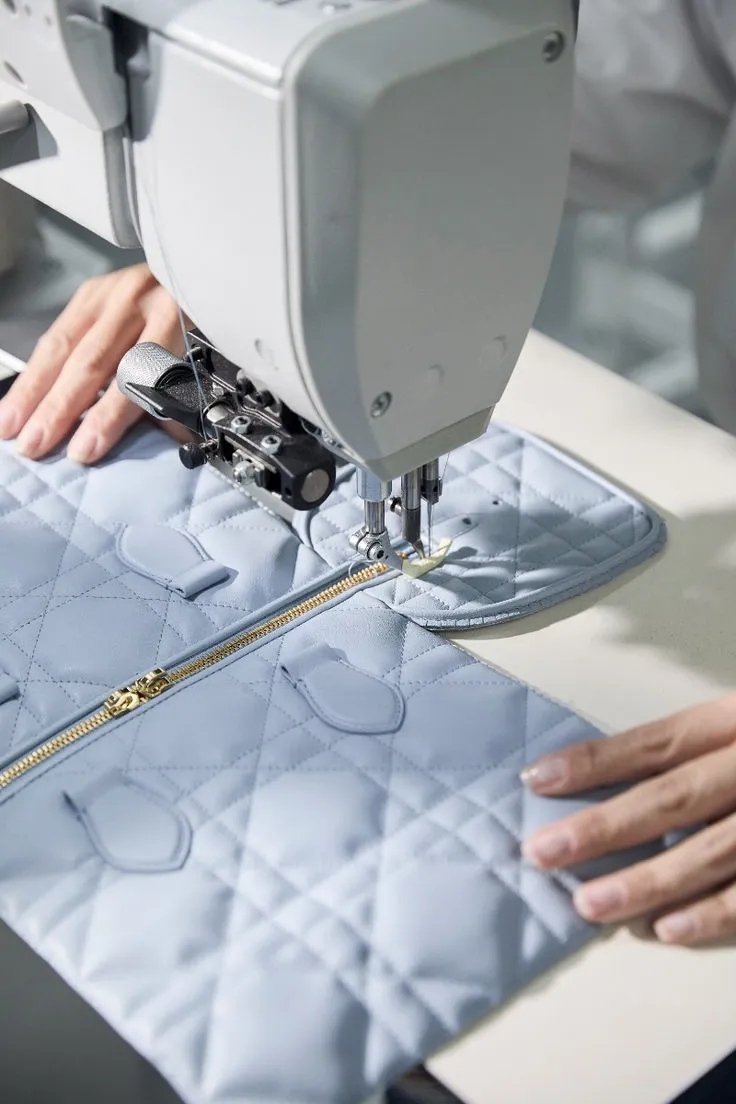
– Flexible production lines: Workstations sized to handle different construction methods with quick retooling for changes in style.
– Cross-trained operators who can switch between leatherwork, canvas, and hardware assembly to accommodate fluctuating product mixes.
– Use of jigs and templates for repeatability on complex shapes.
Quality checkpoints embedded in the process:
– In-process inspections at key stages (cutting, stitching, assembly) to catch defects early.
– End-of-line inspections against tech pack standards and client-specific QC checklists.
– KPI tracking (defect rates, rework hours, yield per line) to identify bottlenecks.
Quality assurance, compliance, and testing
Private label clients often expect their products to meet specific testing standards and regulatory requirements. PrinceBag’s QA framework includes:
– Pre-production testing of materials (tensile strength, colorfastness, rub testing).
– Functional testing of closures, straps, and hardware under simulated use.
– Traceability and compliance documentation for lead, azo dyes, phthalates, and other regulated substances.
They also support clients pursuing certifications (e.g., REACH compliance, OEKO-TEX, or leather origin documentation) by maintaining supplier paperwork and third-party test reports.
Customization, branding, and packaging
Brand differentiation in private label production often comes from details—hardware finishes, linings, embossing, and packaging. PrinceBag’s offerings include:
– Custom hardware tooling and plating for exclusive finishes.
– Inner label application—woven labels, heat-stamped logos, and QR-code tags for authenticity.
– Packaging solutions, from dust bags to gift-ready boxes, including client-provided packaging guidelines.
Their process for custom elements:
– Early feasibility and cost assessment for custom hardware.
– Pre-production tooling approvals, with mock-ups for finish and color matching.
– Integration of packaging into BOM and production schedules to ensure simultaneous availability.
Supply chain and logistics management
Reliable delivery is a make-or-break factor for private label relationships. PrinceBag focuses on:
– Transparent lead time commitments and buffer planning for seasonal peaks.
– Consolidated shipping and freight optimization (LCL, FCL, air freight for urgent replenishment).
– Documentation readiness—commercial invoices, packing lists, certificates of origin—to accelerate customs clearance.
They also use inventory management strategies:
– Vendor-managed inventory for key clients to enable JIT replenishment.
– Safety stock for best-sellers where client agreements bear the cost.
Costing and pricing strategies
Balancing client price expectations with sustainable margins requires transparent costing:
– Detailed COGS breakdowns including materials, trims, labor, overhead, tooling amortization, and logistics.
– Scenario modeling for different MOQs and materials to show cost-per-unit sensitivity.
– Volume-tier pricing to incentivize larger orders while supporting startups with higher per-unit costs at lower quantities.
PrinceBag recommends clients consider total landed cost (including duties and freight) rather than just factory price when assessing supplier competitiveness.
Managing MOQs and lead time expectations
A frequent friction point in private label is MOQs and lead times. PrinceBag tackles this by:
– Offering graduated MOQ structures—prototype runs (10–50 pieces), small-batch (100–500), and standard production (1000+), depending on complexity.
– Communicating realistic lead times for each stage (sampling, tooling, production, shipping) with defined slack for common delays.
– Providing expedited pathways at a premium for launches that require shortened timelines.
They also stress the necessity of contractual clarity: payment terms for tooling, lead time penalties (if any), and change order costs.
Sustainability and corporate responsibility
Sustainability is increasingly central to brand value. PrinceBag’s measures include:
– Sourcing eco-certified leathers and recycled linings where clients request them.
– Waste-minimization practices in cutting and careful material nesting to reduce trim loss.
– Social responsibility programs that enforce fair labor practices and supplier audits.
For many private label clients, PrinceBag prepares sustainability dossiers that detail provenance, certifications, and improvements planned for future seasons.
Challenges encountered and practical solutions
PrinceBag’s experience reveals common challenges and pragmatic remedies:
– Challenge: Frequent late changes from clients causing rework and delays.
Solution: Implement change-order windows and tiered fees for modifications after pre-production sign-off.
– Challenge: Managing high variability in client product mixes that strain production planning.
Solution: Time-boxed production slots for private label clients and cross-training workforce to adapt quickly.
– Challenge: Small initial orders with demanding customization.
Solution: Offer templated customization (limited hardware/color options) to keep tooling costs manageable while preserving brand distinctiveness.
– Challenge: Sourcing consistent eco-materials at scale.
Solution: Develop strategic partnerships with certified suppliers and staggered adoption roadmaps to scale sustainable components.
Analytical comparison: private label production scenarios
Below is an illustrative table comparing operational metrics across three private label production scenarios PrinceBag commonly supports. These figures are representative benchmarks to aid decision-making rather than exact company data.
| Metric | Startup Small-Batch | Retail Seasonal Run | Premium Private Label |
|---|---|---|---|
| Typical MOQ | 50–300 units | 500–3,000 units | 200–1,000 units (higher customization) |
| Lead time (sampling to shipment) | 6–10 weeks | 12–20 weeks | 10–18 weeks |
| Estimated unit COGS (relative) | Higher per unit due to low volume | Lower per unit due to scale | Moderate to high (premium materials & hardware) |
| Defect rate target | <3% | <1.5% | <1% |
| Customization flexibility | High (template-based) | Moderate (cost-optimized) | High (custom hardware & finishes) |
| Typical client lead time sensitivity | Medium | High (seasonal windows) | High (brand image & launches) |
| Sustainability options | Available (higher cost) | Scalable (dependent on volume) | Integral (premium demand) |
Case examples and outcomes (anonymized)
PrinceBag documents several anonymized client case studies demonstrating applied practices:
– DTC leather goods brand: Began with a 150-unit first run using templated designs and upgraded to seasonal runs of 800 units after sales validation. Key success: rigorous sampling and a clear tech pack that eliminated major revisions.
– Department store private label line: Required 3,000 units across five SKUs with a strict delivery window. PrinceBag assigned dedicated production slots and implemented a pre-shipment audit, achieving on-time delivery with defect rates below 1.5%.
– Boutique fashion label: Needed exclusive hardware and limited-edition finishes for a capsule. PrinceBag managed custom tooling and a short pilot run, balancing exclusivity with tooling amortization by limiting production to 500 units at a higher price point.
Lessons learned and recommended best practices
From PrinceBag’s accumulated experience, the most actionable best practices are:
– Clarity up front: Use detailed tech packs and decision matrices to reduce ambiguity.
– Formalize approval gates: Define who is authorized to approve samples and what constitutes final sign-off.
– Align on cost implications: Make tooling and small-batch premiums explicit.
– Build redundancy: Maintain second-source suppliers for critical trims and hardware.
– Measure and share KPIs: Transparent reporting on lead times, defect rates, and delivery performance builds trust.
– Educate clients: Walk DTC founders through realistic timelines, packaging lead times, and quality tolerances.
Future outlook and capabilities to invest in
To better serve private label clients moving forward, PrinceBag advises investment in:
– Digital tech packs and 3D prototyping to accelerate sampling iterations.
– Traceability systems to meet rising regulatory and consumer demands for provenance.
– Automation for repeatable operations (e.g., automated stitching aids) to reduce labor variability.
– Sustainability programs and supplier partnerships for environmentally preferred materials.
These investments will further reduce time-to-market, improve predictability, and create differentiation for private label clients.
pragmatic partnership as the core value
PrinceBag’s experience shows that success in private label production arises from the combination of manufacturing competence and client-facing discipline. The technical mastery of materials and construction must be married to strong communication, clear expectations, and robust operational processes. For brands and retailers, choosing a partner like PrinceBag means prioritizing transparency, flexibility, and a willingness to co-develop solutions—whether that is a tiny DTC debut collection or a high-volume seasonal line.
Ultimately, private label is not simply “order and produce”; it is a collaborative development cycle. Manufacturers that treat clients as partners—investing in tooling foresight, supply-chain resilience, and quality systems—create the conditions for repeat business and scalable success. PrinceBag’s roadmap illustrates the playbook: detailed pre-production planning, disciplined in-line QC, and a willingness to evolve systems to meet new brand expectations are the pillars on which consistent private label success is built.