

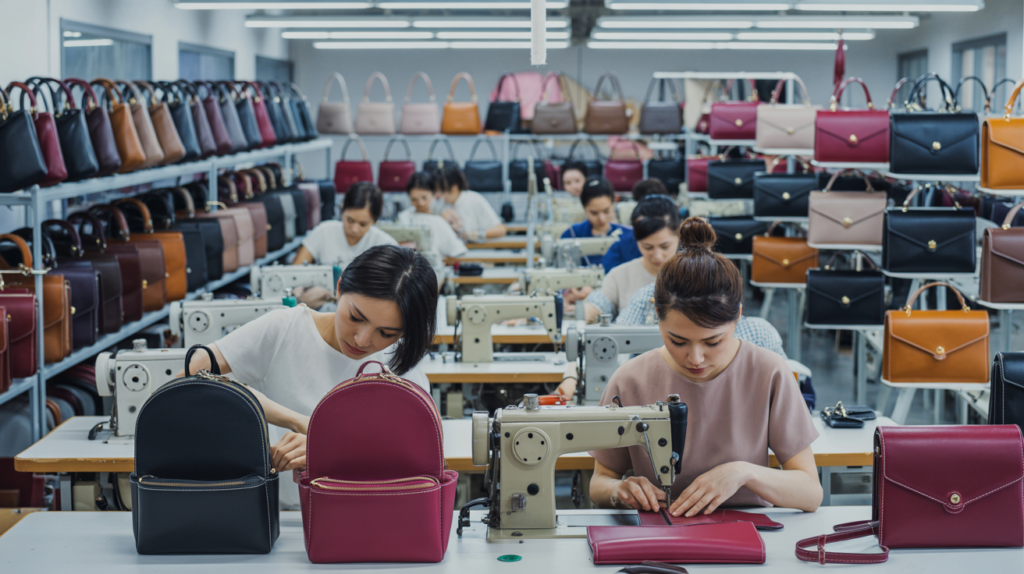
PrinceBag Ladies Bag Factory has built a reputation on flexibility, craftsmanship, and responsiveness to market trends. For brands, boutique stores, and designers seeking to stand out in the crowded handbag market, the right manufacturing partner can be the difference between a product that merely exists and one that sells consistently. This article dives deeply into the customization options PrinceBag offers for ladies handbags — from materials and hardware to packaging and sustainability — and provides practical guidance for choosing the best combination of features for your target customers. Whether you are launching a seasonal collection, developing a signature line, or placing a first production order, this guide will help you understand trade-offs, timelines, costs, and quality controls needed to achieve an outstanding finished product.
Understanding the PrinceBag Customization Philosophy
PrinceBag emphasizes modular customization: offering a broad palette of options without forcing brands into excessive minimums or unnecessary add-ons. The factory’s approach is to enable creativity while keeping production efficient and scalable. Core tenets include:
– Material variety and sourcing transparency: offering genuine leathers (full-grain, top-grain), coated and PU leathers, vegan leather alternatives, technical fabrics, and recycled materials.
– Hardware and finishing breadth: standard and premium hardware finishes, bespoke embossing, and a range of closure systems.
– Prototyping and sampling support: in-house pattern making and sample development to get fit and look right before bulk orders.
– Compliance and QC: checkpoints during cutting, stitching, and final inspection, and optional third-party testing where required.
This philosophy allows emerging designers to experiment with differentiated details while enabling larger brands to push for consistency in high volumes.
Material Choices and Their Impact
Materials determine look, feel, performance, and cost. PrinceBag’s catalog includes:
– Full-grain leather: premium durability and natural texture; ages well. Higher cost and requires skilled cutting and edge finishing.
– Top-grain leather: more uniform appearance; slightly lower cost with good durability.
– Split leather with coatings (PU): consistent finish, lower cost, easier color matching.
– Vegan leathers (PU, microfibre, bio-based alternatives): ethical choice; range widely in durability and breathability.
– Technical fabrics (nylon, Cordura, ballistic): lightweight, durable, ideal for casual/utility styles.
– Recycled textiles and upcycled materials: sustainable option; may have higher variability in appearance but strong market appeal.
Trade-offs to weigh:
– Appearance vs. price: Full-grain leather sells premium but raises price points.
– Durability vs. weight: Technical fabrics can be lighter and longer-lasting for everyday use.
– Sustainability vs. consistency: Recycled materials require more QC to ensure uniformity across batches.
Hardware, Closures, and Functional Details
Hardware choices affect aesthetics, usability, and longevity. PrinceBag offers:
– Zippers: coil, metal teeth, two-way zippers; waterproof zippers available.
– Locks and closures: magnetic snaps, twist locks, turn locks, push locks, buckles.
– Chains and straps: solid brass chains, plated metal, leather straps, webbing straps.
– Feet and rivets: metal feet to protect bag bottom; reinforced rivets for stress points.
– Internal components: padded laptop compartments, removable organizers, key leashes.
Choosing hardware:
– For high-end leather goods, invest in solid brass or stainless steel hardware plated in gold or gunmetal.
– For streetwear and utility, consider heavy-duty zippers and carabiner-style attachments.
– Magnetic closures are convenient but less secure for high-value items; locks add security but increase weight.
Color, Texture, and Surface Finishes
PrinceBag’s dyeing and finishing capabilities allow precise color matching and varied textures:
– Aniline and semi-aniline finishes: preserve natural grain with added color.
– Pigmented and coated finishes: uniform surface, easier maintenance.
– Embossing and graining: Saffiano, pebble grain, croc-embossed for luxury motifs.
– Print finishes: digital sublimation, screen printing, heat transfer for patterns and logos.
– Distressing and hand-finishing: for vintage or artisanal looks.
Considerations:
– Uniform finishes simplify QC; artisanal finishes require close sample approval to avoid batch variability.
– Print durability: repeated rubbing and exposure testing recommended for printed surfaces.
Lining, Compartments, and Internal Structuring
Internal design affects user experience:
– Linings: polyester, satin, cotton twill, microfiber suede, or leather. Waterproof liners for travel bags.
– Pocket configurations: zip pockets, slip pockets, phone sleeves, pen holders, padded laptop sleeves.
– Internal reinforcement: cardboard, plastic boards, or leather interlinings for structure.
– Removable organizers: increase utility and are appreciated in premium and travel segments.
Best practices:
– Match lining material to bag purpose (e.g., wipeable lining for cosmetics).
– Strategic pocket placement can differentiate a bag’s functional appeal.
Branding and Decoration Options
Brand presentation must be consistent and legally defensible:
– Logo methods: metal plates, debossing, embossing, heat-stamped foil, woven labels, leather tags.
– Custom tags and hangtags: printed cards, recycled paper tags, or stamped leather.
– Decorative techniques: embroidery, beading, appliqué, laser-cut overlays, printed patterns.
– Limited-edition treatments: hand-painting, gemstone or crystal embellishments for small runs.
IP considerations:
– Provide clear brand artwork and trademark documentation when requesting branded hardware or logo plates.
– PrinceBag can source custom logo hardware but often requires tooling costs and minimums.
Production Process, Timelines, and Minimums
PrinceBag supports stages from design to bulk production:
– Design & Spec: technical drawings, measured templates, and trim lists.
– Sampling: 1–3 prototypes typically; made-to-order sample lead time ranges from 7–21 days depending on complexity.
– Pre-production run: small pilot batch (recommended 50–200 pcs) to validate manufacturing settings.
– Bulk production: time depends on order size, materials, and complexity — typically 30–75 days after sample approval.
Minimum order quantities (MOQs):
– Basic trims and standard models: MOQs may be as low as 50–100 pcs per color.
– Custom hardware and bespoke features: MOQs for custom tooling can be 500+ pcs or shared across colorways to reduce per-piece cost.
– Fast-track and smaller batch production options are often available at a premium.
Costs and How Customization Affects Pricing
Customization increases costs in several ways:
– Material premium: genuine leathers and recycled materials cost more than FB-coated PU.
– Tooling and molds: custom hardware, logo plates, and pattern dies incur one-time tooling fees.
– Labor intensity: hand-finishing, embroidery, and complex stitching patterns increase labor hours.
– Small batch inefficiencies: lower volumes raise per-unit overhead.
To help with decision-making, here is an analysis table comparing common customization choices on key metrics:
| Customization Element | Relative Cost Impact | Lead Time Impact | Durability | MOQ Considerations | Suitability |
|---|---|---|---|---|---|
| Full-grain leather | High | Medium | High | Medium | Premium & luxury |
| PU/Vegan leather | Low–Medium | Short | Medium | Low | Ethical & budget-friendly |
| Recycled textiles | Medium | Medium–Long | Varies | Medium | Sustainable lines |
| Custom metal hardware | High (tooling) | Long (tooling) | High | High | Brand signature |
| Embossing / Debossing | Low–Medium | Short | High | Low | Subtle branding |
| Printed patterns | Medium | Medium | Medium | Low | Fashion-forward designs |
| Embroidery / Beading | Medium–High | Long | Low–Medium | Medium | Decorative / artisanal |
| Waterproof zippers | Low–Medium | Short | High | Low | Travel & outdoor |
| Padded tech compartments | Medium | Short | High | Low | Functional / work bags |
| Hand-finishing / distressing | High (labor) | Long | Varies | Low | Limited editions |
This table condenses how each choice typically affects cost, timing, durability, and suitability so you can quickly prioritize.
Prototyping, Sampling, and Approvals
PrinceBag places strong emphasis on the sampling stage to avoid costly revisions later:
– Tech packs: Provide measured drawings, materials list, trim codes, color references (Pantone), and functional notes.
– Sample types: Visual sample (looks), PP sample (pre-production to check materials and construction), and golden sample (final approved reference).
– Iteration cycle: Expect 2–4 iteration rounds for complex designs; simpler bags may require only 1–2 rounds.
– Sign-off: Golden sample approval should include clear photos and written confirmation covering measurements, tolerances, and acceptable material variances.
Tips:
– Provide physical swatches and reference samples whenever possible to minimize miscommunication.
– Schedule technical meetings (video or in-person) to go through details like seam allowances and edge paint choices.
Quality Control and Testing
QC is critical for brand reputation. PrinceBag offers multi-stage checks:
– Incoming material inspection: ensure hides/fabrics meet specs.
– In-process QC: checks on cutting accuracy, seam integrity, stitch density, and hardware attachment.
– Final inspection: appearance, functionality (zippers, locks), dimensional checks, and packaging verification.
– Optional testing: colorfastness, abrasion resistance, tensile testing for straps, and chemical testing for restricted substances (e.g., lead, phthalates) as required by market regulations.
Acceptable quality levels:
– Agree on AQL (Acceptable Quality Level) thresholds in your contract. Commonly AQL 2.5 or 4.0 is used for apparel/leather goods depending on tolerance for defects.
Sustainability, Compliance, and Certifications
PrinceBag can support sustainability goals:
– Material sourcing: offerings include recycled nylon, bio-based PU, and lower-impact leathers.
– Process changes: water-saving dye processes and solvent-free adhesives are available on request.
– Certifications: PrinceBag can facilitate documentation for regulatory compliance (e.g., REACH, CPSIA, OEKO-TEX for certain linings) and provide MSDS for chemical trims.
How to approach sustainability:
– Identify which aspects of sustainability matter to your customers (materials, packaging, traceability) and prioritize investment there.
– Use clear claims backed by supplier certificates to avoid greenwashing risks.
Packaging, Presentation, and Fulfillment
First impressions matter; packaging contributes to perceived value:
– Options: dust bags (cotton, flannel), branded boxes, tissue wrapping, custom-printed boxes, swing tags, and care cards.
– Sustainable packaging: recycled boxes, soy-based inks, and minimal plastic use.
– Fulfillment services: pick-and-pack, drop-shipping options, and labeling for retail compliance.
Considerations:
– Invest in good inner packaging for delicate surfaces (to avoid scratches during transit).
– For direct-to-consumer brands, consider including personalization inserts or serial numbers for authenticity.
Pricing Strategy and Cost Optimization
To manage costs without sacrificing brand integrity:
– Consolidate trims and hardware across styles to increase volume and reduce per-piece cost.
– Limit colorways per style; each additional color increases dyeing and sampling costs.
– Consider core silhouettes with seasonal surface treatments to keep tooling costs spread across multiple launches.
– Negotiate tiered pricing based on volume and multi-style commitments.
Cost breakdown (estimates will vary by region and material):
– Materials: 40–60% of finished goods cost.
– Labor and overhead: 20–40%.
– Hardware and trims: 5–15%.
– Tooling and sampling amortized: depends on number of units.
Timeline Example: From Concept to Bulk Shipment
A realistic timeline for a mid-complexity handbag line:
– Design & tech pack completion: 1–2 weeks
– Material sourcing & lead-in: 2–6 weeks
– Sampling (3 rounds): 2–6 weeks
– Pre-production run: 2–4 weeks
– Bulk production (1,000–5,000 units): 4–10 weeks
– Quality inspection & packaging: 1–2 weeks
– Total typical lead time: 12–30 weeks
Factors shortening timelines:
– Use of in-stock materials and standard hardware.
– Fewer sample iterations with clear tech packs.
– Higher production priority (at added premium).
Choosing Options Based on Target Market
Segment-focused recommendations:
– Luxury market: full-grain leather, bespoke metal hardware, leather-lined interiors, high-end finishing, and artisan detailing. Expect higher MOQs for custom hardware.
– Premium ready-to-wear: top-grain leather, signature embossing, high-quality zippers, and structured linings. Balance cost and premium feel.
– Contemporary/fashion brands: printed patterns, seasonal colorways, bold hardware choices, and innovative shapes.
– Eco-conscious consumers: recycled fabrics, certified low-impact dyes, transparent sourcing, and minimal plastic packaging.
– Functional commuters: padded laptop compartments, waterproof materials, heavy-duty zippers, and reinforced straps.
Case Studies: How Customization Translated into Market Success
1) Boutique brand launching a vegan line:
– Challenge: Deliver a premium look without genuine leather.
– PrinceBag solution: microfibre vegan leather with saffiano embossing, gold-tone plated hardware, and leather-like edge finishing. Outcome: positive consumer feedback on look and durability; retail sell-through exceeded projections.
2) Mid-sized label moving into premium tier:
– Challenge: Establish brand identity with signature hardware.
– PrinceBag solution: custom logo clasp and embossed leather tag; introduced limited-edition color with hand-painted edges. Outcome: perceived uplift in brand value and justify higher retail pricing.
3) Sustainable capsule collection:
– Challenge: Keep costs moderate while using recycled materials.
– PrinceBag solution: recycled nylon linings, recycled PET fabric exteriors, minimal metal hardware, and recycled boxes. Outcome: strong PR, good margin maintained through simplified trims.
Practical Ordering Checklist
Before placing a custom order with PrinceBag, ensure you have:
– Complete tech pack with measurements, tolerances, and construction notes.
– Material swatches or C/O specifications (color, finish, GSM).
– Trim list with part numbers and acceptable alternates.
– Artwork files for logos (vector formats) and any trademark documentation for branded hardware.
– Target price per unit and acceptable AQL thresholds.
– Clear timeline and shipping instructions (FOB, CIF, DDP preferences).
– Sample approval process and payment milestones.
Negotiation and Contract Tips
– Agree on tooling amortization: define how tooling costs are recovered and what happens if you stop ordering.
– Include re-order pricing terms: lock in pricing bands or escalation clauses.
– Define inspection rights: third-party inspections and rejection remedies.
– Clarify IP ownership: who owns patterns and hardware designs, and how confidentiality is handled.
Aftercare, Repairs, and Warranty
A strong after-sales plan builds brand loyalty:
– Repair services: PrinceBag can facilitate repair networks or provide spare parts for hardware.
– Warranty terms: typical coverage for manufacturing defects for 6–12 months; leather wear not usually covered.
– Care instructions: provide care cards addressing cleaning, conditioning, and storage.
Common Mistakes and How to Avoid Them
– Skipping detailed tech packs: leads to costly iterations—invest time upfront.
– Underestimating sampling rounds: allow at least two rounds for fit and materials.
– Choosing too many colorways: increases cost and inventory complexity—start with 2–3 per style.
– Over-customizing hardware on a small run: amortize tooling across multiple styles or accept standard hardware for first runs.
Final Recommendations
Working with PrinceBag Ladies Bag Factory offers an expansive toolkit for creating differentiated handbags. To maximize success:
– Start with a clear market brief defining price points, target customers, and seasonal rhythm.
– Prioritize one or two signature elements (custom leather, unique closure, or lining print) rather than many small customizations that add cost and lead time.
– Use prototyping wisely; lock down a golden sample and document tolerances.
– Build sustainability into the roadmap incrementally — consumers reward transparency and authenticity.
– Maintain an open line of communication with PrinceBag’s design and production teams to troubleshoot and iterate quickly.
By understanding the implications of each customization decision — and leveraging PrinceBag’s capabilities in materials, hardware, and production — brands can create bags that resonate with customers, maintain healthy margins, and scale reliably. Whether you are launching an artisanal limited edition or an accessible everyday line, careful planning and collaboration will transform ideas into successful product launches.