

Starting a handbag brand is an exciting journey that blends creativity, strategy, and meticulous execution. For many entrepreneurs, the challenge is not just designing beautiful products but also finding a reliable manufacturing partner who can translate designs into high-quality handbags while supporting brand growth. PrinceBag OEM Handbag Factory positions itself as a one-stop partner for entrepreneurs and established brands looking to launch or scale their handbag lines. This article walks you through why choosing PrinceBag can accelerate your brand launch, details the practical steps to work with an OEM factory, and offers analysis, cost considerations, quality-control tips, and branding strategies to help your handbag business succeed.
Understanding OEM Manufacturing and Why It Matters
Original Equipment Manufacturer (OEM) partnerships are common in fashion and accessories. In the context of handbags, an OEM factory like PrinceBag manufactures products designed by you (the brand owner) or in collaboration with the factory’s design team. Key advantages include:
– Access to skilled production teams and specialized machinery.
– Lower per-unit costs at scale due to established supply chains.
– Faster prototyping and iteration cycles.
– Opportunities for private labeling and custom branding.
– Regulatory compliance and certifications handled by the factory.
Choosing the right OEM is critical. The wrong factory can cost you in product quality, delayed shipments, or reputational damage. PrinceBag markets itself as experienced in handbag production with capabilities across materials, hardware, finishing techniques, and quality assurance—making it a viable partner for brands that want to outsource manufacturing while maintaining control over design and customer experience.
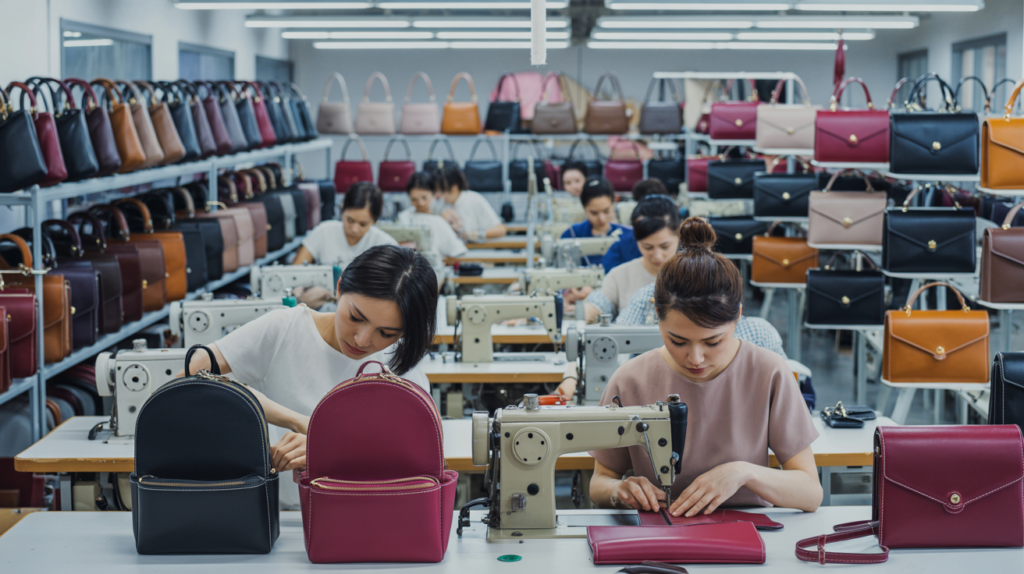
What PrinceBag OEM Handbag Factory Offers
PrinceBag typically offers:
– Full-cycle manufacturing: from sample development to mass production.
– Material sourcing: leather (genuine and PU), canvas, nylon, eco-friendly materials, and hardware (zippers, clasps, chains).
– Customizable components: lining, pockets, straps, embossing, logo plates.
– Quality control processes and in-house testing.
– Private labeling and branded packaging options.
– Minimum Order Quantity (MOQ) tiers to suit startups and established brands.
– Logistics support: consolidated shipping, FOB/CIF arrangements, and assistance with export documentation.
These capabilities simplify the process for entrepreneurs who want to focus on branding, marketing, and sales while leaving production complexities to experts.
Step-by-Step: Start Your Handbag Brand with PrinceBag
1. Define your brand and product vision.
– Who is your target customer? (age, income, style preferences)
– What is your brand’s value proposition? (affordable luxury, eco-friendly, functional travel bags)
– What product categories do you want to launch? (totes, crossbody, clutches, backpacks)
2. Prepare design assets and technical specs.
– Sketches, mood boards, and sample photos.
– Technical drawings (spec sheets) detailing dimensions, materials, hardware, and tolerances.
– Branding elements like logos and desired placement.
3. Contact PrinceBag for an initial consultation.
– Share your product vision, estimated order quantities, and timeline.
– Request information on materials, MOQs, lead times, and pricing structures.
4. Approve materials and request samples.
– Start with material swatches and hardware samples.
– Commission a prototype/sample or 1-3 pre-production samples for approval.
5. Finalize the production order and sign an agreement.
– Confirm pricing, production schedule, payment terms (e.g., deposit + balance), and penalties for defects or delays.
6. Monitor production and QC.
– Arrange for in-line and final inspections.
– Use photographic updates or third-party inspection services if needed.
7. Packaging, labeling, and shipping.
– Finalize hang tags, dust bags, boxes, and any compliance labels.
– Coordinate shipment methods and customs paperwork for the destination market.
8. Post-production support.
– Discuss reorders, seasonal adjustments, and continuous improvement.
Design and Material Considerations
Design is where your brand voice becomes tangible. PrinceBag can work with a range of materials; your choices affect cost, durability, sustainability credentials, and perceived value.
– Leather: Full-grain, top-grain, corrected-grain, and bonded options. Natural aging, scent, and higher price points.
– PU and vegan leathers: More affordable, easier to maintain, and suitable to brands emphasizing cruelty-free practices.
– Canvas and nylon: Lightweight, durable, and often used in casual or functional designs.
– Eco-materials: Recycled PET fabrics, cork, and plant-based leathers appeal to eco-conscious consumers.
Hardware choices (zippers, sliders, chains) and interior linings also shape the user experience. Work with PrinceBag to request functional prototypes—pocket placement, zipper length, strap ergonomics—so you can validate usability before mass production.
MOQ, Lead Times, and Scalability
Understanding MOQ and lead times is essential for budgeting and inventory planning. PrinceBag typically provides tiered MOQs:
– Sample orders: 1–3 units (higher per-unit cost, used for validation).
– Small batch production: 50–200 units (startup-friendly).
– Bulk production: 500+ units (lower per-unit cost).
Lead times:
– Sampling: 2–4 weeks depending on complexity.
– Small batch: 4–8 weeks after sample approval.
– Bulk production: 8–16 weeks.
Scalability depends on factory capacity and supply chain reliability. PrinceBag’s existing supplier relationships mean that as your volumes grow, production timelines and pricing can improve. Be mindful of seasonal demand (holiday peaks) and raw material availability, which can affect lead times.
Costing and Pricing Strategy
To set profitable retail prices, you need a clear view of production costs and margin targets. Typical cost components:
– Material cost: leather, fabric, hardware, lining.
– Direct labor: cutting, sewing, finishing.
– Overhead allocation: factory utilities, QA, administration.
– Packaging: boxes, dust bags, labels.
– Freight and duties: shipping to your fulfillment center and import taxes.
A basic pricing framework:
– Cost of Goods Sold (COGS) = production cost + packaging + freight per unit.
– Wholesale price = COGS 2–2.5 (varies by channel).
– Retail price = Wholesale 2–2.5 (keeps standard margins across distribution).
Work with PrinceBag to obtain per-unit cost estimates at different order quantities. This allows you to model break-even volumes and expected margins.
Quality Control and Assurance
Quality builds brand reputation. PrinceBag should provide:
– Incoming material inspections for leather, fabric, and hardware.
– In-line checks during cutting and stitching stages.
– Final inspection for defects, tolerances, and functionality.
– Pre-shipment inspections and lab testing (colorfastness, seam strength).
Request documented quality control plans and reject/repair policies. For higher assurance, consider third-party inspectors or a sample retention policy to ensure consistent quality across production runs.
Branding, Packaging, and Unboxing Experience
Packaging and presentation are critical for perceived value. PrinceBag can deliver private-label options:
– Logo embossing on leather, metal logo plates, screen-printed linings.
– Branded dust bags, care cards, and hang tags.
– Custom boxes with inserts to protect the product.
Think through unboxing experience: consider eco-friendly materials, reusable dust bags, and QR codes linking to care instructions or brand stories. Packaging is both protection and marketing—it should align with your brand ethos.
Logistics, Shipping, and Compliance
Efficient logistics help reduce lead times and unexpected costs. Key considerations:
– Incoterms (FOB, CIF, DDP) determine who handles shipping and customs.
– Consolidation options for multiple SKUs to save cost.
– Labeling and compliance for destination markets (e.g., textile composition labels, country of origin, CE, REACH requirements).
– Tariff classifications to estimate import duties.
PrinceBag often assists with export documentation and can coordinate freight forwarders. Ensure clarity on who manages duties and customs clearance to avoid delays.
Sustainability and Ethical Manufacturing
Consumers increasingly value sustainability and ethical practices. Questions to ask PrinceBag:
– Do they source sustainable or recycled materials?
– What policies exist for worker safety, fair wages, and working hours?
– Can they provide certifications (e.g., OEKO-TEX, GRS)?
– How do they handle waste, effluent, and emissions?
Transparency around supply chain ethics and material sourcing becomes a differentiator. If sustainability is core to your brand, build requirements into your contract and request documentation.
Marketing and Go-to-Market Strategy
Your partnership with PrinceBag handles production; you own brand narrative and sales. Recommended go-to-market steps:
– Launch with a focused collection (3–6 SKUs) to test product-market fit.
– Use high-quality product photography and lifestyle images reflecting your target audience.
– Develop multi-channel sales: direct-to-consumer (DTC) website, marketplaces, and selected wholesale partnerships.
– Leverage influencer collaborations and PR for initial awareness.
– Use pre-orders or limited drops to gauge demand and finance initial production.
Create a feedback loop: collect customer reviews and product performance data to inform subsequent production iterations with PrinceBag.
Risk Management and Contingency Planning
Working with an OEM involves risks—delays, defects, material shortages, and price fluctuations. Mitigation strategies:
– Start with small batches to validate designs.
– Include clear quality and delivery terms in contracts (penalties, remediation).
– Maintain a small buffer in inventory to cover shipping delays.
– Identify secondary suppliers for critical components (zippers, leather).
– Insure shipments against loss or damage.
Discuss risk scenarios with PrinceBag and document agreed remediation processes.
Case Study: Launching a Small Handbag Line
Imagine an entrepreneur, “Luna,” launching a boutique crossbody bag line. She used PrinceBag for OEM manufacturing.
Steps Luna took:
– Designed 4 styles (2 leather, 2 vegan leather) with specific hardware choices.
– Ordered prototypes (3 samples each) and iterated twice.
– Placed a small batch order of 120 units (30 per SKU).
– Implemented a pre-order campaign to fund production and validate demand.
– Integrated branded dust bags and eco-friendly boxes via PrinceBag’s packaging service.
– Launched on her DTC site and sold out within 6 weeks.
Key outcomes:
– Rapid sample iteration reduced time to market from concept to sale by 40%.
– Strong margins due to optimized materials and negotiated MOQ pricing.
– Repeat reorder placed with a 20% margin improvement due to sourcing efficiencies.
This highlights how a strategic OEM relationship can accelerate product-market fit and scale.
Cost and Timeline Analysis Table
| Item | Estimated Cost per Unit (USD) | Time to Produce | Notes |
|---|---|---|---|
| Sample (prototype) | $60 – $150 | 2–4 weeks | Higher cost per unit; depends on complexity and materials |
| Small batch (MOQ 50–200) | $18 – $45 | 4–8 weeks | Includes materials, labor, basic packaging |
| Bulk batch (MOQ 500+) | $8 – $25 | 8–16 weeks | Lower per-unit cost; better negotiation power |
| Custom hardware (metal logo, clasps) | $0.80 – $5.00 | 2–6 weeks lead time (tooling) | One-time tooling costs may apply |
| Packaging (dust bag + box) | $1.50 – $6.00 | 2–6 weeks | Eco options typically cost more |
| Freight & Duties (per unit, air vs sea) | $1 – $6 (sea), $6 – $20 (air) | Sea: 20–40 days; Air: 5–10 days | Depends on destination, volume, and incoterm |
| Total COGS (small batch example) | $25 – $60 | — | Includes production + basic packaging + freight allocation |
This table provides ballpark figures. Exact costs vary by material choices, design complexity, and negotiated factory prices. Request a formal quote from PrinceBag to get precise numbers for your SKUs.
Practical Tips for Working Smoothly with PrinceBag
– Prepare clear tech packs: The more precise your specifications, the fewer iterations you’ll need.
– Spec multiple materials: Have primary and secondary material options to avoid production delays.
– Visit the factory if possible: Seeing operations builds trust and speeds problem-solving.
– Start with 1–2 core styles: Validate your target market before expanding SKUs.
– Protect designs: Use NDAs and mark-ups on tech packs for proprietary elements.
– Use milestone-based payments: Align payments with sampling, production start, and shipment.
– Build a communication cadence: Weekly updates during production keep you informed.
Frequently Asked Questions
Q: What if I don’t have finalized designs?
A: Many OEMs, including PrinceBag, offer design support and can help translate concepts into production-ready tech packs. Expect additional costs for design services.
Q: Can PrinceBag help with small startup orders?
A: Yes—many factories have small-batch MOQs or sample programs to support startups. Costs per unit will be higher than bulk runs.
Q: How do private label and OEM differ?
A: OEM manufactures your designs under your brand. Private label may involve selecting ready-made designs and adding your branding—often faster but less unique.
Q: How do I ensure intellectual property protection?
A: Use NDAs, register designs where applicable, and work with reputable factories that respect IP. Keep critical tooling secure and limit the number of parties with full design files.
Measuring Success and Iterating
Success metrics for your handbag brand include:
– Sell-through rate: % of inventory sold within a time window.
– Customer satisfaction and returns rate.
– Gross margin and profitability per SKU.
– Time-to-reorder and production scalability.
– Brand awareness and repeat customers.
Use these KPIs to inform design tweaks, material changes, or production volume adjustments with PrinceBag. Iterate quickly but with data—listen to customers and balance trends with timeless design cues.
Is PrinceBag the Right Partner?
Choosing PrinceBag or any OEM factory is a strategic decision. The right partner provides reliable quality, transparent communication, scalable capacity, and alignment with your brand’s values (e.g., sustainability). PrinceBag offers the core capabilities entrepreneurs need to go from concept to retail-ready handbags. To determine fit:
– Request references and production samples.
– Evaluate communication responsiveness and willingness to accommodate changes.
– Compare quotes and quality standards with other factories.
– Check certifications and compliance records.
A strong OEM relationship eases the manufacturing burden and lets you concentrate on marketing, customers, and growth. With careful planning—clear tech packs, realistic timelines, and contingency buffers—you can leverage PrinceBag’s OEM capabilities to launch a handbag brand that combines craftsmanship, brand identity, and commercial viability.
If you’re ready to explore production options, prepare your initial design concepts and sample requirements, and reach out to PrinceBag for a formal consultation and quotation. With deliberate planning and the right manufacturing partner, you can bring your handbag vision to market confidently and efficiently.