
Sampling and prototyping are the backbone of turning a handbag concept into a commercially viable, high-quality product. At PrinceBag Women’s Purse Supplier, these stages are treated as both technical engineering processes and creative collaborations. An effective sampling program reduces production risk, controls costs, and speeds time-to-market — but only when it is structured, transparent, and tightly managed. This article explains, in practical detail, how sampling and prototyping typically work at PrinceBag, what buyers should expect, the technical checkpoints used, cost and lead-time drivers, and best practices to achieve smooth approvals and reliable production.
Overview of Sampling and Prototyping at PrinceBag
PrinceBag’s sampling and prototyping process is designed around iterative validation: translate a design into a sequence of increasingly production-like samples, test function and aesthetics, resolve nonconformances, and lock specifications for pre-production. For women’s purses this covers many intertwined elements — pattern, volume and shape, leather or fabric selection, linings, interfacings, hardware (zippers, snaps, chains, buckles), edge finishes and detailing like quilting or embossing. Each sample iteration reduces uncertainty on these variables.
At PrinceBag the sampling journey typically serves four main goals:
– Validate construction and assembly methods so the design can be repeated reliably at scale.
– Verify materials, color matching, finishes and trims under expected production processes.
– Test hardware for durability, look and fit.
– Finalize tolerances and pack-level requirements for quality control and production handover.
PrinceBag uses a combination of in-house capabilities (pattern making, prototype sewing, basic hardware fitting and lab testing) and trusted external partners (precision hardware suppliers, plating houses, die casters) depending on complexity.
Step-by-Step Sampling Workflow
1. Concept & Tech Pack: The buyer provides sketches, mood boards, and a tech pack. The tech pack is central — it must include measurements, materials, trim specs, color codes, and construction notes. Without clear specs, sampling becomes iterative and costly.
2. Pattern & Mockup (Toile): Pattern maker converts the tech pack into patterns; an initial toile or muslin-style mockup is sewn to check proportions and logic of assembly.
3. Material Swatches & Lab Dips: Leather/fabric swatches and lining options are submitted. Lab dips (for linings or printed fabrics) confirm color matching under PrinceBag’s lighting conditions and production dye processes.
4. Hardware Prototypes: For custom hardware (buckles, logo plates, chains), initial prototypes are ordered from suppliers or made in-house for fit testing.
5. First Functional Sample (FS): A sewn, full-size sample using production-equivalent materials where possible. This is the first real check for construction, pocket placement, strap attachment, and overall look.
6. Fit & Functional Review: The sample is measured against the spec sheet; functional testing (zippers, strap load) is performed.
7. Revision Rounds: Corrections are documented; updated tech pack and pattern revisions are generated. Multiple cycles may be needed.
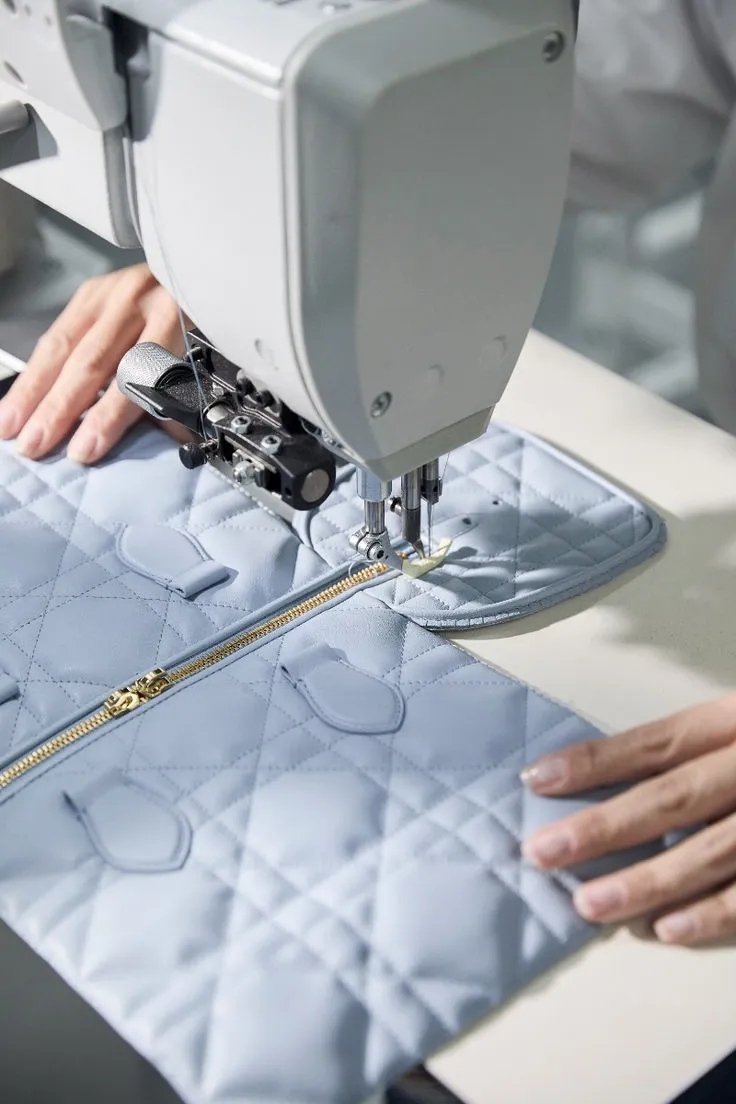
8. Pre-Production Sample (PPS): A sample sewn under production conditions (same machines, workers, materials) to validate workmanship and process stability.
9. Golden Sample (Approved Sample): The final signed-off sample used as the standard for mass production and QC. It is archived with full documentation.
Roles, Communication & Documentation
Clear responsibilities and written records are essential. Typical roles involved:
– Buyer / Merchandiser: Issues the brief and approves samples.
– Technical Designer (TD) / Pattern Maker: Converts designs into measurements and patterns.
– Sample Maker / Prototype Team: Produces physical samples and notes assembly methods.
– Quality Engineer: Executes testing and identifies tolerance failures.
– Production Manager: Plans the transition to bulk production, assesses capacity and tooling needs.
– Sourcing/HW Supplier Liaison: Manages custom hardware, plating, and dies.
Documentation to insist on:
– Complete tech pack with spec sheet, materials list, and construction diagrams.
– Sample comments log for each revision (date-stamped).
– Material certificates (leather grade, fabric composition).
– Hardware specification sheets including plating and tolerance.
– Sign-off forms for PPS and Golden Sample.
Clear, timestamped photographs (reference, in-progress, and detail shots) speed remote approvals and reduce ambiguous commentary.
Sample Types and Purposes – Analysis Table
| Sample Type | Primary Purpose | Typical Lead Time | Typical Cost Range | Advantages | Limitations |
|---|---|---|---|---|---|
| Concept Mockup / Toile | Check shape/proportions; pattern fit | 1–3 days | Low | Fast, low cost, quick corrections | Not production materials; aesthetics differ |
| Material Swatches / Lab Dip | Confirm color & material properties | 3–10 days | Low–Medium | Crucial for color consistency | May require multiple rounds |
| First Sewn Sample (FS) | Validate assembly & overall look | 7–14 days | Medium | First full representation of design | Not always made under production conditions |
| Hardware Prototype | Validate fit, look & plating | 2–6 weeks | Medium–High | Ensures hardware fits; critical for premium bags | Long lead time & tooling costs may apply |
| Pre-Production Sample (PPS) | Validate production process & quality | 1–3 weeks | Medium–High | Production-equivalent; basis for QC | More expensive; requires scheduling |
| Golden Sample (GS) | Final approval standard | Depends on previous rounds | High (cumulative) | Defines acceptance criteria for mass production | Must be strictly controlled & archived |
Lead Times, Cost Drivers and Typical Budgets
Lead times for purse sampling depend on complexity. Simple fabric totes with off-the-shelf zippers can move from tech pack to golden sample in 2–4 weeks. High-end leather purses with custom hardware, plating and embossing can take 6–12 weeks or more due to external tooling and finishing. Cost drivers include:
– Custom hardware tooling (dies, molds, CNC): significant one-time costs, often several hundred to several thousand USD depending on complexity.
– Premium material: full-grain leather and specialty linings add to sample costs and may require multiple lab dips.
– Number of revision rounds: each round adds time and labor.
– External finishing services: plating, die-casting, laser engraving.
– Small-batch inefficiencies: sampling is inherently expensive per unit; labor and setup costs are spread over very few items.
Typical sample budget guidance (very generalized):
– Low-range sample set for a simple purse: $100–$400 per sample.
– Mid-range sample set (better materials, one or two custom trims): $400–$1200 per sample.
– High-end prototype (custom hardware & tooling amortized): $1200+ per sample, tooling additional.
Buyers should budget for at least 2–3 rounds of meaningful revisions and plan for the possibility of hardware rework.
Technical Considerations for Women’s Purses
Design integrity in women’s purses rests on a few technical pillars:
– Structure & Interfacing: Many purses use interfacings, foam, or board to maintain shape. Testing for sag and edge deformation is critical.
– Edge Finishing & Coating: Painted or burnished edges must be consistent; uneven edges reveal low craftsmanship.
– Stitch Density & Thread Selection: For load-bearing straps, thread strength and stitch pattern are critical. High-stress points should use reinforced bartacks or binding.
– Hardware Connections: Rivets, screws, or folded leather tabs must avoid stress concentration. Hardware tolerances affect movement and noise.
– Lining & Pocket Placement: Interior functionality drives consumer satisfaction; pocket access, depth, and seams must be validated under usage.
– Adhesives & Glues: Some constructions rely on glues before stitching. Curing time and temperature sensitivity must be controlled to avoid delamination.
PrinceBag tests these elements during the FS and PPS stages and documents acceptable tolerances.
Prototyping Hardware and Tooling: Molds, Dies & Custom Hardware
Hardware is a frequent source of delay and cost. Typical hardware items are: zipper pulls, sliders, buckles, chains, logo plates, studs, D-rings. Options for producing hardware:
– Off-the-shelf: fastest and cheapest; can be sourced in small quantities and plated as needed.
– Custom tooling: required for unique shapes or branding. Tooling can include die-casting molds for metal parts or injection molds for plastic components.
– Plating and Finishing: Brass parts may be nickel-plated, gold-plated, or treated with PVD; color and durability testing should be part of prototyping.
Tip: At PrinceBag, an early hardware feasibility review is recommended — provide artwork for metal parts, define plating finish and a tolerance matrix, and request prototype samples from the hardware vendor before finalizing.
Tooling costs and lead times: expect 2–6 weeks for tooling production and $500–$5,000+ depending on complexity. If the buyer plans multiple SKUs using the same hardware, amortize tooling cost across the order.
Quality Criteria and Testing
PrinceBag applies a set of QC tests during sampling:
– Dimensional Inspection: compare measurements to spec sheet; document acceptable tolerances.
– Wear & Durability Testing: strap pull tests, handle load tests, zipper cycles (e.g., 5,000 cycles for premium zippers).
– Colorfastness: rub tests and wash tests for fabrics/linings.
– Hardware Fatigue: torque and pull tests on buckles and rings.
– Adhesion Tests: peel tests on glued components to detect potential delamination.
– Simulated Use: filling the bag, opening/closing compartments, and assessing structural integrity under typical load.
These tests are typically documented with pass/fail criteria on the sample sign-off sheet.
Iterative Revision Strategy
Iterations should be intentional. A recommended revision strategy:
– Round 0: Concept adjustments (pattern and silhouette).
– Round 1: First sewn sample — structural and major fit issues only.
– Round 2: Fit & material refinements; hardware fit.
– Round 3: Pre-production under production conditions for QC validation.
Set explicit decision points for each round: what must be resolved to proceed (e.g., “stitch density at straps must be > X and no more than Y mm deviation from nominal”). Limit the number of rounds by elevating issues to decision-makers early: prioritize errors that affect fit or function vs. cosmetic micro-adjustments.
Document all decisions in an approval log and require formal sign-off on the Golden Sample.
Managing Intellectual Property and Design Secrecy
Protecting design IP is especially important for novel purse designs or brand-identifying hardware. Best practices:
– NDA: Have a signed non-disclosure agreement before exchanging detailed tech packs and hardware artwork.
– Design Registration: For unique ornamental designs, consider registered design protection in key markets.
– Control Access: Limit the number of copies of tech packs and restrict access inside the supplier’s facility.
– Watermark Photos: If images are shared widely, watermark and track distribution.
– Tooling Ownership: Clarify in contracts who owns the tooling and whether tooling can be used for other clients — negotiate exclusivity if needed.
PrinceBag typically agrees to NDAs and can hold tooling on behalf of clients under clear contractual terms.
Sustainability and Ethical Sourcing in Sampling
Sampling can generate waste. PrinceBag offers sustainable options:
– Digital Sampling: Use CAD and 3D rendering to vet proportions before physical prototypes.
– Reuse Offcuts: Swatches and leftover panels can be repurposed into sample accessories.
– Low-Impact Materials: Offer recycled linings and vegetable-tanned leathers when requested.
– Consolidated Sampling: Combine multiple small design changes into fewer rounds to reduce material waste.
Ask PrinceBag to indicate material certifications (e.g., REACH, OEKO-TEX) for linings and components.
Common Challenges and How PrinceBag Mitigates Them
– Color Mismatch: Use physical lab dips and agree on reference lighting and Pantone/CMYK/swatch values.
– Hardware Delays: Lock hardware selections early and partner with reliable vendors; consider off-the-shelf alternatives for speed.
– Pattern Distortion: Ensure experienced pattern makers perform gradations and allow for leather stretch rates.
– Communication Gaps: Use structured comment sheets and weekly review calls; require clear photos with measurement overlays.
– Capacity Constraints: Reserve sampling capacity early during peak seasons (e.g., Q3 for year-end launches).
PrinceBag mitigates these by enforcing an internal checklist, keeping a roster of trusted hardware partners, and offering project managers who coordinate timelines.
Best Practices for Buyers Working with PrinceBag
– Provide a detailed tech pack: measurements, seam allowances, material specs, and a clear priority list for issues.
– Share a clear approval process and timescale: e.g., “PPS sign-off required within 5 business days.”
– Use consistent color references: physical swatches and Pantone numbers.
– Prioritize decisions: mark which items are “must-fix” vs. “nice-to-fix.”
– Consolidate feedback: send a single consolidated comments file to avoid contradictory instructions.
– Schedule factory visits or live video reviews: seeing assembly techniques clarifies many issues.
– Discuss tooling & production scheduling upfront: agree who pays for tooling, lead-time expectations, and tooling ownership.
Sample Approval Checklist & Template
Sample Approval Checklist (items to verify on every FS/PPS/Golden Sample):
– Dimensions: length, width, depth within tolerance.
– Edge finishing consistent and defect free.
– Stitching: density, alignment, reinforced points checked.
– Hardware: correct part, finish consistent, secure attachment.
– Lining and pockets: placement and sewing quality.
– Zippers: function and alignment.
– Adhesive bonds: no bubbling or delamination.
– Color & texture: conforms to approved swatches / lab dips.
– Weight and balance: bag sits/stands as intended.
– Packaging requirements: dust bag, tags, polybag size.
Sample Sign-off Template (simple):
– Sample ID:
– Date received:
– Sample stage (FS / PPS / GS):
– Reviewer:
– Pass / Conditionally Approved / Rejected:
– Comments (with image references and measurements):
– Required actions:
– Deadline for next sample:
– Final sign-off name & date:
Insist on written sign-off for PPS and GS; verbal approvals lead to disputes.
Case Scenarios & Practical Tips
Scenario A — Fast-fashion buyer with short lead time: prioritize off-the-shelf hardware, use synthetic leathers, accept a single PPS round, and shorten approvals with rapid photo feedback. Expect lower per-sample costs but more variation in finish.
Scenario B — Luxury brand with strict aesthetics: expect 4–6+ weeks for hardware tooling, multiple lab dip rounds, and rigorous tensile and plating tests. Accept higher per-sample investment for long-term product integrity.
Practical tip: where possible, request PrinceBag to produce a small pilot order (e.g., 1–2% of planned production) after PPS to verify production-line consistency before full run.
Sampling and prototyping at PrinceBag Women’s Purse Supplier are structured processes that balance creative intent with manufacturing realities. Clear documentation, early hardware feasibility checks, realistic lead-time expectations, and disciplined sign-off routines are the ingredients of success. Buyers who supply comprehensive tech packs, prioritize decisions, and invest in proper PPS and Golden Sample approvals will significantly reduce production risk, control costs, and protect brand integrity. With collaborative communication and the right expectations, PrinceBag can transform purse concepts into reliable, repeatable products that meet both functional and aesthetic standards.