


PrinceBag Ladies Bag Factory positions itself as a specialized manufacturer in the competitive ladies’ handbag market, balancing craft quality with scalable production. To understand what determines its production capacity and lead time, it’s essential to unpack the factory’s internal processes, external dependencies, and practical planning strategies. This article explains those components in detail, provides a comparative analysis table, and offers concrete examples and implementation recommendations to help buyers, ODM/OEM partners, and internal planners make informed decisions.
Factory profile and positioning
PrinceBag Ladies Bag Factory is best understood through its market positioning and product mix. A factory serving ladies’ bags typically divides its output among categories such as everyday totes, crossbody bags, evening clutches, work satchels, and seasonal trend styles. Product complexity ranges from simple unlined nylon totes to fully lined leather handbags with multiple pockets, piping, metal hardware, and decorative elements.
Key attributes that define the factory profile:
– Product complexity distribution: percentage of simple vs. complex SKUs.
– Production model: made-to-order (MTO), made-to-stock (MTS), or hybrid.
– Vertical integration: in-house cutting, sewing, hardware finishing, and packing versus subcontracted components (leather, hardware plating, printing).
– Quality level and compliance: domestic quality standards, sample approval flows, and certifications (e.g., REACH, CPSIA if needed).
– Workforce skill mix: experienced craft cutters and hand-stitchers, machine operators, and QC teams.
These attributes are the basis for estimating realistic production capacity and expected lead times.
Understanding production capacity: definitions and drivers
Production capacity is not a single number; it’s a dynamic metric influenced by many variables. For a ladies bag factory like PrinceBag, capacity can be looked at in several ways:
– Theoretical capacity: the maximum output assuming 100% uptime and no changeovers.
– Practical capacity: considers scheduled maintenance, breaks, and expected downtime.
– Effective capacity: further adjusts for changeovers, rework rates, and quality hold-ups.
– Orderable capacity: capacity that can be reliably committed to customers after reserving buffers and lead-time margins.
Primary drivers of capacity:
– Number of production lines and workstations (cutting, seam, hardware fitting, finishing).
– Machine mix and operator efficiency (e.g., automatic cutting machines vs. manual).
– Skill level and labor availability (skilled hand-sewing slows rate for complex items).
– Product mix and average unit time (a leather bag with lining may take 4–10 hours total; a simple nylon tote might take 0.5–1 hour).
– Uptime and shift structure (one, two, or three shifts per day).
– Auxiliary processes and bottlenecks (hardware plating, stamping, finishing ovens).
– Supply chain consistency (availability of zippers, linings, hardware).
A realistic capacity estimate emerges from time-and-motion analysis for representative SKUs, aggregated across the planned product mix, and adjusted for real-world constraints.
Decomposing lead time
Lead time is the total elapsed time between receipt/confirmation of an order and delivery. For PrinceBag, lead time typically comprises:
1. Pre-production design and sampling:
– Concept confirmation and tech pack finalization.
– Prototyping and sample approval (can include first-sample, fit, and revised sample rounds).
2. Material procurement:
– Lead time for leather, fabric, linings, zippers, hardware, and trims.
– Custom hardware (e.g., logo plates, buckles) can add significant time.
3. Production preparation:
– Cutting schedules, pattern marking, die-making (if required), and pre-production meetings.
– Material inspection and pre-production testing.
4. Actual production:
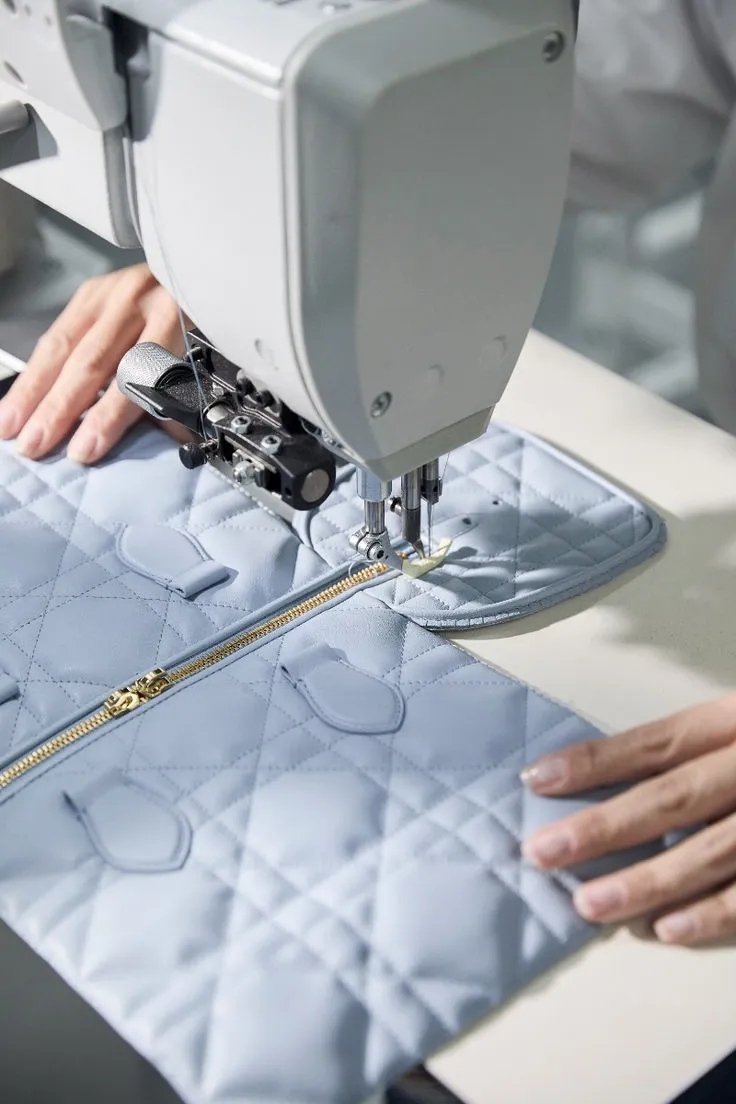
– Cutting, stitching/sewing, assembly, edge finishing, hardware fitting, and lining.
– Inline QC steps and rework.
5. Final inspection, packing, and documentation:
– Full QC and AQL sampling, packing into cartons, labeling, and export documentation.
6. Shipping and logistics:
– Inland transport, customs clearance, and ocean/air freight transit times.
Lead time drivers include sample revision cycles, supplier lead times for critical components, production capacity constraints, and seasonal demand peaks.
Typical lead-time ranges and realistic expectations
While lead times vary by product and factory specifics, the following ranges are typical for a full-service ladies’ bag factory:
– New product development (first sample to PP sample approval): 2–6 weeks.
– Material procurement for standard trims and fabrics in-stock: 1–4 weeks.
– Custom hardware lead time: 4–12 weeks (depending on plating and tooling).
– Production run (for orders of 500–5,000 units): 3–8 weeks depending on complexity.
– Final inspection and packing: 3–7 days.
– Shipping (sea, standard): 2–6 weeks depending on origin/destination.
Combining these elements, a typical guaranteed lead time for a factory like PrinceBag for an established SKU with materials in stock could be 6–12 weeks from order confirmation. For a new SKU requiring custom hardware and new samples, 12–20 weeks is safer.
Analysis table: production capacity and lead time factors
Below is a sample analytical table comparing representative production lines and their impact on capacity and lead time. Note: values are illustrative and should be validated with actual factory data.
| Production Line / Process | Average Unit Time (min) | Monthly Practical Capacity (units) | Typical Uptime (%) | Lead Time Contribution | Key Bottleneck Risk |
|---|---|---|---|---|---|
| Cutting (auto and manual) | 5–20 (per unit, avg) | 20,000–60,000 | 90 | 1–5 days per batch | Material queue, die availability |
| Main sewing | 15–120 | 8,000–30,000 | 88 | 1–3 weeks (depending on batch size) | Skilled operator shortage for complex styles |
| Hardware fitting & finishing | 3–30 | 15,000–40,000 | 85 | 2–7 days | Custom hardware queues |
| Quality control & rework | Variable (per failing unit) | Depends on defect rate | 95 | 1–7 days | High defect rates increase lead time |
| Packing & shipping prep | 1–10 | 20,000–50,000 | 98 | 1–4 days | Carton shortages, documentation delays |
| Custom hardware production (external) | N/A (supplier lead time) | N/A | N/A | 4–12 weeks | Lead-time variability; tooling delays |
How to calculate realistic lead time for an order
A systematic approach to calculating lead time helps set expectations and commit reliably. Use the following formula:
Total Lead Time = Design & sample time + Material procurement time + Pre-production setup + Production run time + Quality & packing time + Shipping time + Contingency buffer
Example calculation for a mid-complexity order of 2,000 units, with some custom hardware already on order:
– Design & sample: 2 weeks (PP sample already approved so reduced)
– Materials in stock: 1 week (liner/fabric in stock; zippers standard)
– Pre-production setup: 3 days
– Production run: 3 weeks (2 shifts)
– QC & packing: 7 days
– Shipping (sea): 21 days
– Contingency buffer: 7 days
Total = 2w + 1w + 0.5w + 3w + 1w + 3w + 1w = ~11.5 weeks (~80 days)
Note how each component’s variability can change the final number; if hardware were delayed by two additional weeks, total lead time jumps to ~13.5 weeks.
Capacity planning and order allocation strategies
To maximize throughput and meet commitments, PrinceBag can use several production planning methods:
– Make-to-stock (MTS) for high-turn SKUs: Maintain safety stock for core styles to fulfill short-term orders quickly.
– Make-to-order (MTO) for custom lines: Use accurate lead-time quotations and require deposits to secure purchase commitments.
– Prioritized scheduling: Allocate line capacity by customer priority tiers (key accounts, seasonal orders).
– Line balancing: Cross-train workers and redistribute tasks to prevent single-step bottlenecks.
– Lot splitting: Break large orders into smaller batches to ship partial quantities (reduces customer waiting).
– Supplier-managed inventory (SMI): Work with hardware and trim suppliers to hold consigned inventory near the factory.
Production allocation should be driven by an integrated MRP/ERP that accounts for capacities, lead times, and constraints.
Reducing lead time: practical levers
Shortening lead time improves competitiveness and customer satisfaction. Effective levers include:
1. Pre-approved components: Agree on standard trims and hardware with buyers so re-approval isn’t needed for every order.
2. Strategic inventory: Hold safety stock for critical items (zippers, linings, buckles) and maintain small on-site racks for custom hardware in early production.
3. Fast-track sampling: Use parallel sample approval where packaging and fit checks happen concurrently.
4. Increase shifts: When demand spikes, add shifts or temporary operators for critical periods.
5. Local sourcing: Source time-sensitive trims locally to avoid long overseas supplier lead times.
6. Automation: Invest in automatic cutting and edge finishing machines to reduce manual time and variability.
7. Reduce non-value activities: Streamline paperwork, minimize rework by tightening inline QC, and improve first-pass yield.
8. Vendor development: Work with hardware vendors to reduce tooling and plating lead time, including local tooling hubs or fast-prototype shops.
These measures require investment and coordination but can shave weeks off lead time.
Quality control and its impact on capacity and lead time
Quality control isn’t optional—it’s a lead-time and brand-protection driver. Key QC elements:
– Incoming material inspection: prevents downstream rework.
– Inline checks: quick checks during assembly reduce defect accumulation.
– Final inspection & AQL: typical 2–4 day process for medium batches.
– Rework capacity: allocate dedicated rework lines to avoid blocking main lines.
Poor quality increases rework percentages, which reduces effective capacity and extends delivery time. For instance, a 5% rework rate on a 10,000-unit run effectively occupies capacity for an additional 500 units’ worth of production time, and that rework often has higher per-unit time and affects scheduling.
Scaling for seasonal peaks and large orders
Seasonality (e.g., holiday collections) demands advance planning:
– Forecasting: Accurate lead-time aware forecasts enable earlier raw-material bookings.
– Flexible labor agreements: Temporary staffing pools and shift flexibility help absorb spikes.
– Capacity reservation: Lock in production slots months ahead for key customers.
– Contract manufacturing partners: Use vetted subcontractors for overflow production, but maintain quality and audit control.
– Early order incentives: Discounts or priority terms for earlier commitments help flatten demand curves.
Scaling too rapidly without supplier and workforce backing can introduce quality and lead-time risks.
Risk management and contingency planning
Common risks impacting capacity and lead time:
– Supplier delays for trims and hardware.
– Sudden labor shortages.
– Machine breakdowns and maintenance issues.
– Regulatory or customs delays.
– Raw material price spikes causing procurement holdups.
Contingency tactics:
– Dual-sourcing critical trims.
– Preventive maintenance programs.
– Maintain strategic buffer of critical SKUs.
– Insurance for transport-related delays and bonded warehouses for faster customs clearance.
– Supply chain transparency platforms to detect upstream delays early.
A formal risk register with mitigation plans for each identified risk helps turn reactive responses into planned actions.
Case study: planning a 10,000-unit tote order
Scenario: A retail customer places an order for 10,000 simple lined canvas totes, to be shipped in 10 weeks. Evaluate feasibility.
Key assumptions:
– Each unit sewing time = 15 minutes.
– Cutting time per unit = 3 minutes.
– Hardware minimal (standard rivets, in stock).
– Factory runs 2 shifts (16 hours/day), 26 workdays/month.
– Efficiency and uptime = 85%.
Compute theoretical capacity:
– Sewing capacity per machine/operator per month = (16 hours/day 60 min 26 days efficiency) / per-unit sewing time.
= (24,960 min 0.85) / 15 ≈ 1,414 units per operator per month.
– If sewing line has 8 operators dedicated = ~11,312 units/month. Cutting supports this with auto cutter capacity.
Production time needed for 10,000 units ≈ less than one month; add cutting, QC, packing, and a few days for materials inspection. With materials in stock and no custom hardware, a 6–8 week timeline is realistic. Shipping (sea) to many destinations may require an additional 2–4 weeks. Thus an overall 10-week promise can be met if supply chain and QC conditions hold.
If any custom element is involved (custom printing, hardware), add the supplier lead time before production begins.
KPIs to monitor production capacity and lead time performance
Use performance metrics to manage and improve operations:
– On-time delivery rate (OTD): percentage of orders delivered by promised date.
– Lead time variability: standard deviation of lead time versus target.
– First-pass yield (FPY): percent of units meeting quality without rework.
– Capacity utilization: ratio of actual output to practical capacity.
– Order cycle time: average time from order confirmation to shipment.
– Supplier fill rate: percentage of components delivered on time.
Continuous monitoring and monthly reviews ensure corrective actions are timely.
Communication and transparency with buyers
A factory that communicates clearly is more trusted. Best practices:
– Provide lead-time windows and explain major contributors (e.g., “8–12 weeks: includes 4–6 weeks production and 4 weeks shipping”).
– Share monthly capacity updates when demand is volatile.
– Offer partial shipment options for critical SKUs.
– Document sample approval and change-order impacts on lead time.
– Maintain a shared timeline and milestone tracker with customers.
Good communication reduces disputes and supports collaborative problem-solving when delays occur.
Technology and process investments that improve capacity and lead time
Investments with high impact:
– Automatic cutting machines: reduce cutting time and material waste.
– ERP/MRP systems: integrate planning, procurement, and production scheduling.
– Digital tech packs and PLM: speed up sampling and reduce specification errors.
– Conveyor and automated finishing: speed up downstream tasks.
– Worker training and lean manufacturing programs: increase throughput and reduce waste.
ROI should be measured by reduced lead time, higher throughput, and lower rework.
Practical checklist for buyers dealing with PrinceBag
Before confirming an order, buyers should verify:
– Are all components (linings, zippers, hardware) in stock or on confirmed PO with delivery dates?
– Has PP sample been approved, and are all specs finalized?
– What is the factory’s confirmed production window (start and completion dates)?
– Is contingency time included for customs, QC failures, or rework?
– Are partial shipments acceptable, and what are the cost implications?
– What are the payment terms and kinetic triggers (e.g., deposit, balance before shipping)?
Clarity on these questions avoids misunderstandings and helps predict realistic lead times.
balancing reliability and responsiveness
PrinceBag Ladies Bag Factory’s production capacity and lead time are the product of many interlocking decisions: product complexity, supplier relationships, production processes, workforce skills, and logistics strategies. Buyers and planners who understand the breakdown of lead-time components, maintain clear communication, and apply rigorous capacity planning can create realistic delivery schedules that meet market needs while protecting quality.
For the factory, continuous improvement—through technology investment, supplier development, training, and robust planning systems—turns capacity into competitive advantage. For buyers, flexibility (e.g., accepting partial shipments or pre-ordering custom elements) paired with early commitments will help secure slots in the production schedule and shorten the time to market.